Dna double helix 3D render
1344×768 · AVIF · CC BY 4.0
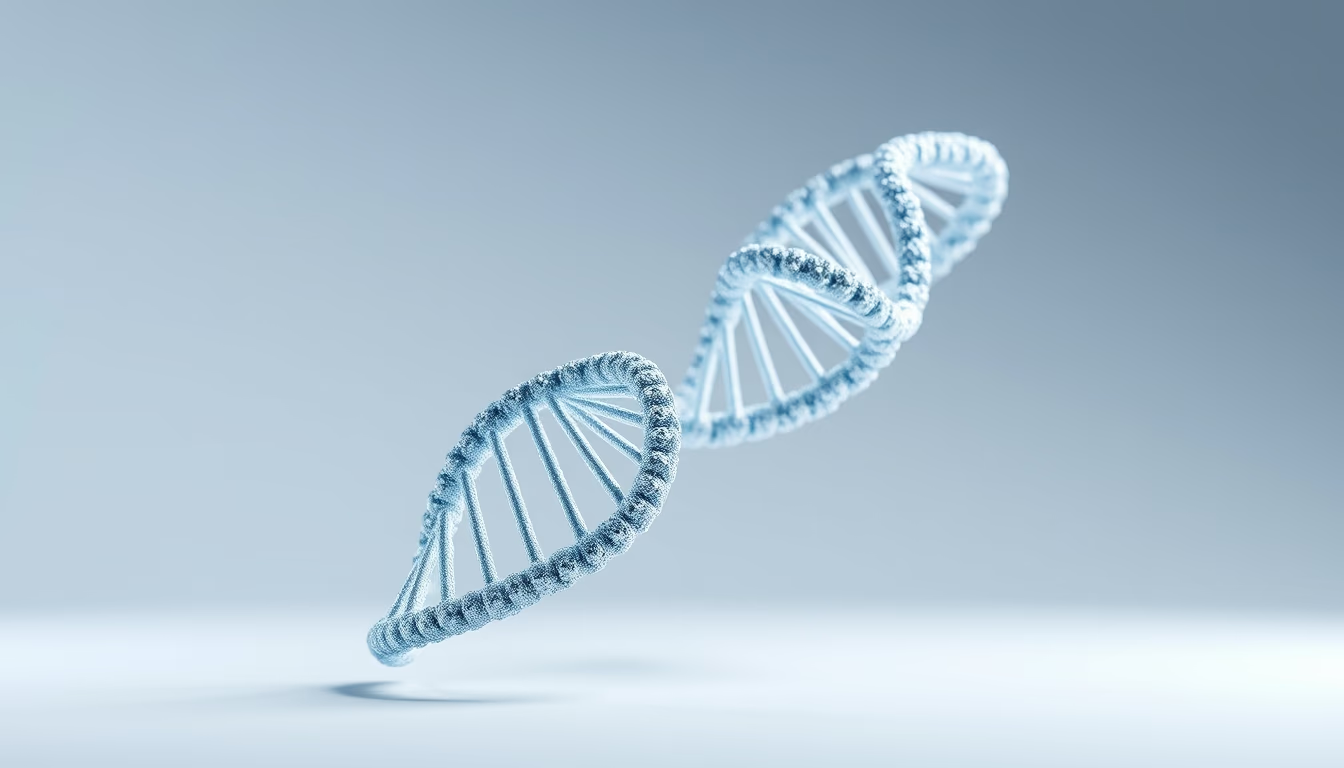
The DNA double helix is the structure that stores the genetic code of all living beings, discovered in 1953 by Watson and Crick.
About this subject
The DNA molecule (deoxyribonucleic acid) has a three-dimensional double helix structure, first described in 1953 by James Watson and Francis Crick, based on X-ray diffraction data obtained by Rosalind Franklin and Maurice Wilkins. This spiral configuration consists of two antiparallel polynucleotide chains winding around a common axis, forming a right-handed helix (clockwise direction). The chains are held together by hydrogen bonds between complementary nitrogenous base pairs: adenine (A) pairs with thymine (T), and cytosine (C) with guanine (G). The classic double helix model, called B-form, predominates under physiological conditions.
The discovery of the helical structure of DNA revolutionized molecular biology, enabling understanding of how genetic information is stored and replicated. The sequence of bases along the strand encodes instructions for protein synthesis and regulates cellular processes. The Human Genome Project, completed in 2003, mapped the approximately 3 billion base pairs of human DNA, highlighting its complexity. Computer-generated 3D renderings, such as the one inspiring this image, are essential educational and scientific tools for visualizing the helical structure and its interactions.
The double helix is not a rigid structure: it can undergo twisting and supercoiling, and also exhibit conformational variations, such as the A and Z forms, which differ in diameter and helix pitch. Detailed understanding of DNA drives advances in genomic medicine, gene editing (CRISPR), biotechnology, and evolutionary studies, cementing it as one of the icons of modern science.
Frequently Asked Questions
What is the DNA double helix?
The DNA double helix is the three-dimensional structure formed by two nucleotide strands that twist around each other, like a spiral staircase. The strands are held together by nitrogenous base pairs (A-T and C-G), and this configuration allows the storage and replication of genetic information.
Who discovered the structure of DNA?
The double helix structure of DNA was proposed by James Watson and Francis Crick in 1953, based on X-ray diffraction studies by Rosalind Franklin and Maurice Wilkins. In 1962, Watson, Crick, and Wilkins received the Nobel Prize in Medicine for this discovery.
Why is the double helix important for genetics?
The double helix explains how DNA can be copied during cell division (replication) and how the base sequence encodes proteins. This knowledge laid the foundation for genetic engineering, gene therapy, and techniques such as DNA sequencing and CRISPR.
Direct URL
https://pub-c7d6a6ea828543ac903a74a341ccb2e1.r2.dev/imagens/dna-double-helix-3d-render-commercial-product-photography-v9.avifHow to credit
Include a visible link back to UtilizAí. Copy one of the snippets below:
<a href="https://xn--utiliza-eza.com/en/midia/imagens/dna-double-helix-3d-render-commercial-product-photography-v9">Dna double helix 3D render</a> by <a href="https://xn--utiliza-eza.com">UtilizAí</a>, licensed under <a href="https://creativecommons.org/licenses/by/4.0/">CC BY 4.0</a>.
[Dna double helix 3D render](https://xn--utiliza-eza.com/en/midia/imagens/dna-double-helix-3d-render-commercial-product-photography-v9) by [UtilizAí](https://xn--utiliza-eza.com), CC BY 4.0
License: CC-BY-4.0