Distillery copper still
1344×768 · AVIF · CC BY 4.0
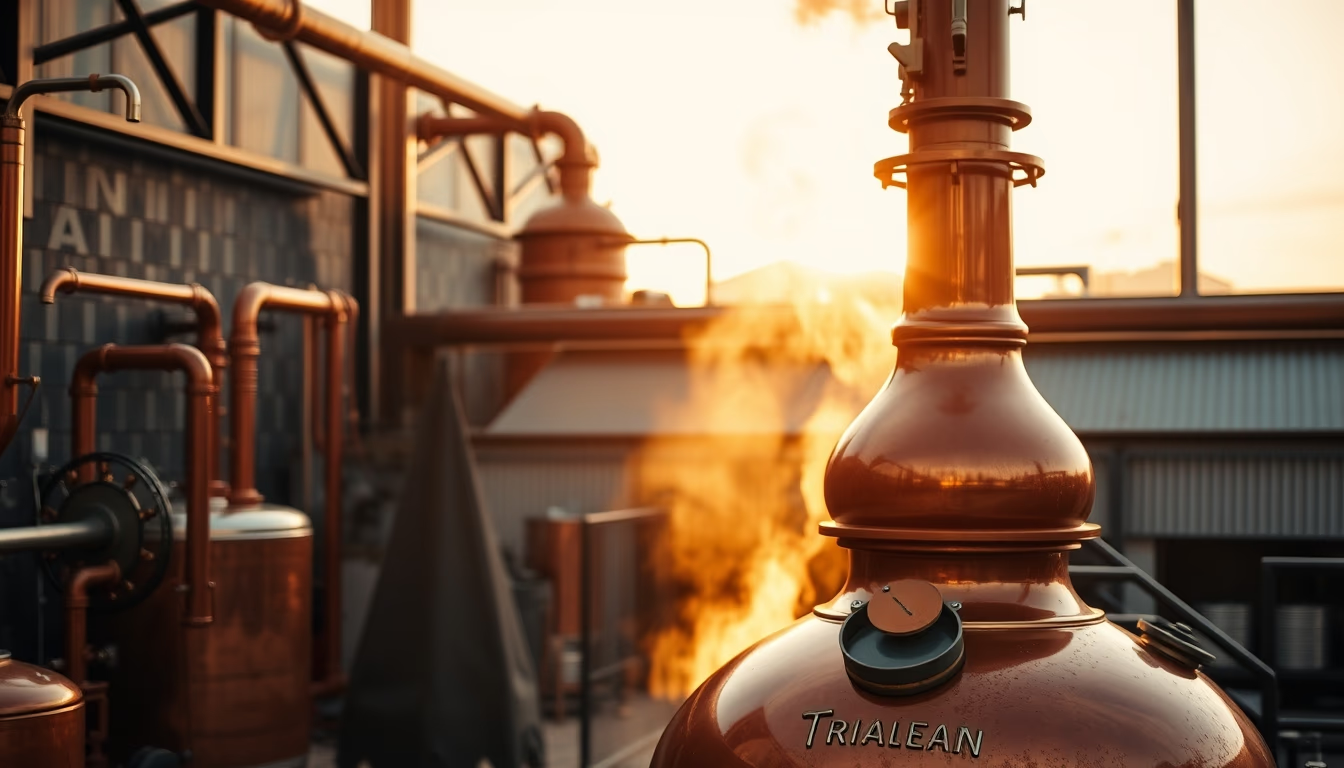
Copper stills are essential in producing premium spirits like whiskey and rum, influencing flavor and purity.
About this subject
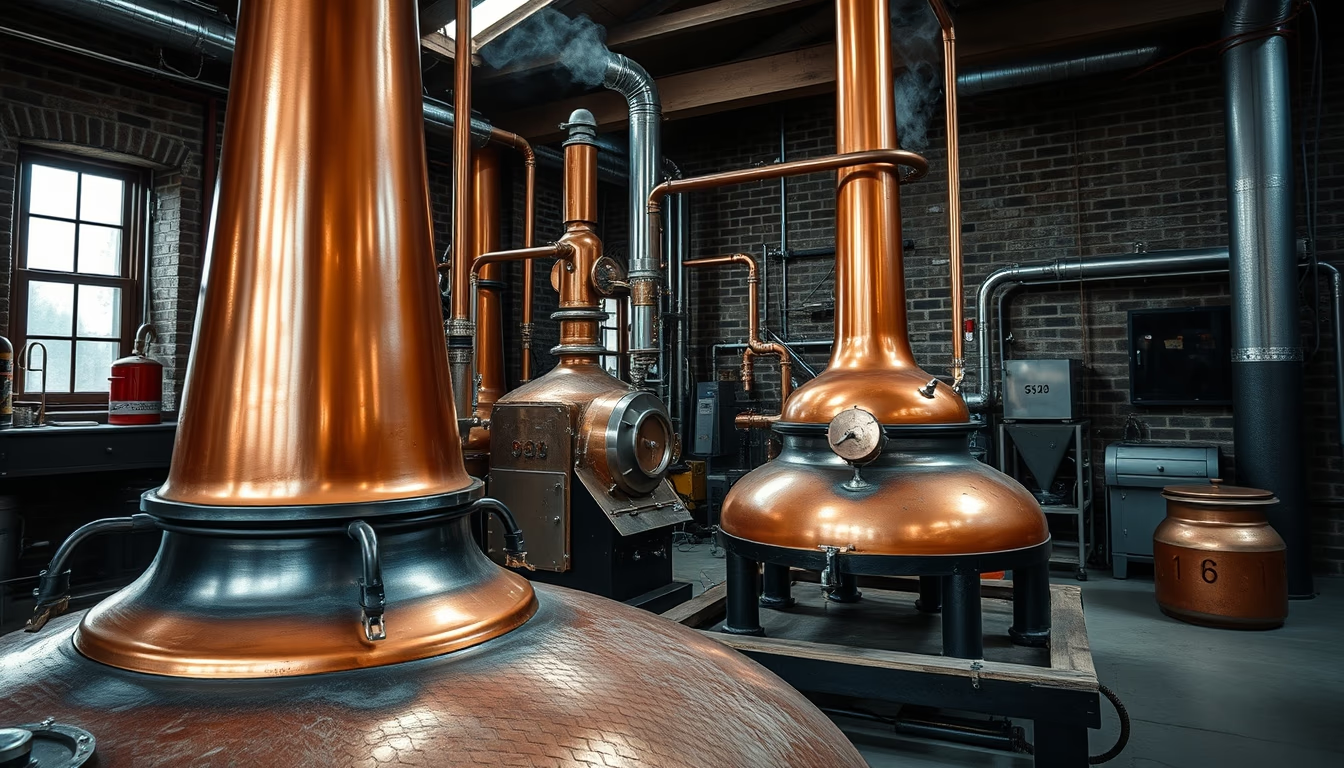
The copper still is the heart of artisanal spirit production. Used for centuries, this equipment transforms fermented mash into concentrated alcoholic beverages such as whiskey, rum, brandy, and cachaça. Copper is not merely a traditional material: it chemically reacts with sulfur compounds during distillation, removing undesirable flavors and contributing to the spirit's purity and aromatic profile. This reaction also produces copper acetate, which acts as a catalyst for the formation of fruity and floral esters, nuances highly valued by master distillers.
There are two main types of copper stills: the pot still (batch distillation) and the column still (continuous distillation). The pot still, typical of Scottish and Irish single malt whiskey distilleries, operates in batches and allows greater retention of flavor compounds, resulting in full-bodied and complex spirits. The column still, invented in the 19th century by Robert Stein and perfected by Aeneas Coffey, enables continuous distillation and higher alcohol purity, used for lighter whiskeys and gin. The choice between them depends on the desired style and regional traditions.
Crafting a copper still requires artisanal skill. Specialized coppersmiths hammer and solder the parts, ensuring uniform thickness and no weak points. The still's shape, including the angle of the neck and the size of the condenser, directly influences reflux and vapor contact with the copper, affecting distillation selectivity. Each distillery often keeps a unique design as a production secret. Copper corrosion over time makes the stills more porous, subtly altering the sensory profile, which is why many master distillers avoid frequent replacement.
Globally, copper distillation is synonymous with quality. In Scotland, the law requires whiskey to be distilled in copper stills to receive the single malt designation. In countries like Japan, India, and the United States, craft distilleries adopt the same tradition to produce award-winning whiskeys and gins. The revival of interest in artisanal spirits and the search for terroir and authenticity have boosted the appreciation of copper stills, which represent a link between the past and present of distillation.
Frequently Asked Questions
Why is copper used in distillation of spirits?
Copper reacts with undesirable sulfur compounds, removing off-flavors and improving purity. It also catalyzes the formation of fruity esters that enhance the spirit's flavor.
What is the difference between a pot still and a column still?
A pot still distills in batches, retaining more flavor compounds, ideal for full-bodied spirits like single malt whiskey. A column still distills continuously, producing purer and more neutral alcohol, used for gin and lighter whiskeys.
Why are copper stills expensive and handcrafted?
Manufacturing is manual, performed by skilled coppersmiths who hammer and solder the copper. Each piece is unique, and the design directly influences the spirit's profile, making the process time-consuming and costly.
Direct URL
https://pub-c7d6a6ea828543ac903a74a341ccb2e1.r2.dev/imagens/distillery-copper-still-travel-photography-p5.avifHow to credit
Include a visible link back to UtilizAí. Copy one of the snippets below:
<a href="https://xn--utiliza-eza.com/en/midia/imagens/distillery-copper-still-travel-photography-p5">Distillery copper still</a> by <a href="https://xn--utiliza-eza.com">UtilizAí</a>, licensed under <a href="https://creativecommons.org/licenses/by/4.0/">CC BY 4.0</a>.
[Distillery copper still](https://xn--utiliza-eza.com/en/midia/imagens/distillery-copper-still-travel-photography-p5) by [UtilizAí](https://xn--utiliza-eza.com), CC BY 4.0
License: CC-BY-4.0