Distillery copper still
1344×768 · AVIF · CC BY 4.0
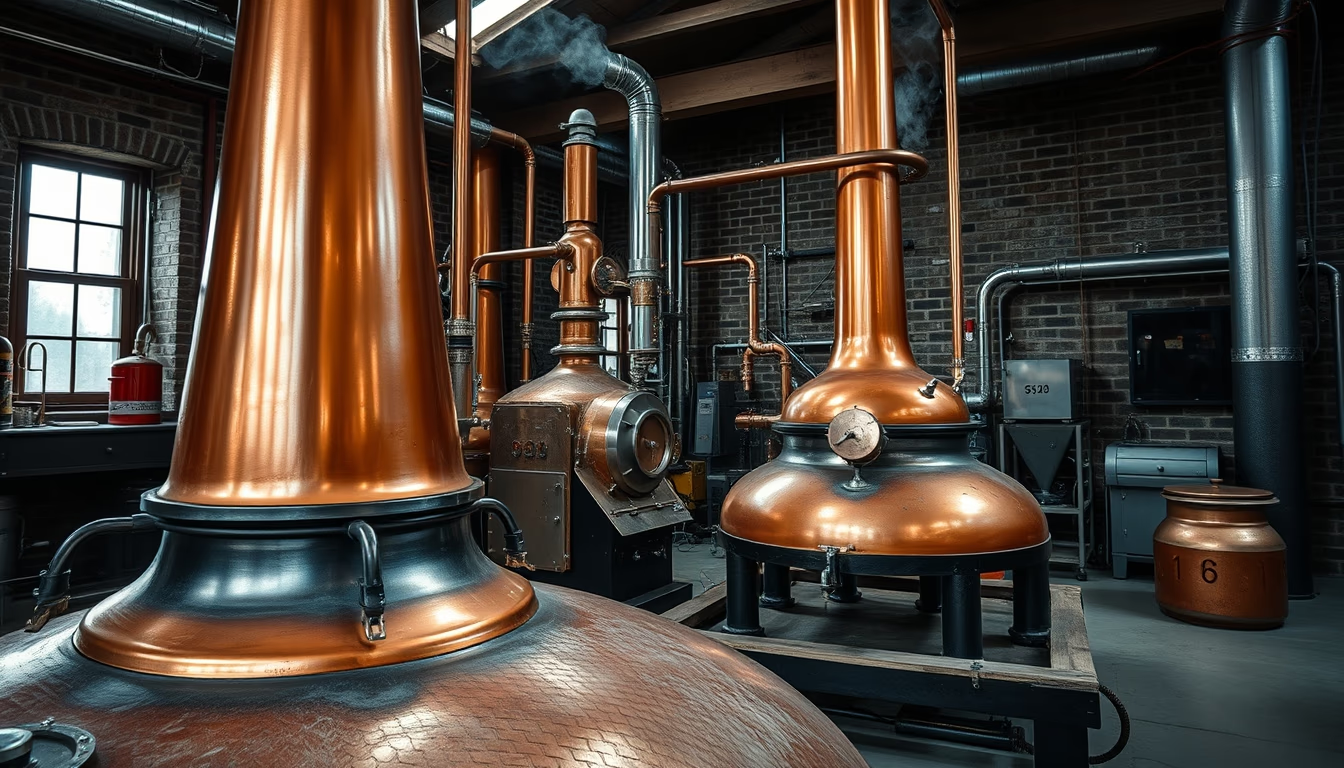
Copper stills are essential in producing spirits like whiskey and brandy, influencing flavor and purity through chemical reactions.
About this subject
Copper stills are central to the distillation of alcoholic spirits, particularly whiskey, brandy, and premium vodka. Their use dates back centuries, with records in medieval Europe and refinement during the Industrial Revolution. Copper is chosen for its ability to remove undesirable sulfur compounds, such as dimethyl sulfide, which can impart rubbery or vegetal aromas. During distillation, hot vapor reacts with the metal, forming copper sulfate that settles and is discarded. This results in a cleaner, smoother spirit.
The shape of the still also influences the sensory profile of the drink. Tall, slender stills produce lighter spirits with fewer congeners, while short, bulbous models retain more flavor compounds, yielding full-bodied, tannic spirits. Scottish single malt distilleries, such as those in Speyside and Islay, use copper stills with unique shapes considered trade secrets. The thickness of the copper and angle of the still's neck are adjusted to control reflux and fraction separation.
Beyond technical function, copper stills are valued for durability and aesthetics. Many are handcrafted by specialized coppersmiths, such as traditional families in Scotland or the Cognac region of France. Maintenance requires care: copper naturally oxidizes, forming patina, but must be cleaned periodically to avoid contamination. Large distilleries may have stills with capacities of thousands of liters, while micro-distilleries use smaller models from 200 to 600 liters.
Trivia: Scotland's oldest distillery, Glenturret, has operated copper stills since 1775. Jack Daniel's in the USA uses copper stills with a maple charcoal filtration system. The price of a handcrafted copper still ranges from US$ 10,000 to over US$ 100,000, depending on size and complexity. The global trend of craft spirits has boosted demand for this equipment, blending tradition and innovation.
Frequently Asked Questions
Why is copper used in distillation?
Copper reacts with undesirable sulfur compounds such as dimethyl sulfide, removing rubbery and vegetal odors. This results in a cleaner, smoother spirit.
What is the difference between tall and short stills?
Tall, slender stills produce lighter spirits with fewer congeners, while short, bulbous stills retain more flavor compounds, yielding fuller-bodied drinks like some scotches.
How are copper stills maintained?
They require periodic cleaning to remove copper sulfate buildup and prevent contamination. Natural oxidation forms a protective patina, but still needs specific care.
Direct URL
https://pub-c7d6a6ea828543ac903a74a341ccb2e1.r2.dev/imagens/distillery-copper-still-national-geographic-style-p6.avifHow to credit
Include a visible link back to UtilizAí. Copy one of the snippets below:
<a href="https://xn--utiliza-eza.com/en/midia/imagens/distillery-copper-still-national-geographic-style-p6">Distillery copper still</a> by <a href="https://xn--utiliza-eza.com">UtilizAí</a>, licensed under <a href="https://creativecommons.org/licenses/by/4.0/">CC BY 4.0</a>.
[Distillery copper still](https://xn--utiliza-eza.com/en/midia/imagens/distillery-copper-still-national-geographic-style-p6) by [UtilizAí](https://xn--utiliza-eza.com), CC BY 4.0
License: CC-BY-4.0