Didgeridoo aboriginal
1344×768 · AVIF · CC BY 4.0
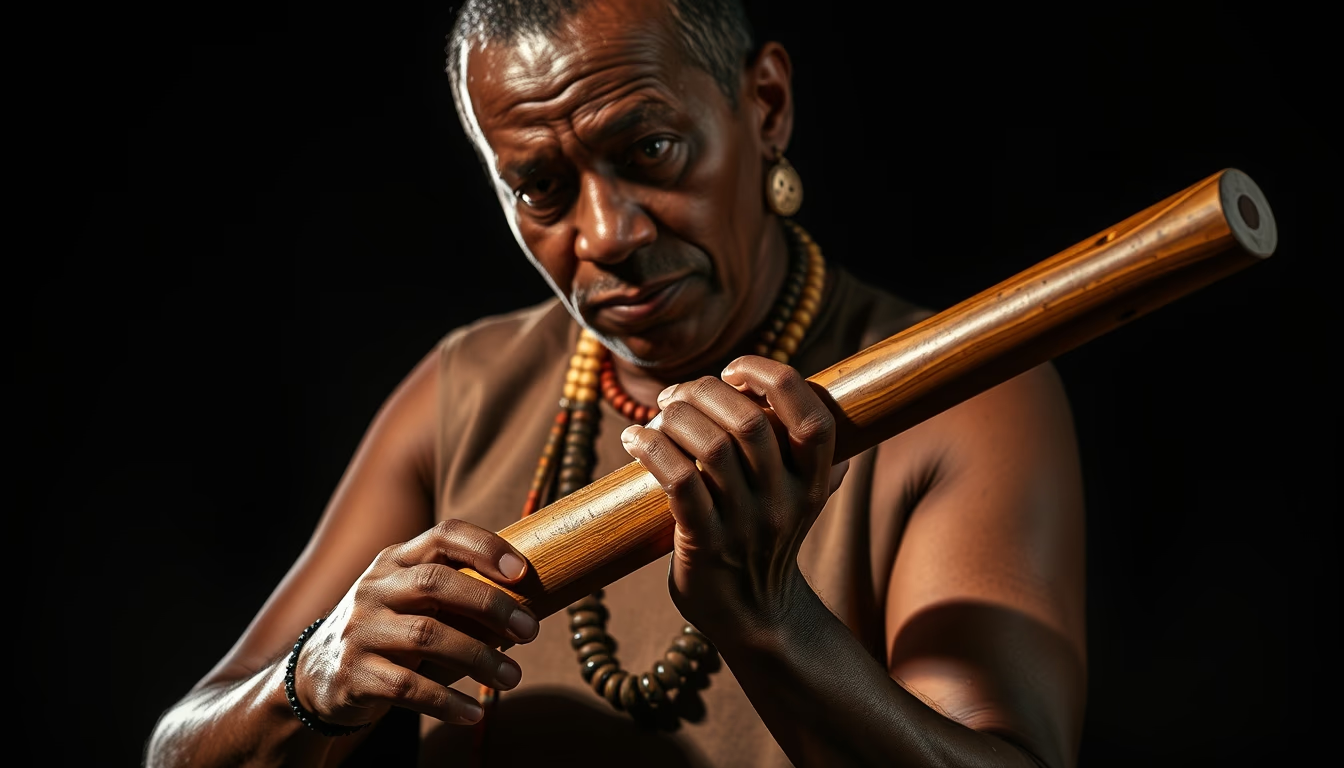
The didgeridoo is an ancient wind instrument of the Australian Aboriginals, known for its deep, resonant sound.
About this subject
The didgeridoo, also known as yidaki in some Aboriginal languages, is an aerophone traditionally made from eucalyptus branches hollowed out by termites. Its history spans over 1,500 years, making it one of the oldest wind instruments in the world. Indigenous peoples of northern Australia, particularly in Arnhem Land, have used it for centuries in ceremonial contexts such as corroborees, storytelling, and sacred songs.
Playing the didgeridoo requires circular breathing, allowing the musician to produce a continuous drone without pausing to inhale. The deep, rhythmic sound is often accompanied by clapsticks and vocal chants. Each instrument has a unique pitch and texture, shaped by the natural dimensions of the wood. Traditional decoration includes ochre paintings and carvings that depict Dreamtime stories and clan symbols.
In modern times, the didgeridoo has been adopted by world music, new age, and even rock artists, gaining international recognition. However, it remains a deeply spiritual object for Aboriginal communities, symbolizing a connection to ancestors and the land. Respectful appreciation involves acknowledging its cultural origins and avoiding trivialization.
Frequently Asked Questions
How is the didgeridoo traditionally made?
Traditionally, the didgeridoo is made from a eucalyptus branch or trunk naturally hollowed by termites. The craftsman selects a suitable piece, cuts it to length (usually 1 to 2 meters), and strips the bark. The surface may be decorated with symbolic paintings using natural ochres.
What is the cultural significance of the didgeridoo for Aboriginal people?
The didgeridoo is a sacred instrument for many Aboriginal peoples of northern Australia. It is used in religious ceremonies, initiation rites, and to transmit Dreamtime stories. The continuous drone symbolizes the connection to the land and ancestors, and the instrument is treated with deep respect.
Is it difficult to learn to play the didgeridoo?
The most challenging technique is circular breathing, which requires practice to master. Beginners may take weeks or months to produce a steady drone. However, with dedication, basic playing can be learned. Many online tutorials and courses are available for those wanting to start.
Direct URL
https://pub-c7d6a6ea828543ac903a74a341ccb2e1.r2.dev/imagens/didgeridoo-aboriginal-fine-art-photography-p1.avifHow to credit
Include a visible link back to UtilizAí. Copy one of the snippets below:
<a href="https://xn--utiliza-eza.com/en/midia/imagens/didgeridoo-aboriginal-fine-art-photography-p1">Didgeridoo aboriginal</a> by <a href="https://xn--utiliza-eza.com">UtilizAí</a>, licensed under <a href="https://creativecommons.org/licenses/by/4.0/">CC BY 4.0</a>.
[Didgeridoo aboriginal](https://xn--utiliza-eza.com/en/midia/imagens/didgeridoo-aboriginal-fine-art-photography-p1) by [UtilizAí](https://xn--utiliza-eza.com), CC BY 4.0
License: CC-BY-4.0