Dat tape recorder
1344×768 · AVIF · CC BY 4.0
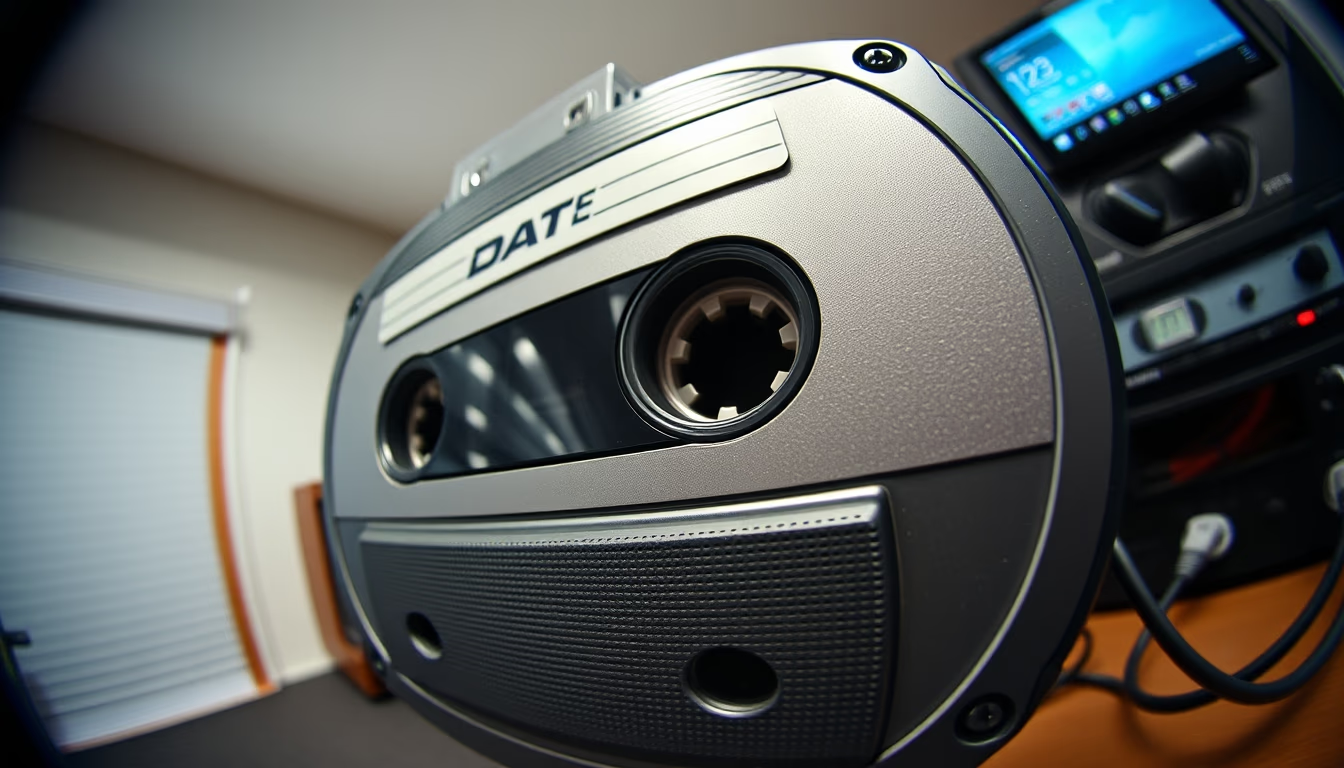
The DAT (Digital Audio Tape) recorder revolutionized professional audio recording in the 1990s with digital quality and portability.
About this subject
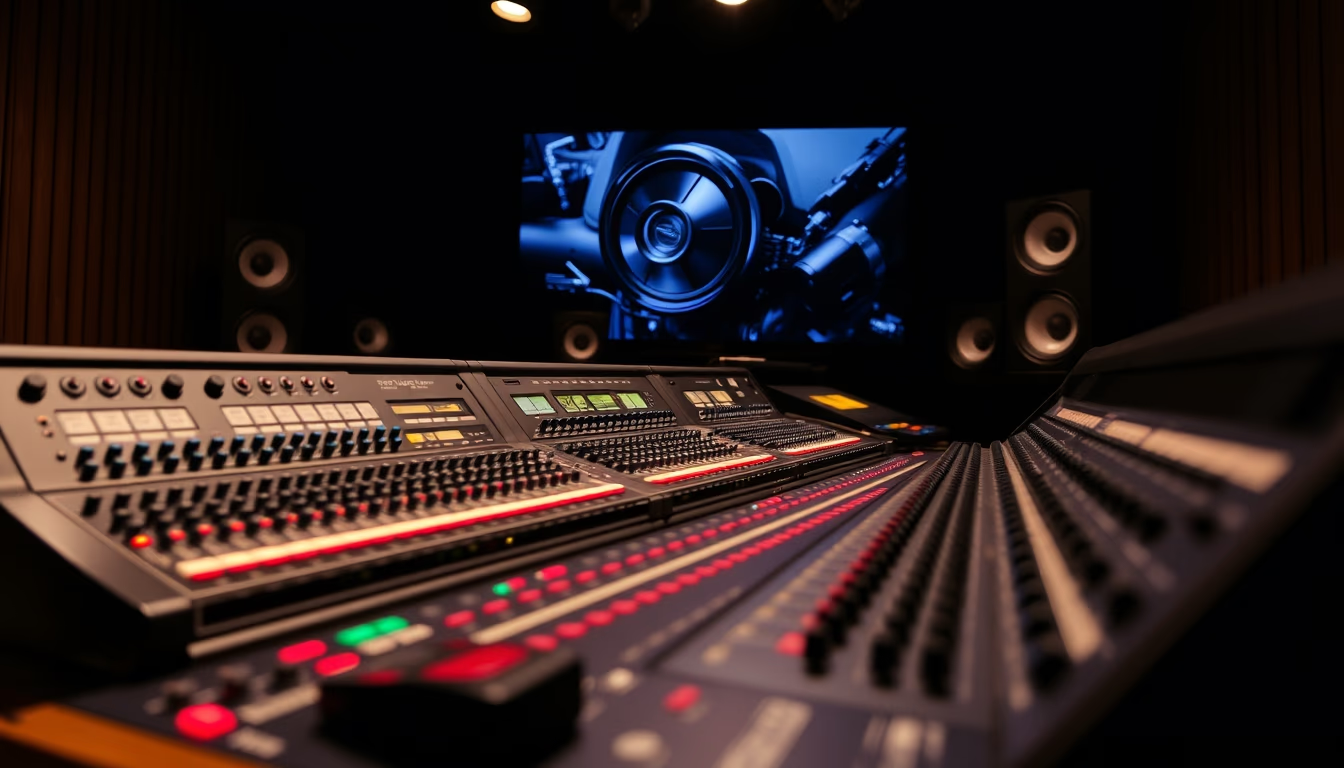
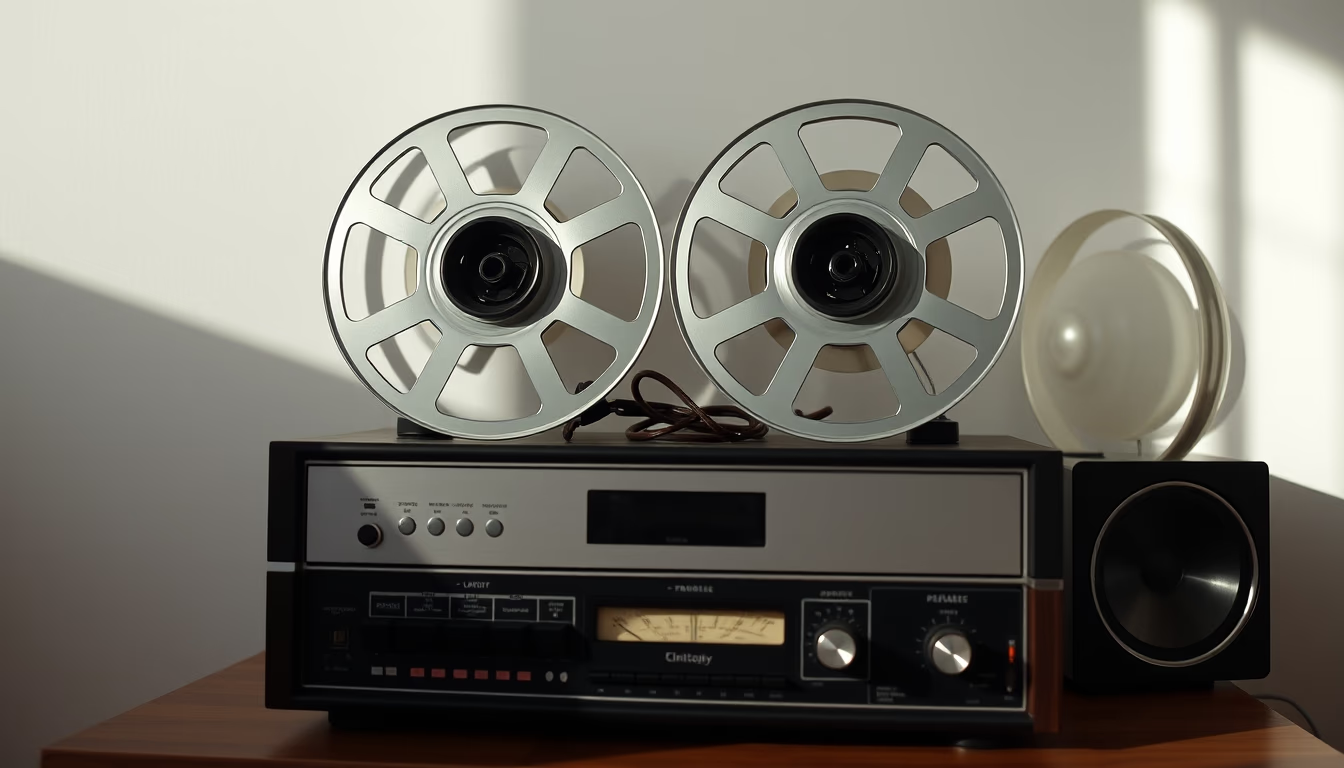
The DAT (Digital Audio Tape) format, co-developed by Sony and Philips and launched in 1987, was a digital magnetic tape storage system designed for high-quality audio. It recorded audio as 16-bit linear PCM at 44.1 or 48 kHz, identical to CD quality, without any lossy compression. This made it the go‑to medium for mastering, live recording, and broadcast applications, effectively replacing analog reel‑to‑reel tape in many professional settings.
DAT recorders came in portable units and rack‑mounted studio versions. Machines like the Sony PCM‑800 and the Tascam DA‑88 (which used a Hi8 cassette for the DAT format) became industry standards. The compact size of the tape (roughly half the size of a standard cassette) allowed up to 120 minutes of recording. Journalists, field recordists, and musicians embraced the format for its reliability, ease of use, and digital fidelity. Additionally, DAT was used for data backup, although its relatively slow access speed limited its adoption in computing.
The rise of CD recorders, hard disk recorders, and digital audio workstations in the late 1990s and early 2000s caused DAT to decline. By the mid‑2000s, it was largely obsolete, replaced by more versatile and cheaper digital media. Today, DAT recorders are sought after by vintage audio enthusiasts and engineers who need to transfer legacy recordings. Maintaining DAT tapes requires careful storage and periodic rewinding to prevent print‑through and data degradation.
A notable offshoot of DAT technology was the ADAT (Alesis Digital Audio Tape) system, which used S‑VHS tape to record eight digital audio tracks simultaneously. This made multitrack digital recording affordable for small studios. While DAT itself is no longer manufactured, its legacy as a reliable, high‑quality digital format remains significant in the history of audio recording.
Frequently Asked Questions
What is the difference between a DAT recorder and a common cassette tape recorder?
DAT records audio digitally as 16-bit linear PCM (CD quality), whereas cassette tape records analog signals, which suffer from noise and degradation. DAT also offers random access via index marks, but requires more expensive equipment and specific tapes.
Is DAT still used professionally today?
No, DAT has been replaced by hard drives, digital audio workstations (DAWs), and cloud storage. However, studios may still use DAT players to transfer legacy recordings. Production of DAT tapes ceased around the mid‑2000s.
How many minutes of audio fit on a DAT tape?
Common DAT tapes hold 60, 90, or 120 minutes of stereo audio at 48 kHz. Longer 180‑minute tapes were produced but were less reliable. The recorded time depends on the tape length and sampling rate.
Direct URL
https://pub-c7d6a6ea828543ac903a74a341ccb2e1.r2.dev/imagens/dat-tape-recorder-fish-eye-wide-angle-fresh6.avifHow to credit
Include a visible link back to UtilizAí. Copy one of the snippets below:
<a href="https://xn--utiliza-eza.com/en/midia/imagens/dat-tape-recorder-fish-eye-wide-angle-fresh6">Dat tape recorder</a> by <a href="https://xn--utiliza-eza.com">UtilizAí</a>, licensed under <a href="https://creativecommons.org/licenses/by/4.0/">CC BY 4.0</a>.
[Dat tape recorder](https://xn--utiliza-eza.com/en/midia/imagens/dat-tape-recorder-fish-eye-wide-angle-fresh6) by [UtilizAí](https://xn--utiliza-eza.com), CC BY 4.0
License: CC-BY-4.0