Currency notes from around the world
1344×768 · AVIF · CC BY 4.0
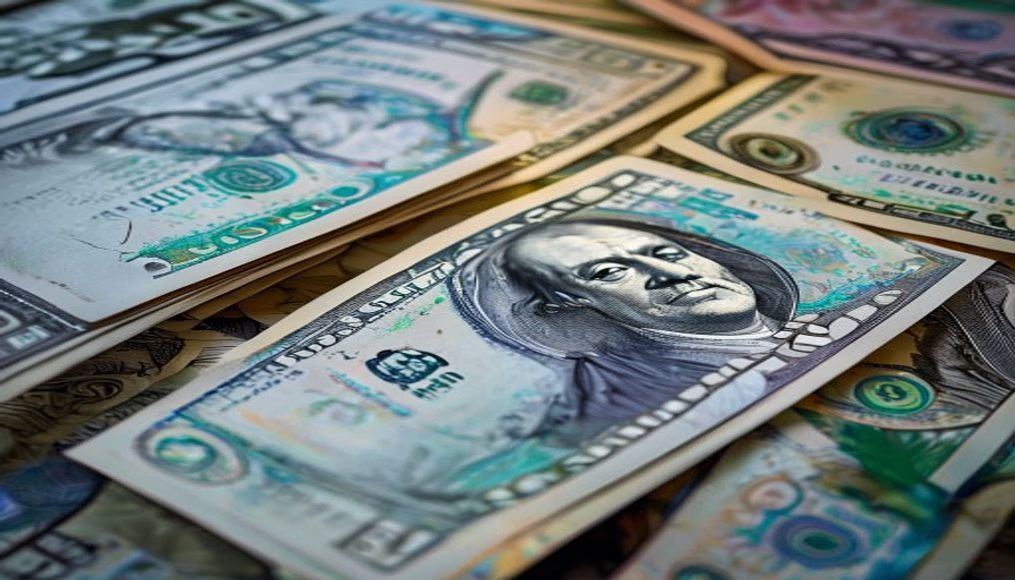
Banknotes from different countries reveal global cultural and economic diversity through unique designs and security features.
About this subject
Banknotes are more than just payment methods; they carry national symbols, historical figures, and elements that reflect a country's identity. China was the first to use paper money during the Tang dynasty (7th century), but modern notes as we know them emerged in Europe in the 17th century. Today, each country adopts designs that tell its story: the Brazilian real features native fauna like the grouper on the R$100 note and the macaw on the R$10 note. Meanwhile, the US dollar displays presidential portraits, and the euro shows bridges and arches symbolizing European unity.
Banknote production involves advanced anti-counterfeiting technology. Watermarks, security threads, microprinting, and color-shifting inks are common. Countries like Canada and Australia lead in using polymer, a more durable and moisture-resistant material. Brazil also adopted polymer for the commemorative R$10 note in 2000 but still uses cotton paper for most notes.
The circulation of foreign currencies interests travelers and economists. Notes from high-inflation countries, like the Venezuelan bolívar, lose value quickly, while the Swiss franc and US dollar are considered stores of value. In some places, old notes become collector's items, such as the Brazilian cruzeiro notes that now fetch higher prices in numismatic markets than their original face value.
The diversity of banknotes invites learning geography and history. Each note reveals a bit of its country's cultural heritage, whether through the choice of figures like Mahatma Gandhi on the Indian rupee or landmarks like the Eiffel Tower on the French franc (before the euro). Observing these differences is a way to travel without leaving home.
Frequently Asked Questions
Which banknotes are the most valuable in the world?
The most valuable banknotes by face value are high-denomination ones, such as the 1000 Swiss franc (about $1,100) or the 1000 Singapore dollar. In terms of collectibility, rare notes like the 500 euro or old Brazilian banknotes, like the 500,000 cruzeiros, can be worth much more.
How can you tell if a banknote is counterfeit?
Check the watermark by holding the note up to light, feel the raised ink on specific areas, verify the security thread, and use a magnifying glass to see microprinting. On polymer notes, partial transparency and a metallic sheen are clues.
Why do banknotes have different sizes and colors?
Colors and sizes help visually impaired people distinguish values and make counterfeiting harder. In Brazil, real notes increase in size with value, and vibrant colors like blue (R$20) and green (R$50) aid identification.
Direct URL
https://pub-c7d6a6ea828543ac903a74a341ccb2e1.r2.dev/imagens/currency-notes-from-around-the-world-street-photography-v11.avifHow to credit
Include a visible link back to UtilizAí. Copy one of the snippets below:
<a href="https://xn--utiliza-eza.com/en/midia/imagens/currency-notes-from-around-the-world-street-photography-v11">Currency notes from around the world</a> by <a href="https://xn--utiliza-eza.com">UtilizAí</a>, licensed under <a href="https://creativecommons.org/licenses/by/4.0/">CC BY 4.0</a>.
[Currency notes from around the world](https://xn--utiliza-eza.com/en/midia/imagens/currency-notes-from-around-the-world-street-photography-v11) by [UtilizAí](https://xn--utiliza-eza.com), CC BY 4.0
License: CC-BY-4.0