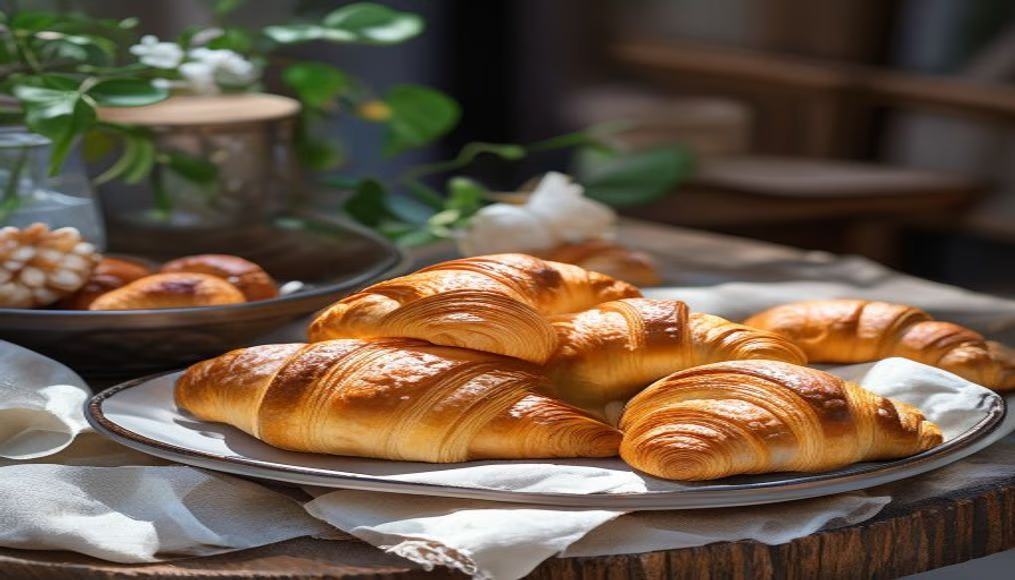
Croissants golden flaky
1344×768 · AVIF · CC BY 4.0
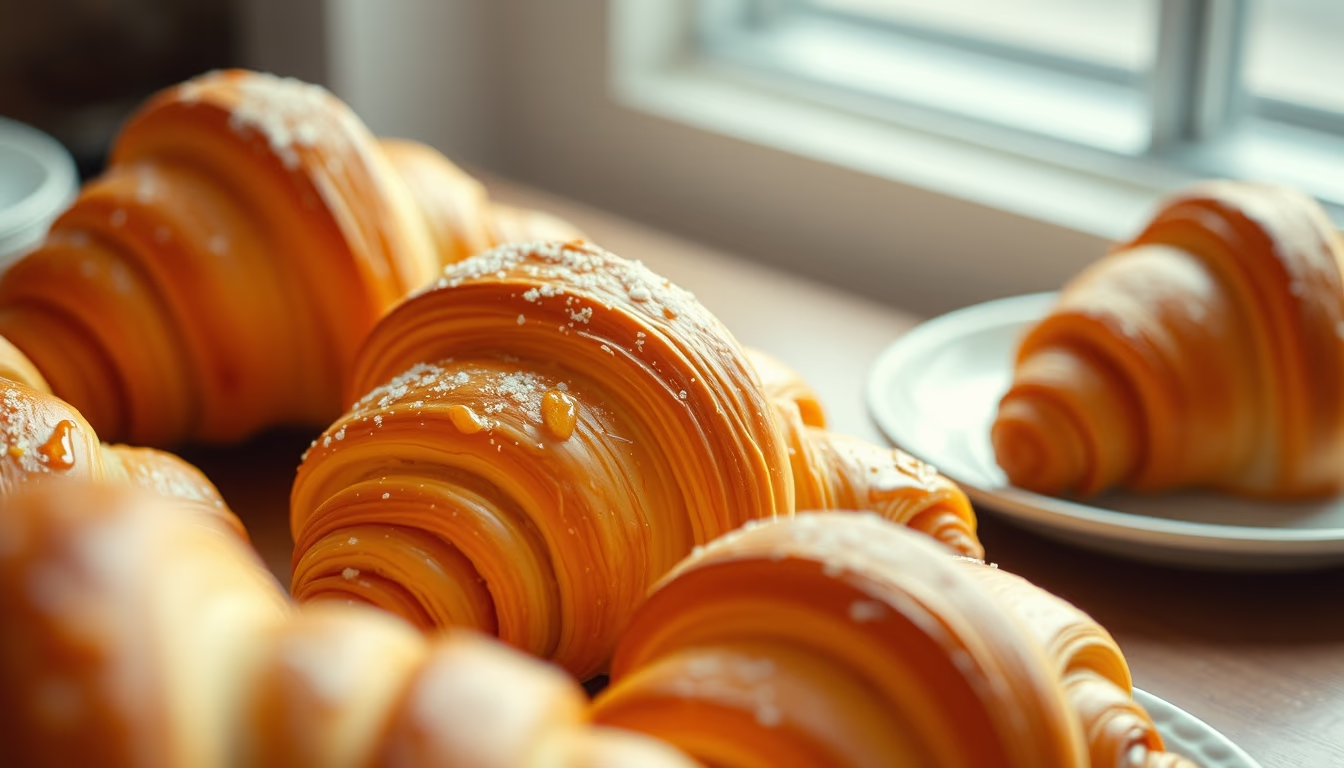
Golden, flaky croissants, a classic of French baking, captivate palates worldwide with their crispy texture and buttery flavor.
About this subject
Despite being associated with France, the croissant actually originates from Austria. The kipferl, a crescent-shaped bread roll, was popular in Vienna during the 13th century. Marie Antoinette is said to have introduced it to France in the 18th century, where Parisian bakers perfected it by replacing the simple dough with a butter-based laminated dough.
Crafting a croissant requires skill and patience. The lamination process involves repeatedly folding and rolling the dough with layers of butter, creating hundreds of thin layers that separate during baking, resulting in an airy, flaky texture. The outcome is croissants that are golden on the outside and soft inside, with a buttery aroma and slight sweetness.
In Brazil, croissants are enjoyed in cafés and bakeries, often filled with ham and cheese or served plain for breakfast. Variations such as pain au chocolat, with chocolate bars, and almond croissant, topped with almond cream, expand the possibilities. The quality of the final product heavily depends on the butter used; artisanal producers favor high-fat butter for optimal texture.
In recent years, the artisan bread movement and conscious consumption trends have highlighted traditional recipes and responsibly sourced ingredients. Croissants made with long fermentation and quality butter stand out in the market, also becoming popular on social media, where lo-fi disposable camera aesthetics emphasize their flaky texture and buttery sheen.
Frequently Asked Questions
What is the origin of the croissant?
The croissant originates from the Austrian kipferl, a crescent-shaped bread roll. It was brought to France by Marie Antoinette and adapted with laminated dough by Parisian bakers.
How is the flaky croissant dough made?
The dough is laminated: layers of butter are placed between dough and folded repeatedly, creating hundreds of thin layers. During baking, water in the butter evaporates, separating the layers and producing the flaky texture.
What is the difference between a croissant and a pain au chocolat?
A croissant is plain or filled, while a pain au chocolat contains chocolate bars in the center. Both use the same laminated dough, but shaping differs: pain au chocolat is rectangular with chocolate rolled inside.
Direct URL
https://pub-c7d6a6ea828543ac903a74a341ccb2e1.r2.dev/imagens/croissants-golden-flaky-lo-fi-disposable-camera-p4.avifHow to credit
Include a visible link back to UtilizAí. Copy one of the snippets below:
<a href="https://xn--utiliza-eza.com/en/midia/imagens/croissants-golden-flaky-lo-fi-disposable-camera-p4">Croissants golden flaky</a> by <a href="https://xn--utiliza-eza.com">UtilizAí</a>, licensed under <a href="https://creativecommons.org/licenses/by/4.0/">CC BY 4.0</a>.
[Croissants golden flaky](https://xn--utiliza-eza.com/en/midia/imagens/croissants-golden-flaky-lo-fi-disposable-camera-p4) by [UtilizAí](https://xn--utiliza-eza.com), CC BY 4.0
License: CC-BY-4.0