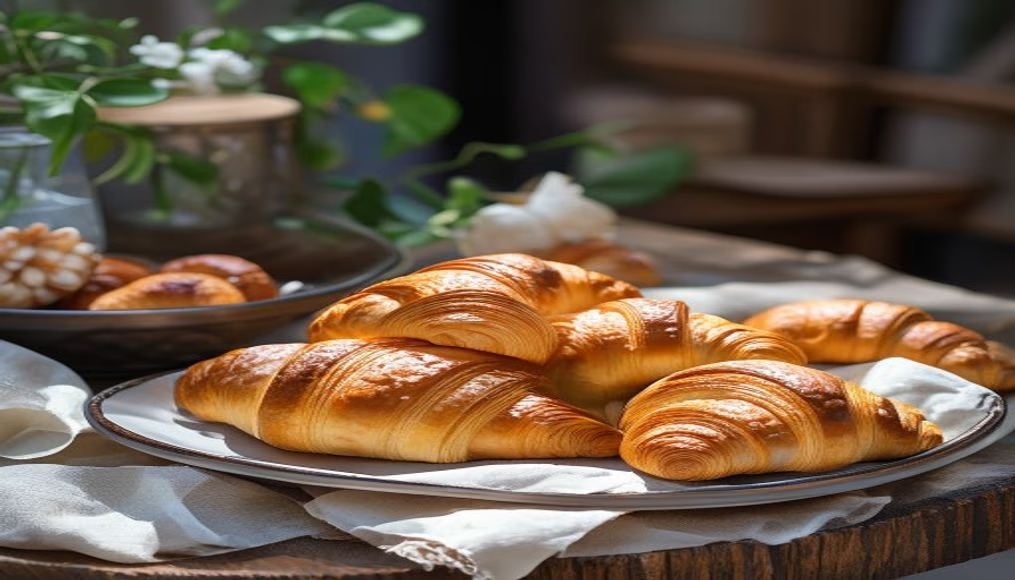
Croissants golden flaky
1344×768 · AVIF · CC BY 4.0
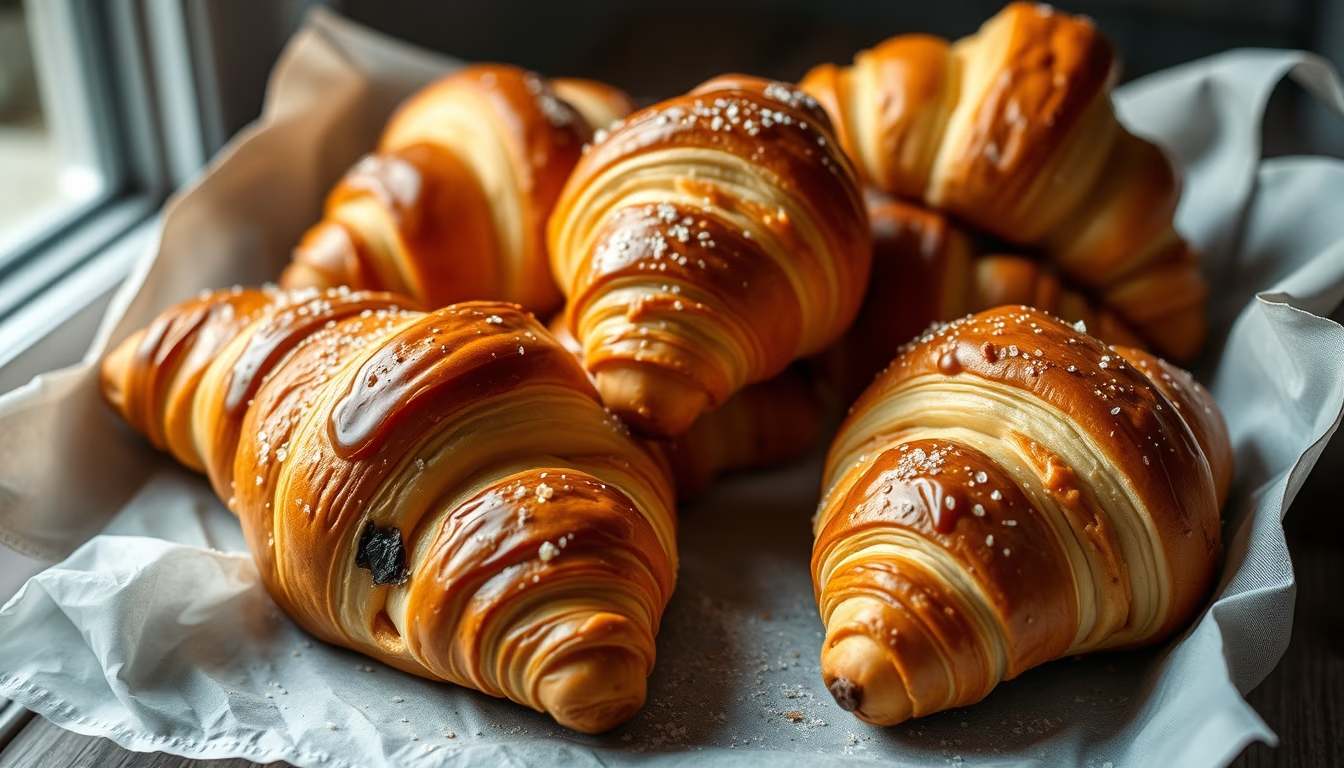
Golden, flaky croissants, a symbol of French bakeries, win over palates worldwide with their texture and flavor.
About this subject
The croissant, despite its strong association with France, has Austrian origins. Its crescent shape recalls the kipferl, a sweet bread in the form of a half-moon that was already consumed in Vienna centuries earlier. The most popular legend claims that the croissant was created in 1683 to celebrate the defeat of the Ottoman Empire, with the shape imitating the crescent moon on the Turkish flag. However, the flaky version we know today was perfected in France from the 19th century onward, when lamination techniques with butter were incorporated into the dough.
Making an artisan croissant requires patience and precision. The dough, enriched with eggs and milk, is repeatedly folded with layers of high-quality butter, creating hundreds of thin sheets. When baked, the water in the butter evaporates, generating steam that separates the layers and produces the airy, crispy texture. Fermentation time and temperature are critical: an under-proofed croissant is dense, while excessive heat melts the butter before baking.
In France, the croissant is mainly eaten at breakfast, plain or with butter and jam. Abroad, it has spawned variations such as those filled with chocolate (pain au chocolat), almonds, ham and cheese, or even savory versions. The global popularity of the croissant has made it an icon of baking, but true excellence is still found in French boulangeries, where tradition and fresh ingredients guarantee authentic flavor.
Interestingly, the croissant only became a symbol of France in the 20th century, driven by industrialization and the spread of French bakeries worldwide. Today, National Croissant Day is celebrated on January 30 in the United States, and France produces about 1.5 billion croissants per year, according to industry estimates.
Frequently Asked Questions
What is the origin of the croissant?
The croissant originates from the Austrian kipferl, a sweet bread shaped like a crescent. The flaky butter version was developed in France from the 19th century, becoming a symbol of French baking.
What is the difference between a croissant and brioche?
A croissant is made from laminated dough, with thin layers of butter between folds, resulting in a flaky and crispy texture. Brioche is a dough enriched with eggs and butter but without lamination, making it softer and airier.
How do you make a flaky croissant?
To make a flaky croissant, you need to prepare an enriched yeast dough and a butter block. The butter is enclosed in the dough, which undergoes a series of folds and chillings. After shaping into triangles and rolling, the croissants are proofed and baked until golden.
Direct URL
https://pub-c7d6a6ea828543ac903a74a341ccb2e1.r2.dev/imagens/croissants-golden-flaky-documentary-photography-p5.avifHow to credit
Include a visible link back to UtilizAí. Copy one of the snippets below:
<a href="https://xn--utiliza-eza.com/en/midia/imagens/croissants-golden-flaky-documentary-photography-p5">Croissants golden flaky</a> by <a href="https://xn--utiliza-eza.com">UtilizAí</a>, licensed under <a href="https://creativecommons.org/licenses/by/4.0/">CC BY 4.0</a>.
[Croissants golden flaky](https://xn--utiliza-eza.com/en/midia/imagens/croissants-golden-flaky-documentary-photography-p5) by [UtilizAí](https://xn--utiliza-eza.com), CC BY 4.0
License: CC-BY-4.0