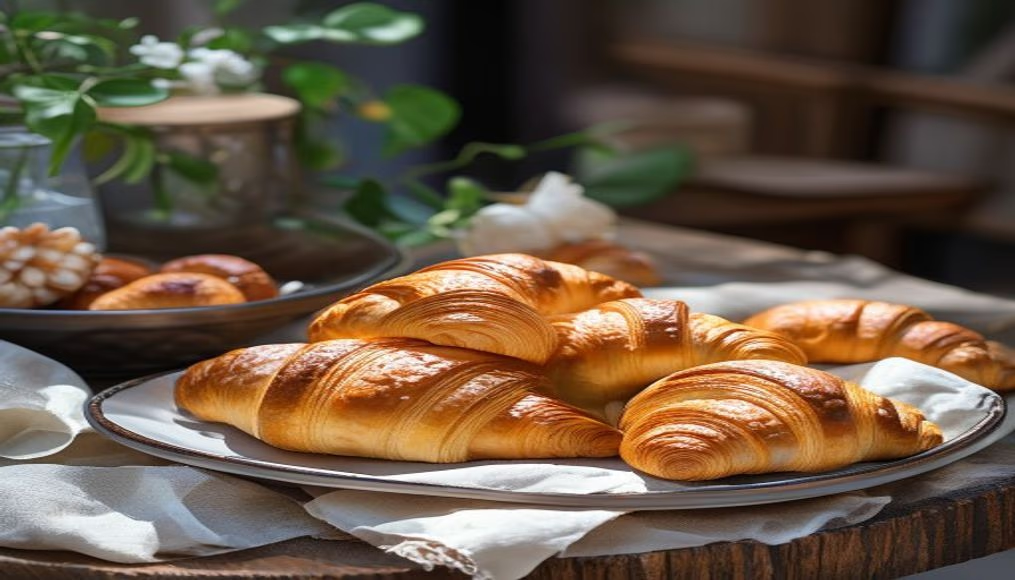
Croissants golden flaky
1344×768 · AVIF · CC BY 4.0
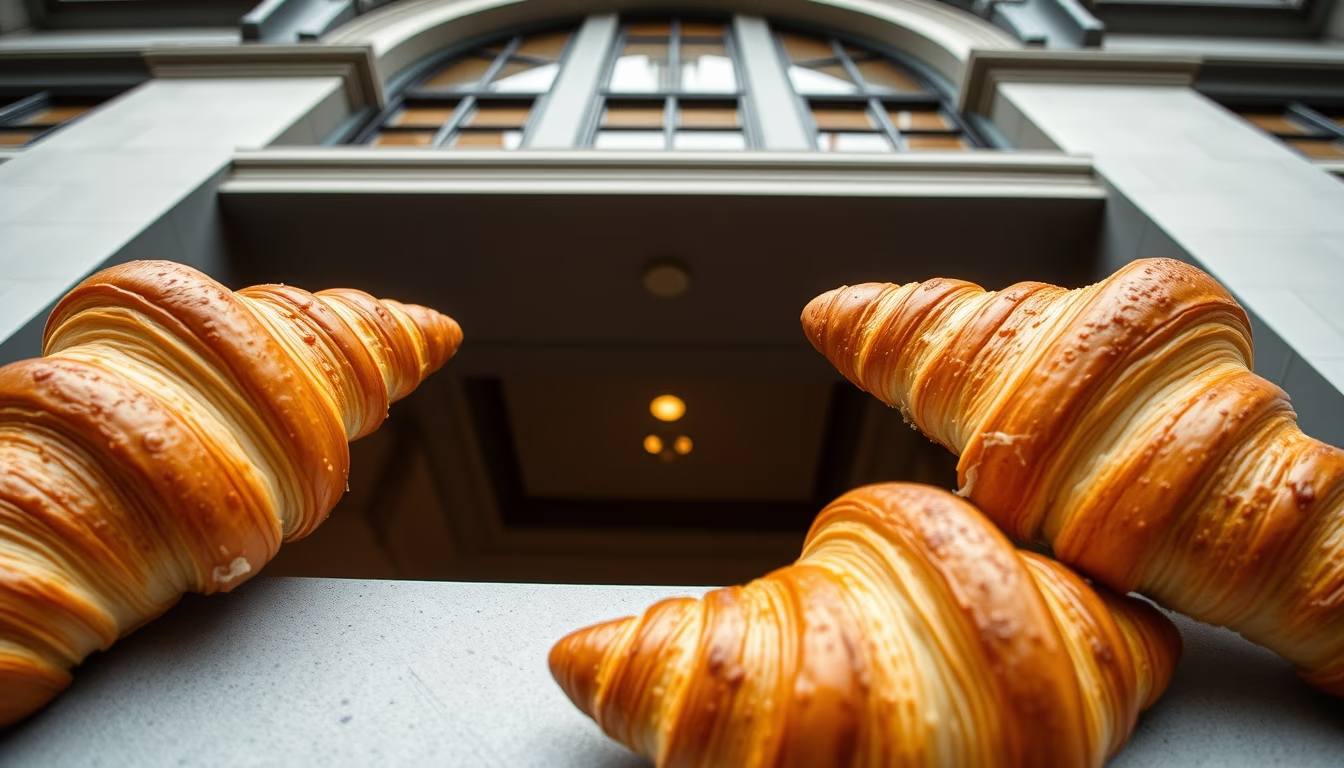
Golden flaky croissant: a classic French pastry that conquered the world, famous for its crispy layers and buttery flavor.
About this subject
The croissant is one of the most recognizable symbols of French pastry, although its origin is often associated with Austria. The modern version, made with laminated yeast dough, was perfected in Paris in the 19th century. The lamination technique, which involves incorporating butter between layers of dough and folding it repeatedly, creates the characteristic texture: crispy on the outside and soft on the inside.
The classic recipe uses wheat flour, water, milk, sugar, salt, yeast, and high-quality butter. The preparation process is long and requires patience: the dough needs to rest between folds to prevent shrinking. The result is a product with dozens of very thin layers that separate during baking, forming an airy structure.
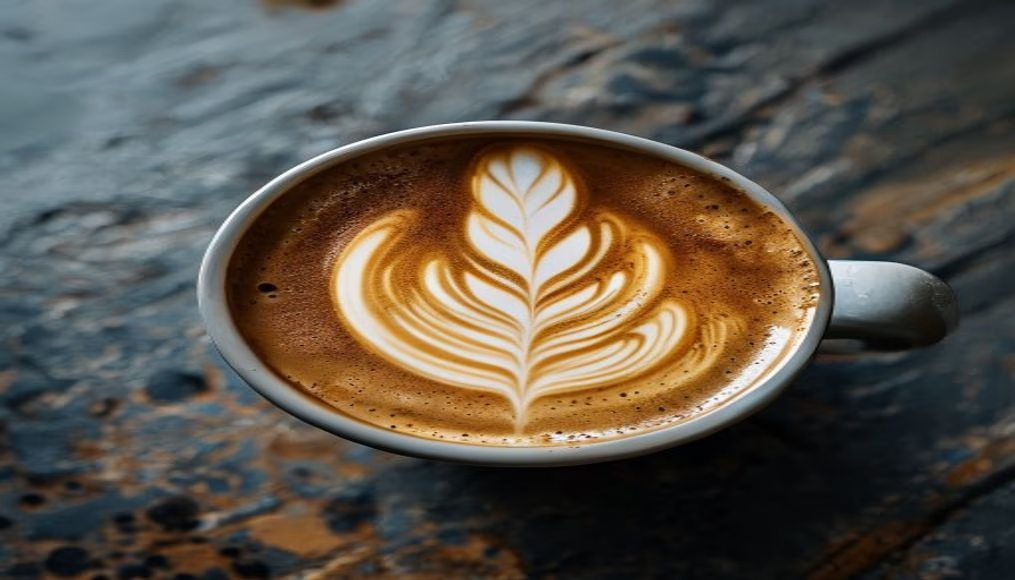
In Brazil, croissants are popular in bakeries and coffee shops, often filled with ham and cheese or served plain with coffee. In France, they are traditionally eaten at breakfast, accompanied by café au lait or hot chocolate. Different countries have created variations: the almond croissant, with almond paste and sliced almonds, is common in France; in the United States, oversized versions with sweet toppings are frequent.
Interestingly, despite the crescent shape that resembles the Turkish flag, there is no historical evidence that the croissant was created to celebrate a French victory over the Ottoman Empire. This is a popular but unsubstantiated legend. What is known is that Marie Antoinette, Archduchess of Austria, supposedly popularized the Austrian kipferl in the French court, which later evolved into the croissant.
Frequently Asked Questions
What is the difference between a croissant and a Brazilian cheese bread?
They are completely different: croissants are made with laminated dough using wheat flour and butter, while Brazilian cheese bread (pão de queijo) is made with cassava starch and cheese.
Can croissants be vegan?
Yes, vegan versions exist that replace butter with vegetable margarine and milk with plant-based milk, but the traditional taste and texture change significantly.
Why are some croissants straight and others curved?
Traditionally, straight croissants (with little curve) indicated they were made with pure butter, while curved ones used margarine or shortening. Today this distinction is no longer a rule.
Direct URL
https://pub-c7d6a6ea828543ac903a74a341ccb2e1.r2.dev/imagens/croissants-golden-flaky-architectural-photography-p2.avifHow to credit
Include a visible link back to UtilizAí. Copy one of the snippets below:
<a href="https://xn--utiliza-eza.com/en/midia/imagens/croissants-golden-flaky-architectural-photography-p2">Croissants golden flaky</a> by <a href="https://xn--utiliza-eza.com">UtilizAí</a>, licensed under <a href="https://creativecommons.org/licenses/by/4.0/">CC BY 4.0</a>.
[Croissants golden flaky](https://xn--utiliza-eza.com/en/midia/imagens/croissants-golden-flaky-architectural-photography-p2) by [UtilizAí](https://xn--utiliza-eza.com), CC BY 4.0
License: CC-BY-4.0