Crispr gene editing concept
1344×768 · AVIF · CC BY 4.0
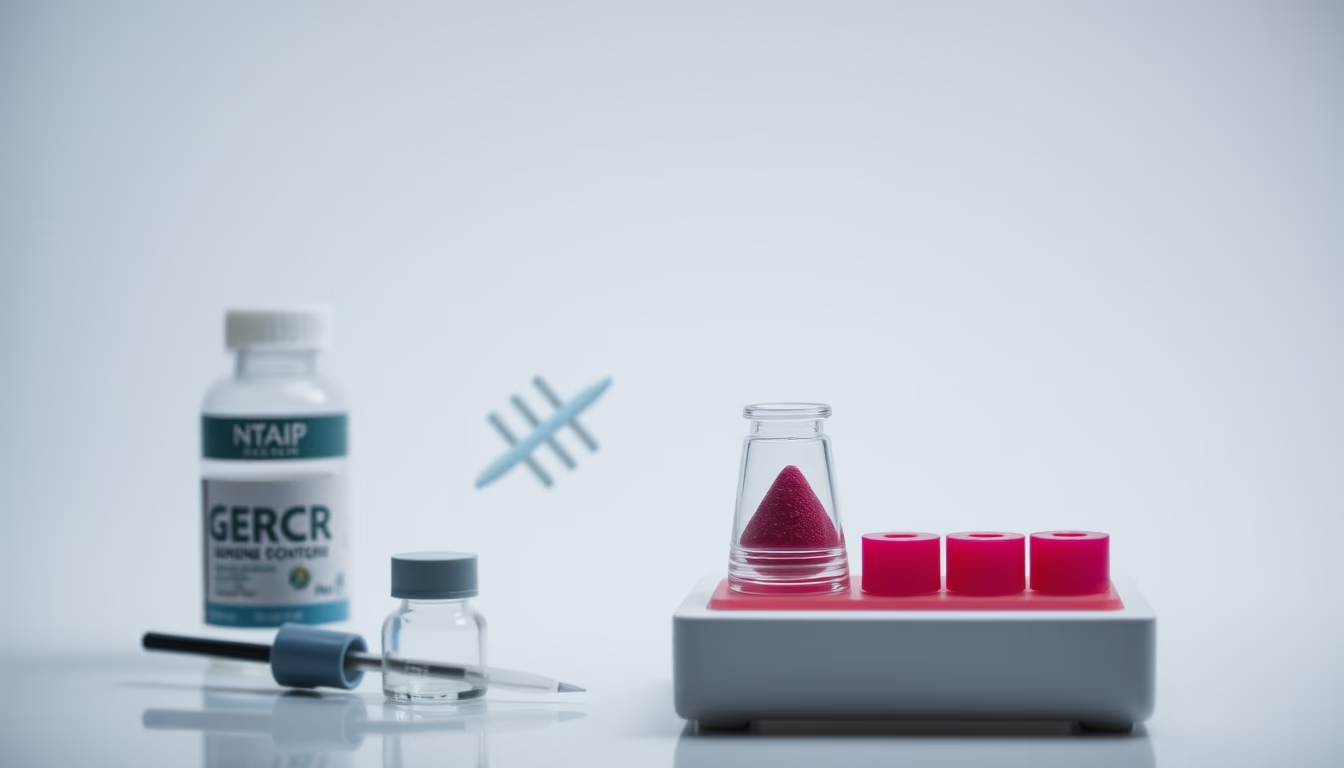
CRISPR is a revolutionary gene-editing tool that allows precise DNA alterations, based on a bacterial defense system discovered in 2012.
About this subject
CRISPR (Clustered Regularly Interspaced Short Palindromic Repeats) is a gene-editing technology inspired by the bacterial immune system. Discovered by Jennifer Doudna and Emmanuelle Charpentier, who won the Nobel Prize in Chemistry in 2020, the system uses the Cas9 protein and a guide RNA to cut DNA at specific locations. This mechanism allows for the insertion, removal, or modification of genes with unprecedented precision.
In practice, CRISPR is applied in basic research to understand genetic functions, in agriculture to create crops resistant to pests and drought, and in medicine to develop therapies for genetic diseases such as sickle cell disease and cystic fibrosis. In 2023, the United Kingdom approved the first CRISPR-based therapy for sickle cell disease and beta-thalassemia, marking a global regulatory milestone.
The use of CRISPR raises significant ethical debates, especially when applied to human germline cells, which can pass alterations to future generations. The 2018 case in which Chinese scientist He Jiankui claimed to have edited human embryos to make them resistant to HIV sparked international condemnation and highlighted the need for clear regulations. Currently, germline editing is banned in most countries, while somatic editing (non-heritable) progresses in clinical trials.
The future of CRISPR includes more precise versions such as base editing (single-base changes) and prime editing (edits without DNA breaks), which reduce the risk of unintended mutations. Research is also exploring its use in treating cancer, neurodegenerative diseases, and even modifying microorganisms for bioremediation. The technology continues to evolve rapidly, promising to transform biology and medicine in the coming decades.
Frequently Asked Questions
Can CRISPR cure genetic diseases?
Yes, CRISPR has the potential to treat genetic diseases by correcting DNA mutations. CRISPR-based therapies have already been approved for sickle cell disease and beta-thalassemia, and clinical trials are ongoing for other conditions such as cystic fibrosis and muscular dystrophy.
What are the ethical risks of CRISPR?
The main ethical risks include editing human germline cells (affecting offspring), the possibility of unintended off-target mutations, and inequality of access to therapies. The scientific community advocates for strict regulation to prevent non-consensual uses.
How is CRISPR used in agriculture?
In agriculture, CRISPR is used to improve crops, such as making plants more resistant to diseases, pests, and adverse weather conditions. Examples include tomatoes with longer shelf life, soybeans with healthier oil, and mushrooms that do not brown.
Direct URL
https://pub-c7d6a6ea828543ac903a74a341ccb2e1.r2.dev/imagens/crispr-gene-editing-concept-studio-still-life-p4.avifHow to credit
Include a visible link back to UtilizAí. Copy one of the snippets below:
<a href="https://xn--utiliza-eza.com/en/midia/imagens/crispr-gene-editing-concept-studio-still-life-p4">Crispr gene editing concept</a> by <a href="https://xn--utiliza-eza.com">UtilizAí</a>, licensed under <a href="https://creativecommons.org/licenses/by/4.0/">CC BY 4.0</a>.
[Crispr gene editing concept](https://xn--utiliza-eza.com/en/midia/imagens/crispr-gene-editing-concept-studio-still-life-p4) by [UtilizAí](https://xn--utiliza-eza.com), CC BY 4.0
License: CC-BY-4.0