Crispr gene editing concept
1344×768 · AVIF · CC BY 4.0
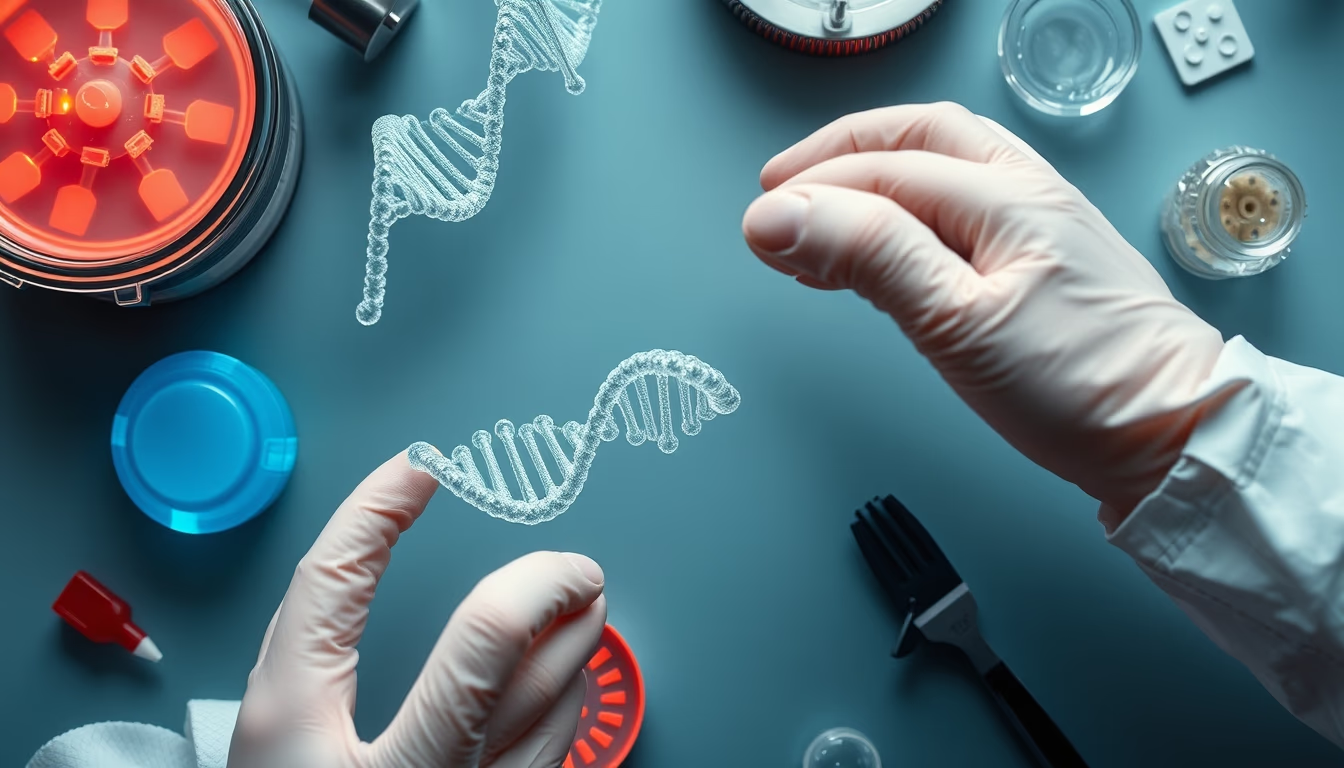
CRISPR-Cas9 is a gene-editing technology that allows precise DNA alterations, revolutionizing molecular biology and medicine.
About this subject
CRISPR-Cas9 stands for Clustered Regularly Interspaced Short Palindromic Repeats and Cas9 protein, a gene-editing tool inspired by a bacterial defense mechanism. Discovered by researchers such as Jennifer Doudna and Emmanuelle Charpentier, who won the Nobel Prize in Chemistry in 2020, the system allows cutting DNA at specific sites to add, remove, or modify genes. Unlike older techniques like zinc fingers or TALENs, CRISPR is faster, cheaper, and easier to use, democratizing access to genetic engineering.
Applications of CRISPR range from agriculture, creating crops resistant to pests and harsh climates, to medicine, where it is being tested for genetic diseases such as sickle cell anemia, beta-thalassemia, and certain cancers. In 2023, the first CRISPR-based therapy, Casgevy, was approved for sickle cell disease in the UK and US, marking a historic milestone. However, technical challenges like off-target effects (unintended cuts) and ethical concerns, especially regarding germline editing in humans, remain under debate.
In Brazil, CRISPR research advances at institutions such as USP and Fiocruz, focusing on transgenic plants, gene therapy, and combating tropical diseases. One example is the development of genetically modified Aedes aegypti mosquitoes to reduce dengue and zika transmission. The technique is also used in diagnostic labs, like the SHERLOCK test, which rapidly and cheaply detects pathogen RNA such as SARS-CoV-2. Despite its potential, regulation is still nascent, and Brazil discusses legal frameworks for therapeutic and agricultural uses.
Interestingly, the name CRISPR was proposed in 2002 by Dutch microbiologist Ruud Jansen, describing palindromic repeats in bacterial DNA. The system functions as an adaptive immune system: bacteria store fragments of invader virus DNA and, upon re-infection, use guide RNA to cut viral DNA. The versatility of CRISPR has inspired variants like CRISPRi (interference) and CRISPRa (activation), which modulate gene expression without cutting DNA, expanding research possibilities.
Frequently Asked Questions
What is CRISPR-Cas9?
CRISPR-Cas9 is a gene-editing technology that allows precise DNA modifications using a Cas9 protein guided by RNA to the target sequence. It is inspired by a bacterial defense mechanism.
What are the medical applications of CRISPR?
CRISPR is used to treat genetic diseases such as sickle cell anemia, beta-thalassemia, and some cancers. It is also being tested for infectious diseases, liver disorders, and hereditary blindness.
Is CRISPR safe for human use?
There are concerns about off-target effects (cuts in wrong places) and germline editing. Current treatments undergo rigorous clinical trials and regulations to ensure safety.
Direct URL
https://pub-c7d6a6ea828543ac903a74a341ccb2e1.r2.dev/imagens/crispr-gene-editing-concept-isometric-flat-lay-p6.avifHow to credit
Include a visible link back to UtilizAí. Copy one of the snippets below:
<a href="https://xn--utiliza-eza.com/en/midia/imagens/crispr-gene-editing-concept-isometric-flat-lay-p6">Crispr gene editing concept</a> by <a href="https://xn--utiliza-eza.com">UtilizAí</a>, licensed under <a href="https://creativecommons.org/licenses/by/4.0/">CC BY 4.0</a>.
[Crispr gene editing concept](https://xn--utiliza-eza.com/en/midia/imagens/crispr-gene-editing-concept-isometric-flat-lay-p6) by [UtilizAí](https://xn--utiliza-eza.com), CC BY 4.0
License: CC-BY-4.0