Colosseum rome interior
1344×768 · AVIF · CC BY 4.0
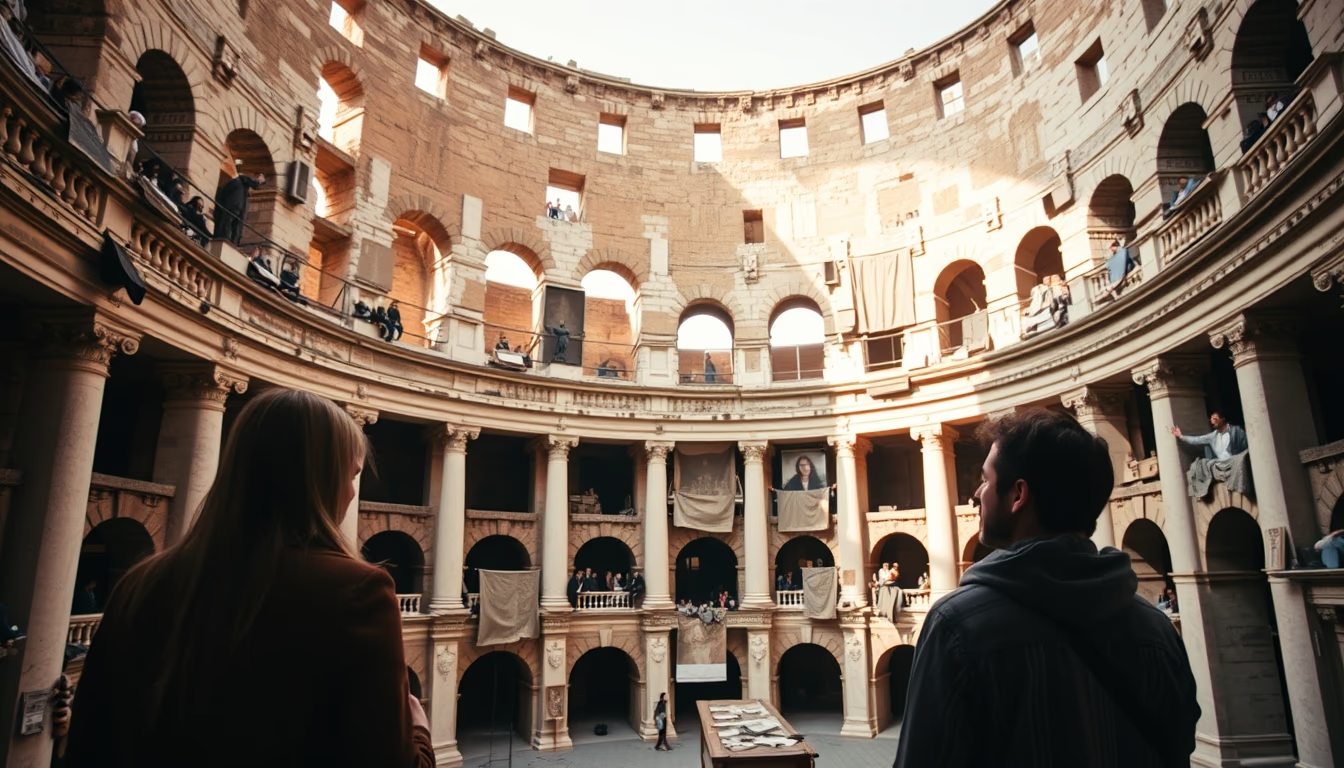
The interior of the Colosseum in Rome reveals the grandeur of Roman engineering, an amphitheater that held up to 50,000 spectators for gladiator bouts and animal hunts.
About this subject
The Colosseum, also known as the Flavian Amphitheatre, is the largest amphitheater ever built in the Roman Empire. Construction began between 70 and 72 AD under Emperor Vespasian and was completed in 80 AD by Titus. Located in the center of Rome, the amphitheater measured 188 meters long, 156 meters wide, and 48 meters high. The central arena (hypogeum) was an underground complex with cells, ramps, and trapdoors that allowed gladiators and animals to enter. An architectural innovation was the velarium, a giant retractable awning supported by ropes and pulleys that protected the audience from sun and rain.
Spectacles at the Colosseum included gladiatorial combats (munera), animal hunts (venationes), and mock naval battles (naumachiae), the latter made possible by a system to flood the arena. The estimated capacity was 50,000 to 70,000 spectators, organized by social class: the podium (senators), the maeniana (knights and plebeians), and the upper tier (women and slaves). Admission was free, and the games were sponsored by the emperor to legitimize his power.
After the fall of the Roman Empire, the Colosseum suffered centuries of neglect. Earthquakes and stone plundering for other buildings reduced its original structure. In the 18th century, it was declared a sacred site in memory of Christian martyrs (though there is no solid historical evidence). Today, it is one of the most visited monuments in the world, a symbol of Rome and ancient engineering. Its current condition requires constant restoration; the most recent, completed in 2016, cleaned the facades and reinforced the arches.
Trivia: the name "Colosseum" derives from a colossal statue of Nero nearby, the Colossus. The 80 rows of numbered seats are an ancestor of modern stadiums. The structure had 76 exits (vomitoria) that allowed emptying the venue in minutes. In 2007, it was elected one of the New Seven Wonders of the World.
Frequently Asked Questions
How many spectators could the Colosseum hold?
It is estimated that the Colosseum had a capacity of 50,000 to 70,000 people, organized by social class.
What happened in the basement of the Colosseum?
The hypogeum was an underground complex with cells and ramps for gladiators and animals, plus trapdoors that allowed dramatic appearances in the arena.
Why is the Colosseum partially ruined?
After the fall of Rome, the Colosseum suffered damage from earthquakes and was used as a quarry for building palaces and churches, reducing its original structure.
Direct URL
https://pub-c7d6a6ea828543ac903a74a341ccb2e1.r2.dev/imagens/colosseum-rome-interior-documentary-photography-p10.avifHow to credit
Include a visible link back to UtilizAí. Copy one of the snippets below:
<a href="https://xn--utiliza-eza.com/en/midia/imagens/colosseum-rome-interior-documentary-photography-p10">Colosseum rome interior</a> by <a href="https://xn--utiliza-eza.com">UtilizAí</a>, licensed under <a href="https://creativecommons.org/licenses/by/4.0/">CC BY 4.0</a>.
[Colosseum rome interior](https://xn--utiliza-eza.com/en/midia/imagens/colosseum-rome-interior-documentary-photography-p10) by [UtilizAí](https://xn--utiliza-eza.com), CC BY 4.0
License: CC-BY-4.0