Clinical trial vials
1344×768 · AVIF · CC BY 4.0
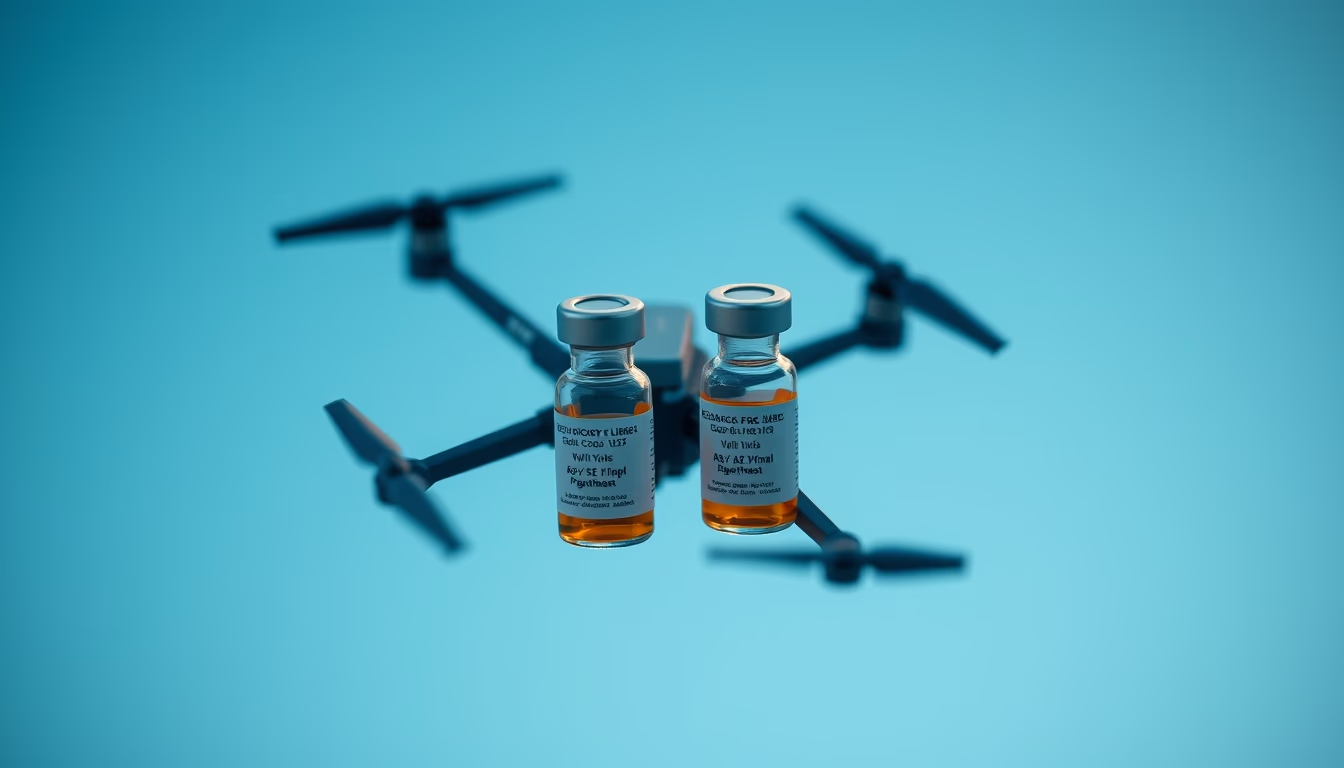
Glass vials used in clinical trials store experimental drugs and biological samples under controlled conditions.
About this subject
Clinical trial vials are specialized glass or plastic containers that hold everything from early-stage investigational compounds to blood, urine, or tissue samples. They are designed to ensure sterility and stability, often made from Type I borosilicate glass for its chemical and thermal resistance. Material choice depends on drug sensitivity; for instance, photosensitive substances require amber glass to block UV radiation.
Accurate labeling is critical in clinical studies, as each vial receives a unique traceability code, usually in barcode or QR format, linked to the patient and drug batch. Storage conditions directly impact efficacy: most require strict temperature control between 2°C and 8°C, with continuous monitoring. Lyophilized (powder) vials require reconstitution with sterile diluent before administration.
In the United States, the FDA mandates that vials comply with Good Manufacturing Practices (GMP), including integrity, endotoxin, and sterility testing. Individual serialization, required in many countries, enables tracking each vial from production to disposal, preventing counterfeits. Current trends include pre-filled syringe-integrated vials and smart vials with sensors that monitor temperature and light exposure in real time.
Frequently Asked Questions
What is the difference between Type I and Type II glass vials?
Type I (borosilicate) glass is the most inert and resistant to thermal shock, ideal for sensitive drugs. Type II (treated soda-lime) has lower chemical resistance and is used for less reactive substances, but both are acceptable in clinical trials if validated.
How are clinical trial vials sterilized?
Common methods include autoclaving (steam at 121°C), gamma radiation, or ethylene oxide. The choice depends on the vial material and compatibility with the contents. Terminal sterilization is preferred whenever possible.
Why are some clinical trial vials different colors?
Glass color (amber, green, clear) protects the contents from light. Amber vials block UV and low-frequency visible rays, while clear vials are used for light-stable drugs or to facilitate visual inspection.
Direct URL
https://pub-c7d6a6ea828543ac903a74a341ccb2e1.r2.dev/imagens/clinical-trial-vials-aerial-drone-shot-p1.avifHow to credit
Include a visible link back to UtilizAí. Copy one of the snippets below:
<a href="https://xn--utiliza-eza.com/en/midia/imagens/clinical-trial-vials-aerial-drone-shot-p1">Clinical trial vials</a> by <a href="https://xn--utiliza-eza.com">UtilizAí</a>, licensed under <a href="https://creativecommons.org/licenses/by/4.0/">CC BY 4.0</a>.
[Clinical trial vials](https://xn--utiliza-eza.com/en/midia/imagens/clinical-trial-vials-aerial-drone-shot-p1) by [UtilizAí](https://xn--utiliza-eza.com), CC BY 4.0
License: CC-BY-4.0