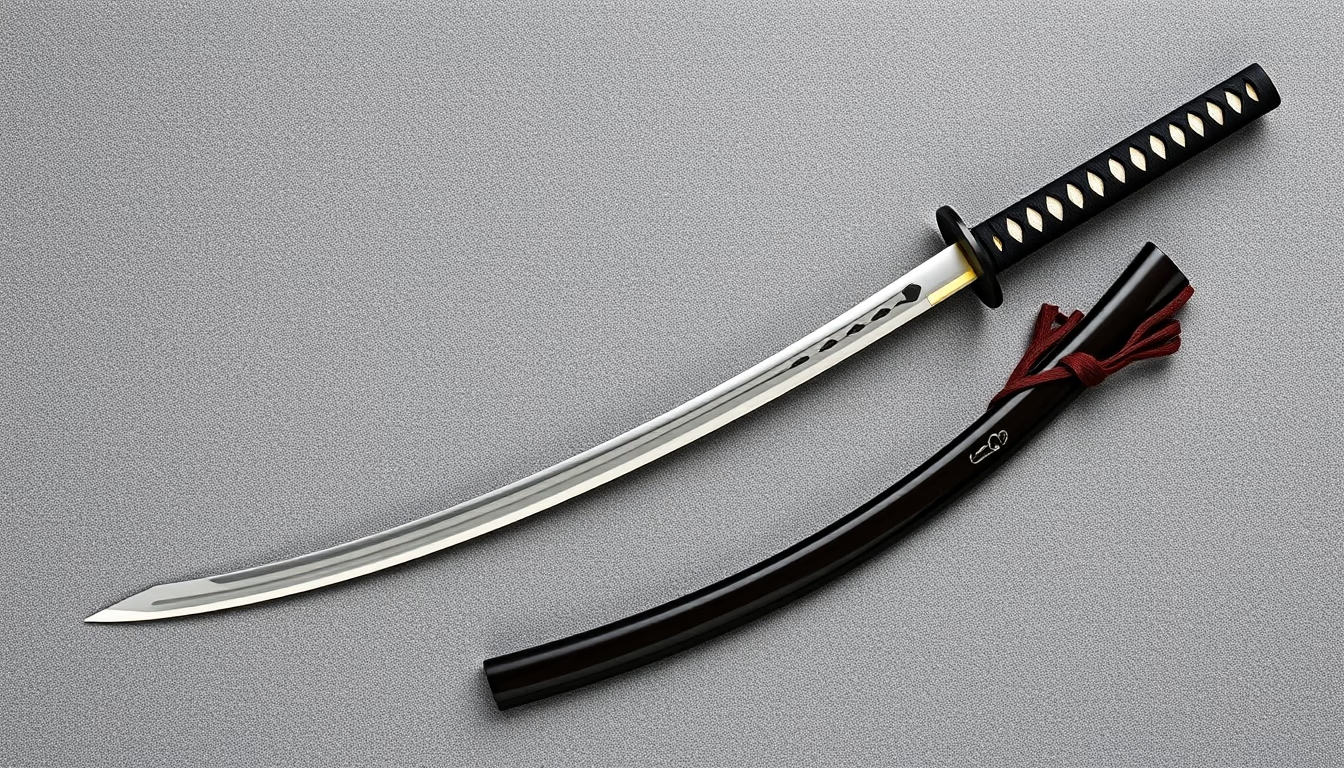
Claymore scottish
1344×768 · AVIF · CC BY 4.0

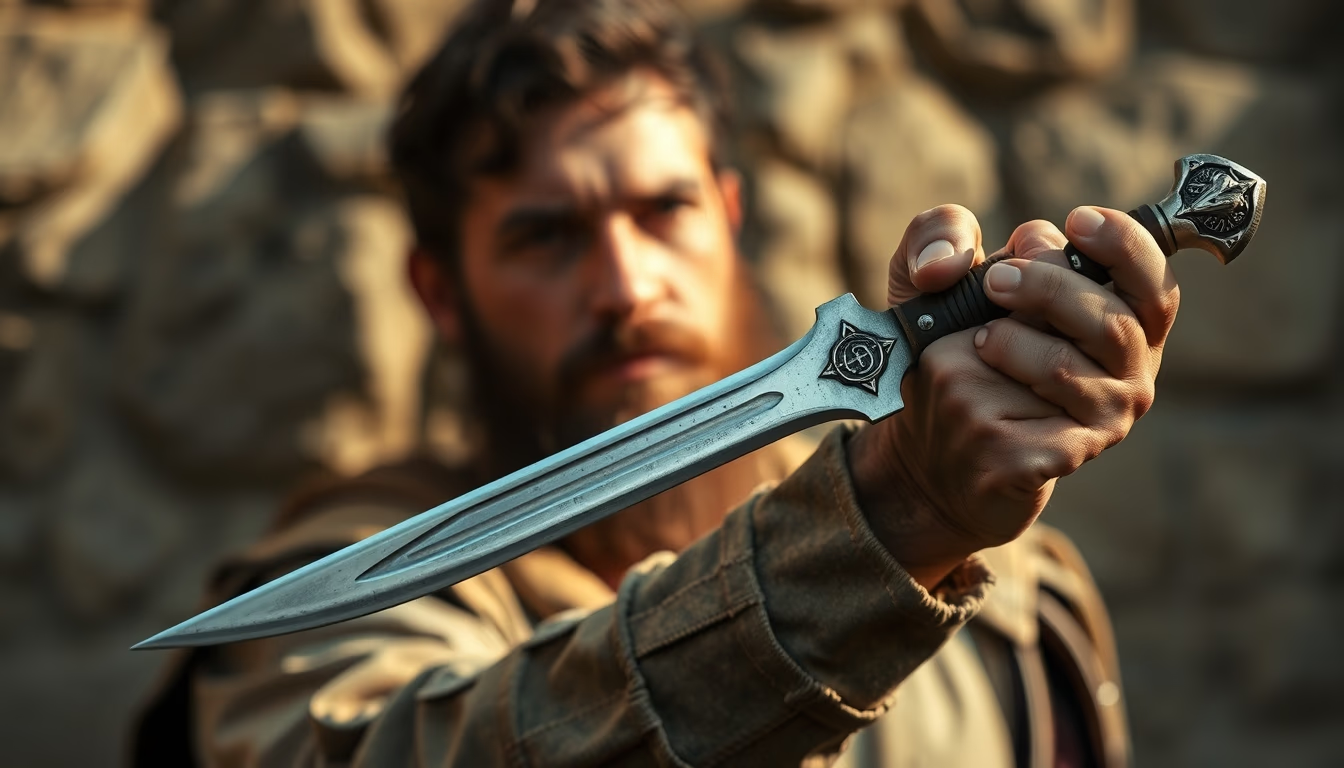
The claymore is a two-handed greatsword used by Scottish warriors from the 15th to 17th centuries, symbolizing bravery and resistance.
About this subject
The claymore, from Scottish Gaelic "claidheamh mòr" meaning "great sword", is one of Scotland's most iconic weapons. It stood out for its imposing size, with a blade that could reach up to 1.2 meters in length, and a long hilt designed for two-handed use. It was primarily wielded by highlanders, warriors from the Scottish Highlands, in battles such as Culloden (1746), though its peak usage was between the 15th and 17th centuries. The sword featured a cruciform guard, often with arms bent forward, and a pommel shaped like a disc or fleur-de-lis.
Historically, the claymore was more than a weapon: it represented status and lineage. Clan chiefs and elite warriors carried it as a symbol of power. Unlike continental longswords, the claymore was relatively light for its size, weighing between 2.5 and 3.5 kilograms, allowing for quick, sweeping strikes. Its blade, typically made of carbon steel, was sharpened on both sides and designed to efficiently cut through both flesh and the woolen garments of enemies.
Crafting a claymore was an art. Scottish smiths, often working in rural forges, used differential hardening techniques to give hardness to the edge and flexibility to the blade's body. Some swords displayed decorative patterns in the steel, like "damascus style", though this was rare. With the advent of firearms, the claymore lost its place on the battlefield but remained as a ceremonial piece and cultural heritage. Today, authentic replicas can be found in Scottish museums, such as the National Museum of Scotland in Edinburgh, and in private collections worldwide.
Interestingly, the claymore influenced popular culture, appearing in films like "Braveheart" (1995) and video games like "Assassin's Creed". Although cinematic portrayals are not always historically accurate, the sword continues to be an emblem of Scottish identity, associated with the independence and bravery of clans who fought against English domination.
Frequently Asked Questions
What is the difference between a claymore and a common longsword?
The main difference lies in size and use. The claymore is a large two-handed sword with a blade up to 1.2 m and a long hilt, while the traditional longsword can be used with one or two hands and has a shorter blade. Additionally, the claymore has a characteristic guard with arms bent forward.
In which famous battles was the claymore used?
The claymore was used in several battles involving Scottish clans, such as the Battle of Stirling Bridge (1297) and the Battle of Bannockburn (1314), though its most prominent use was between the 15th and 17th centuries. It was also wielded at the Battle of Culloden (1746), the last pitched battle on British soil.
Where can I see an authentic claymore today?
Museums in Scotland, such as the National Museum of Scotland in Edinburgh and the Stirling War Museum, display original claymores. Some pieces are also in private collections and traveling exhibitions worldwide. Modern replicas can be purchased from specialized historical arms dealers.
Direct URL
https://pub-c7d6a6ea828543ac903a74a341ccb2e1.r2.dev/imagens/claymore-scottish-long-exposure-fresh14.avifHow to credit
Include a visible link back to UtilizAí. Copy one of the snippets below:
<a href="https://xn--utiliza-eza.com/en/midia/imagens/claymore-scottish-long-exposure-fresh14">Claymore scottish</a> by <a href="https://xn--utiliza-eza.com">UtilizAí</a>, licensed under <a href="https://creativecommons.org/licenses/by/4.0/">CC BY 4.0</a>.
[Claymore scottish](https://xn--utiliza-eza.com/en/midia/imagens/claymore-scottish-long-exposure-fresh14) by [UtilizAí](https://xn--utiliza-eza.com), CC BY 4.0
License: CC-BY-4.0