Claymore scottish
1344×768 · AVIF · CC BY 4.0

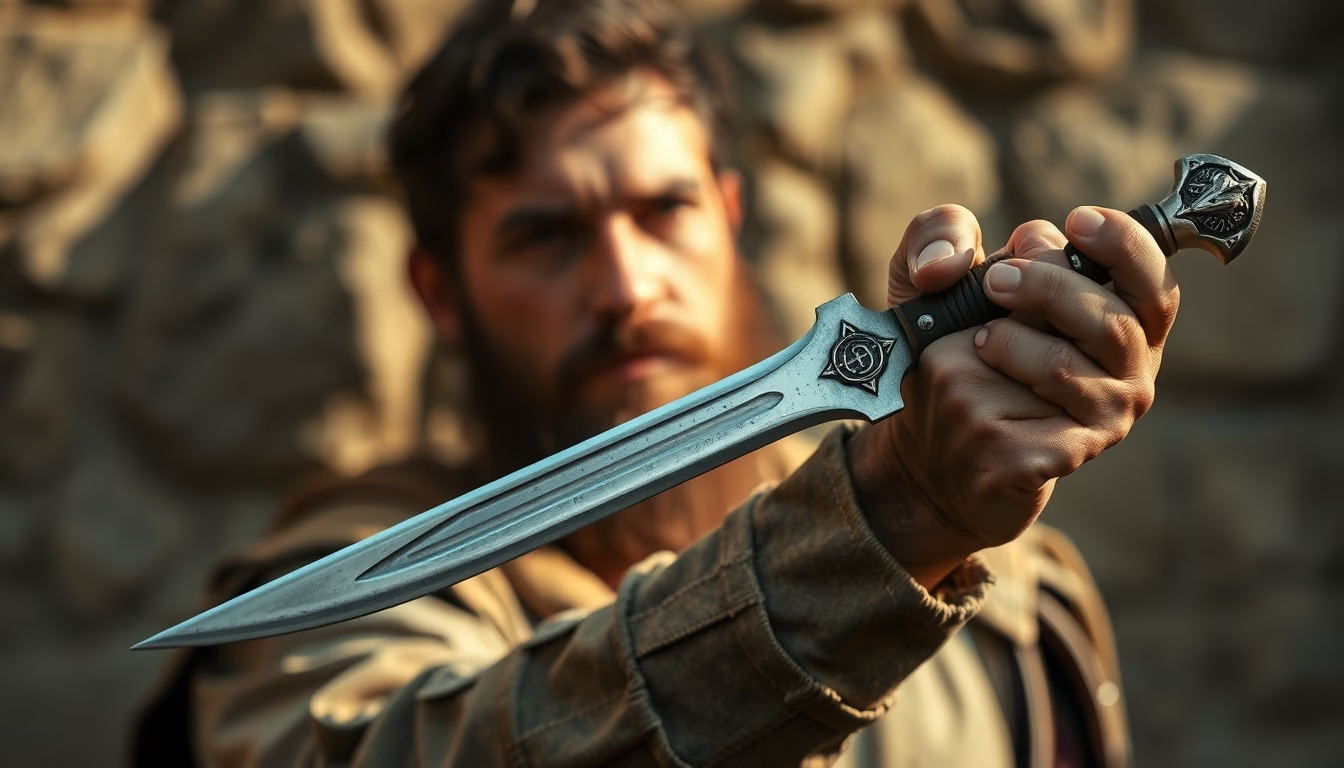
The Scottish claymore, a symbol of Highland bravery, is a broad-bladed sword used between the 15th and 17th centuries.
About this subject
The claymore, from the Gaelic 'claidheamh mòr' meaning 'great sword', is one of the most iconic weapons of Scotland. Its distinctive design features a broad blade approximately 100 to 120 centimeters in length, with a long hilt that allowed for two-handed use. The guard, usually cross-shaped, had arms angled forward forming an arc that protected the wielder's hand. This structure was ideal for close combat, especially in battles between Scottish clans.
Historically, the claymore was widely used between the 15th and early 17th centuries, a period marked by internal conflicts in Scotland and wars against England. Unlike European longswords, the claymore was more robust and heavier, requiring strength and skill to wield. The long hilt enabled powerful strikes, while the broad blade caused deep wounds. On the battlefield, it was a feared weapon, capable of breaking enemy spears and unseating horsemen.
Culturally, the claymore transcended its martial function to become a symbol of Scottish nationalism and Highland resistance. After the prohibition of traditional weapons following the Battle of Culloden in 1746, the claymore came to represent the fight for independence and Scottish cultural identity. Today, it is often associated with historical figures like William Wallace and Robert the Bruce, although the swords they used differed from the classic claymore model.
A verifiable curiosity is that the claymore was not a common weapon among all Scots; its use was restricted to trained warriors, often members of the nobility or clan leaders. The sword's weight, which could reach 2.5 kg, required intensive training. Additionally, the combat technique with the claymore influenced the development of other Scottish weapons, such as the hand-and-a-half sword. Currently, replicas of the claymore are used in historical reenactments and cultural exhibitions, keeping the memory of this important artifact alive.
Frequently Asked Questions
What is a Scottish claymore?
A claymore is a large two-handed sword from Scotland, used between the 15th and 17th centuries. Its name comes from the Gaelic 'claidheamh mòr', meaning 'great sword'.
How was the claymore used in battle?
It was wielded with both hands, allowing powerful slashing and thrusting blows. Its broad blade and heavy weight made it effective against spears and cavalry.
What is the cultural significance of the claymore today?
The claymore is a symbol of Scottish nationalism and Highland resistance. Replicas are used in historical reenactments and films, representing Scottish identity.
Direct URL
https://pub-c7d6a6ea828543ac903a74a341ccb2e1.r2.dev/imagens/claymore-scottish-lo-fi-disposable-camera-fresh12.avifHow to credit
Include a visible link back to UtilizAí. Copy one of the snippets below:
<a href="https://xn--utiliza-eza.com/en/midia/imagens/claymore-scottish-lo-fi-disposable-camera-fresh12">Claymore scottish</a> by <a href="https://xn--utiliza-eza.com">UtilizAí</a>, licensed under <a href="https://creativecommons.org/licenses/by/4.0/">CC BY 4.0</a>.
[Claymore scottish](https://xn--utiliza-eza.com/en/midia/imagens/claymore-scottish-lo-fi-disposable-camera-fresh12) by [UtilizAí](https://xn--utiliza-eza.com), CC BY 4.0
License: CC-BY-4.0