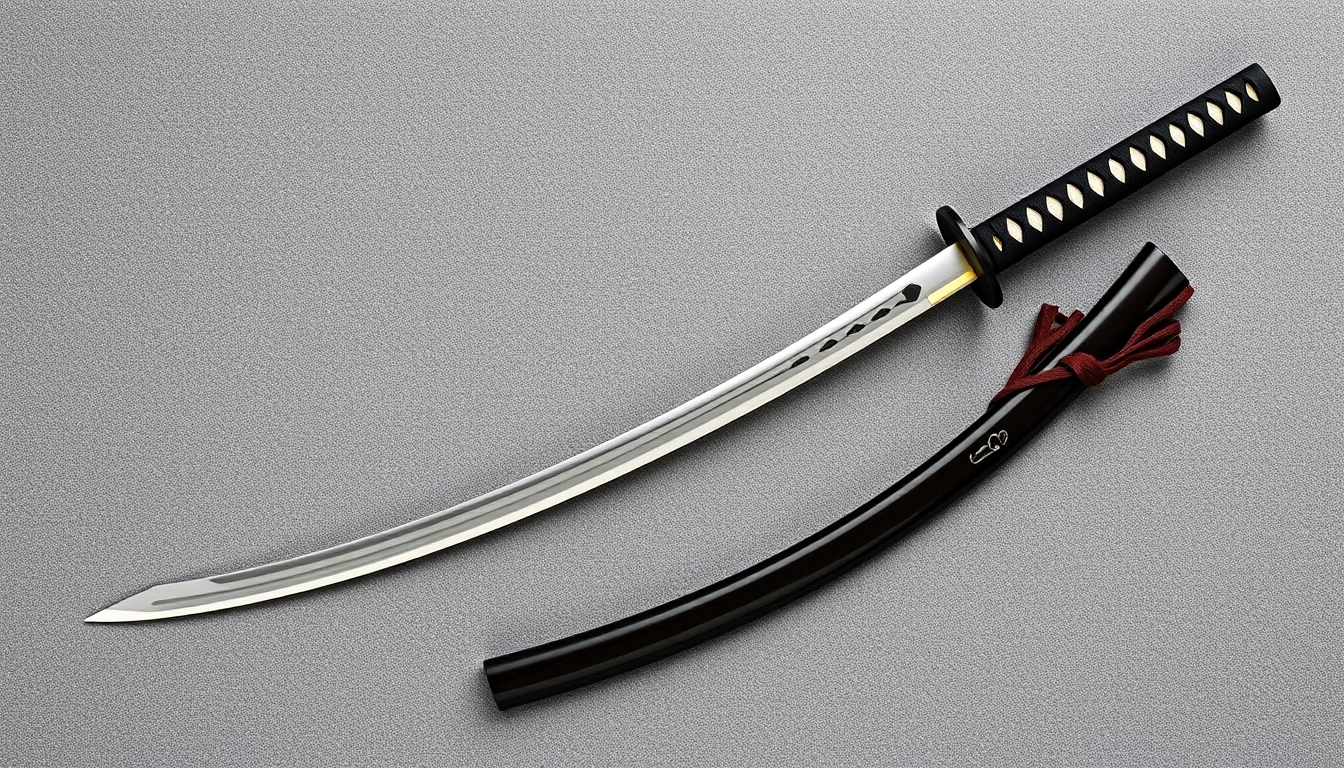
Claymore scottish
1344×768 · AVIF · CC BY 4.0
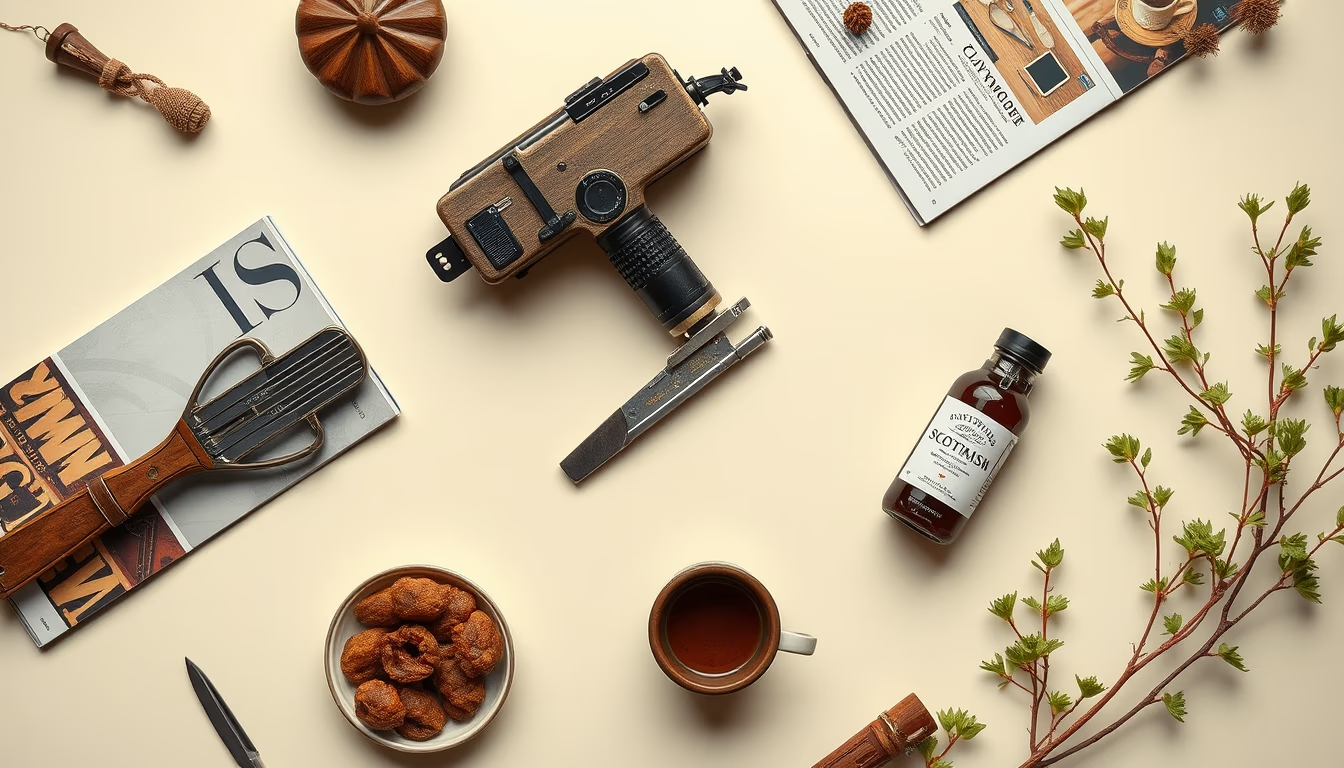
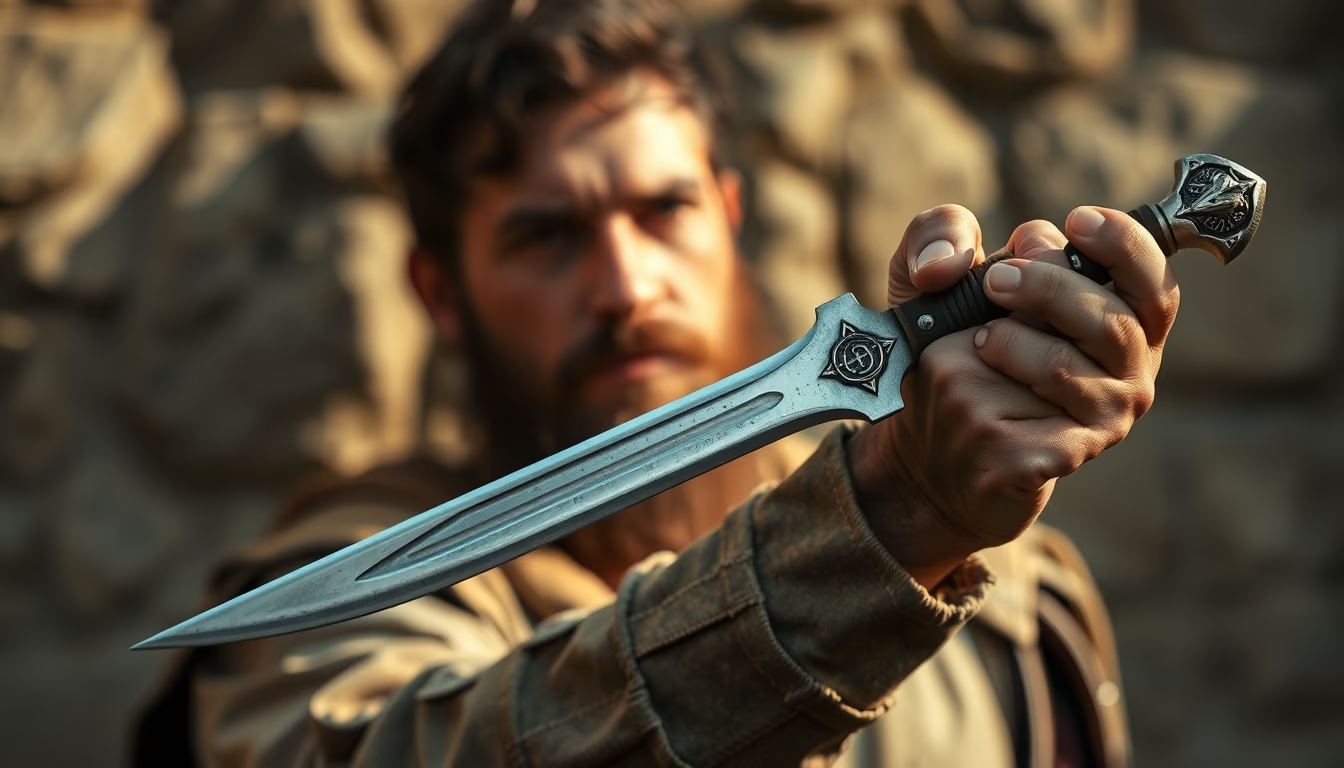
The Scottish claymore is a two-handed sword used in the Highlands of Scotland between the 15th and 17th centuries, a symbol of strength and independence.
About this subject
The Scottish claymore, from the Gaelic claidheamh mòr (great sword), is one of the most iconic weapons in Scottish history. Unlike typical medieval longswords, the claymore had a broad, straight blade about 90 to 100 centimeters long and a grip designed for two-handed use. Its distinctive crossguard, angled forward, could be used to trap an opponent's blade or as a striking weapon. Crafted by skilled blacksmiths in the Highlands, the claymore was made of high-quality steel, often decorated with Celtic patterns.
Historically, the claymore was used by Scottish clans in battles such as Culloden (1746) and during the Scottish Wars of Independence against England. Unlike sabers or scimitars, the claymore was a thrusting and cutting weapon, effective against plate armor and chain mail. Scottish warriors called highlanders wielded it with great skill, using its strength and reach to break enemy formations. With the advent of firearms, the claymore lost tactical utility but never disappeared completely, preserved as a cultural heritage.
Culturally, the claymore transcended the battlefield to become an icon of Scottish identity. It is often associated with historical figures like William Wallace, though the swords of his time were different. In ceremonies and films, the claymore appears as a symbol of courage and resistance. Many original blades are today in museums in Scotland, such as the National Museum of Scotland in Edinburgh, where experts study their metallurgy and design. The claymore has also inspired modern reproductions for collectors and historical fencing practitioners.
Interestingly, the term claymore is also misused to describe 19th-century one-handed Scottish swords, causing confusion among enthusiasts. The true claymore, however, is the great two-handed sword of the Highlanders. Its legacy lives not only in history but in popular culture, appearing in works like the film Braveheart (1995) and in video games. The claymore represents a unique chapter in European military history, reflecting the engineering and tradition of a people who valued honor and bravery.
Frequently Asked Questions
What was the typical weight of a Scottish claymore?
A typical claymore weighed between 2.5 and 3.5 kilograms, lighter than many European longswords of the same period due to its balanced design.
Was the claymore used by knights or infantry soldiers?
The claymore was primarily an infantry weapon, wielded by Highland warriors on foot. Although it could be used on horseback, its size and double grip made it most effective on the ground.
Are there original claymores that have survived to the present day?
Yes, several original claymores are preserved in Scottish museums, such as the National Museum of Scotland. Many date from the 16th and 17th centuries, featuring decorated blades and smiths' marks.
Direct URL
https://pub-c7d6a6ea828543ac903a74a341ccb2e1.r2.dev/imagens/claymore-scottish-isometric-flat-lay-fresh15.avifHow to credit
Include a visible link back to UtilizAí. Copy one of the snippets below:
<a href="https://xn--utiliza-eza.com/en/midia/imagens/claymore-scottish-isometric-flat-lay-fresh15">Claymore scottish</a> by <a href="https://xn--utiliza-eza.com">UtilizAí</a>, licensed under <a href="https://creativecommons.org/licenses/by/4.0/">CC BY 4.0</a>.
[Claymore scottish](https://xn--utiliza-eza.com/en/midia/imagens/claymore-scottish-isometric-flat-lay-fresh15) by [UtilizAí](https://xn--utiliza-eza.com), CC BY 4.0
License: CC-BY-4.0