Claymore scottish
1344×768 · AVIF · CC BY 4.0
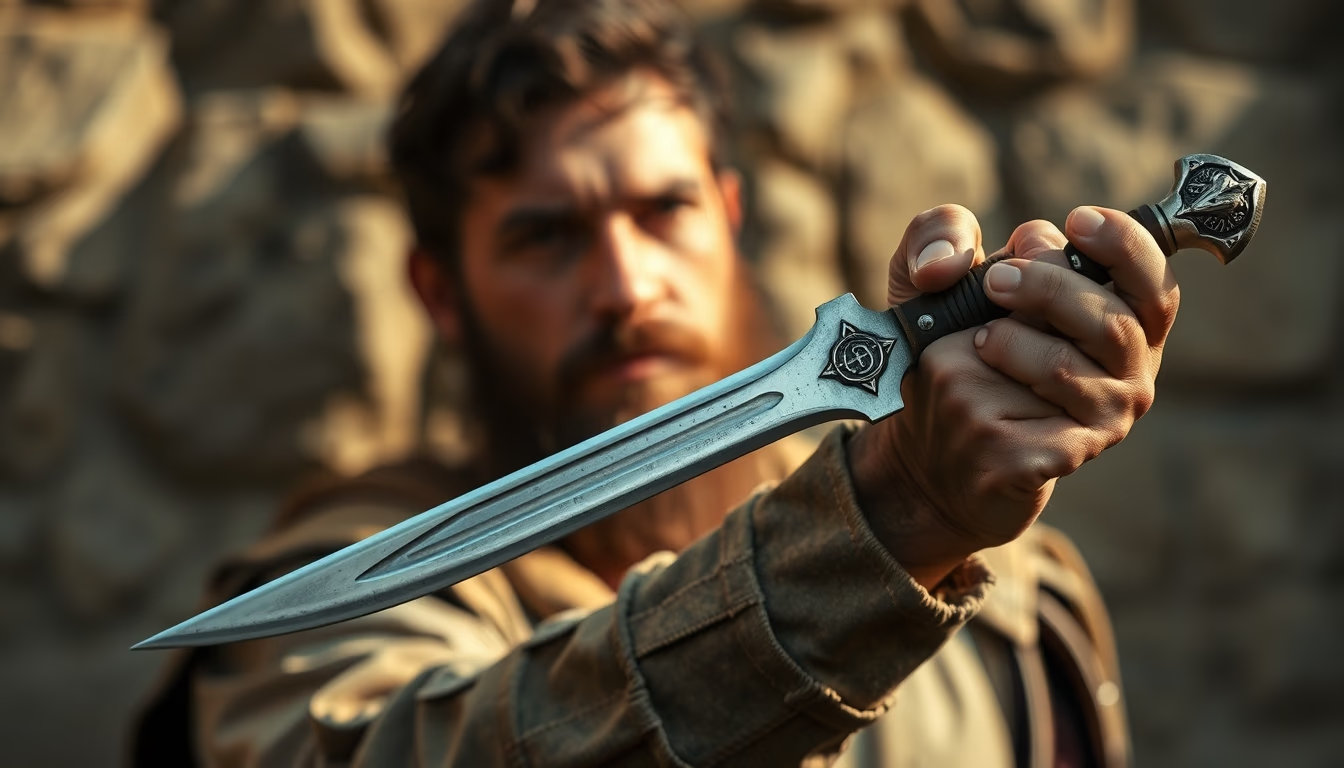
The claymore is a large Scottish sword from the 15th to 17th centuries, iconic of Highland warriors and battles for Scottish independence.
About this subject
The claymore, from Scottish Gaelic claidheamh-mòr meaning "great sword", is a two-handed weapon that became emblematic of the Highland clans of Scotland. Its use predominated between the 15th and 17th centuries, especially during the wars of independence against England. Unlike contemporary European swords, the claymore featured a long blade, typically between 1.2 and 1.5 meters, with a hilt in the shape of a cross with forward-sloping arms, often decorated with clovers or Celtic designs. This distinctive guard allowed for deflecting blows and also served as a support for the non-dominant hand.
The claymore was wielded by warriors known as highlanders, who used it both on foot and horseback. Its weight, between 2.5 and 3 kilograms, required strength and technique, but did not make it as slow as one might think: trained fighters could execute quick and precise cuts. One of the most famous tactics was the "Highland charge", where the Scots advanced en masse, brandishing their claymores and causing panic in enemy ranks. The sword was also a symbol of status and cultural identity, often passed down through generations.
Technically, the claymore evolved over time. Early versions from the 15th century had wider blades with blunt tips, ideal for cutting through mail armor. By the 16th century, with the advent of plate armor, blades became narrower and more pointed, allowing thrusts. Despite its decline in the 17th century, replaced by lighter swords and firearms, the claymore remains an icon of Scottish resistance and is frequently depicted in films and pop culture. Today, replicas are used in historical reenactments and by collectors, while original pieces can be seen in museums such as the National Museum of Scotland in Edinburgh.
Frequently Asked Questions
What is the difference between a claymore and a common longsword?
The claymore is a large Scottish two-handed sword with a long blade (1.2 to 1.5 m) and a distinctive cross guard with forward-sloping arms. The European longsword typically has a blade between 0.9 and 1.1 m and is used with one or two hands, with a straight guard.
Was the claymore actually used in battles?
Yes, the claymore was actively used in battles between the 15th and 17th centuries, especially by Scottish highlanders. It was effective against mail armor and later adapted to face plate armor. Tactics like the Highland charge leveraged its cutting power.
Where can I see an original claymore today?
Original claymores are displayed in museums such as the National Museum of Scotland in Edinburgh and in historic Scottish castles. Replicas are common in historical weapon shops and medieval reenactment groups.
Direct URL
https://pub-c7d6a6ea828543ac903a74a341ccb2e1.r2.dev/imagens/claymore-scottish-fish-eye-wide-angle-fresh16.avifHow to credit
Include a visible link back to UtilizAí. Copy one of the snippets below:
<a href="https://xn--utiliza-eza.com/en/midia/imagens/claymore-scottish-fish-eye-wide-angle-fresh16">Claymore scottish</a> by <a href="https://xn--utiliza-eza.com">UtilizAí</a>, licensed under <a href="https://creativecommons.org/licenses/by/4.0/">CC BY 4.0</a>.
[Claymore scottish](https://xn--utiliza-eza.com/en/midia/imagens/claymore-scottish-fish-eye-wide-angle-fresh16) by [UtilizAí](https://xn--utiliza-eza.com), CC BY 4.0
License: CC-BY-4.0