Claymore scottish
1344×768 · AVIF · CC BY 4.0

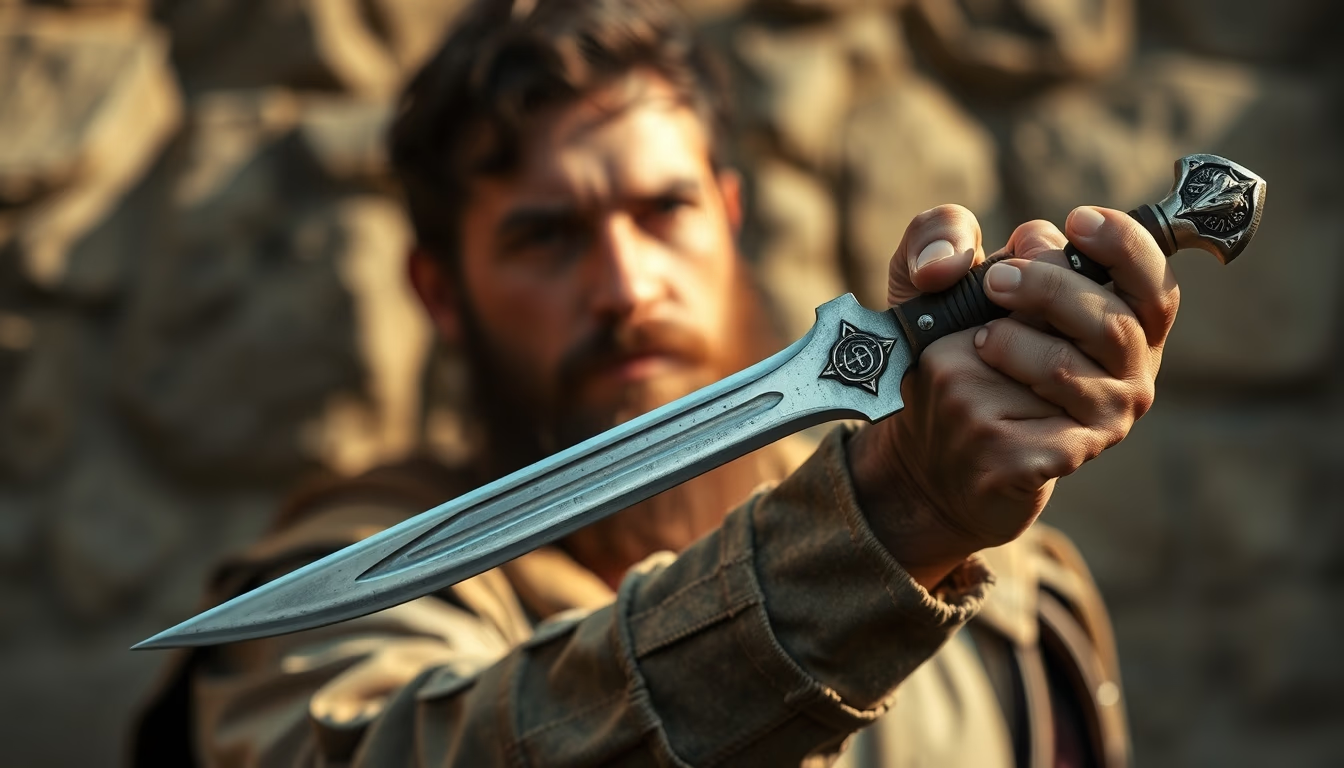
The Scottish claymore is a large two-handed sword, symbol of the Highland clans of Scotland between the 15th and 17th centuries.
About this subject
The claymore, from Scottish Gaelic 'claidheamh-mòr' (great sword), is a large, straight-bladed weapon wielded with both hands. It saw predominant use during the Scottish Wars of Independence and clan conflicts from the 15th to the 17th centuries. The blade measured between 100 and 120 centimeters, with a long hilt enabling powerful strikes capable of breaking spears and cutting light armor. Unlike continental longswords, the claymore featured a cross-shaped guard with forward-sloping arms, often adorned with trefoils or Celtic designs. This design helped trap an opponent's blade in combat maneuvers. The claymore was frequently employed by Highlanders, who combined it with a round shield called a targe. Weighing 2 to 3 kilograms, its balance allowed for quick movements. The claymore's fame was immortalized by historical figures such as William Wallace, who supposedly wielded a giant sword, though the weapon associated with him is larger than typical claymores. With the introduction of firearms, the claymore fell out of use by the late 17th century, but it remains an icon of Scottish culture, appearing in coats of arms, monuments, and festivals.
Frequently Asked Questions
What is the difference between a claymore and a common longsword?
The claymore has a wider blade and a guard with forward-sloping arms, distinguishing it from European longswords. Its use was predominantly Scottish and associated with Highlanders.
Was William Wallace's claymore real?
The sword attributed to William Wallace, displayed at the Wallace Monument, measures about 1.68 meters, larger than typical claymores. Analysis suggests it was made later, but it symbolizes his legend.
How was the claymore used in battle?
It was wielded with both hands to deliver wide, powerful strikes. Highlanders used it together with the targe (shield) for defense, forming combat lines known as 'schiltrons'.
Direct URL
https://pub-c7d6a6ea828543ac903a74a341ccb2e1.r2.dev/imagens/claymore-scottish-documentary-nature-style-fresh8.avifHow to credit
Include a visible link back to UtilizAí. Copy one of the snippets below:
<a href="https://xn--utiliza-eza.com/en/midia/imagens/claymore-scottish-documentary-nature-style-fresh8">Claymore scottish</a> by <a href="https://xn--utiliza-eza.com">UtilizAí</a>, licensed under <a href="https://creativecommons.org/licenses/by/4.0/">CC BY 4.0</a>.
[Claymore scottish](https://xn--utiliza-eza.com/en/midia/imagens/claymore-scottish-documentary-nature-style-fresh8) by [UtilizAí](https://xn--utiliza-eza.com), CC BY 4.0
License: CC-BY-4.0