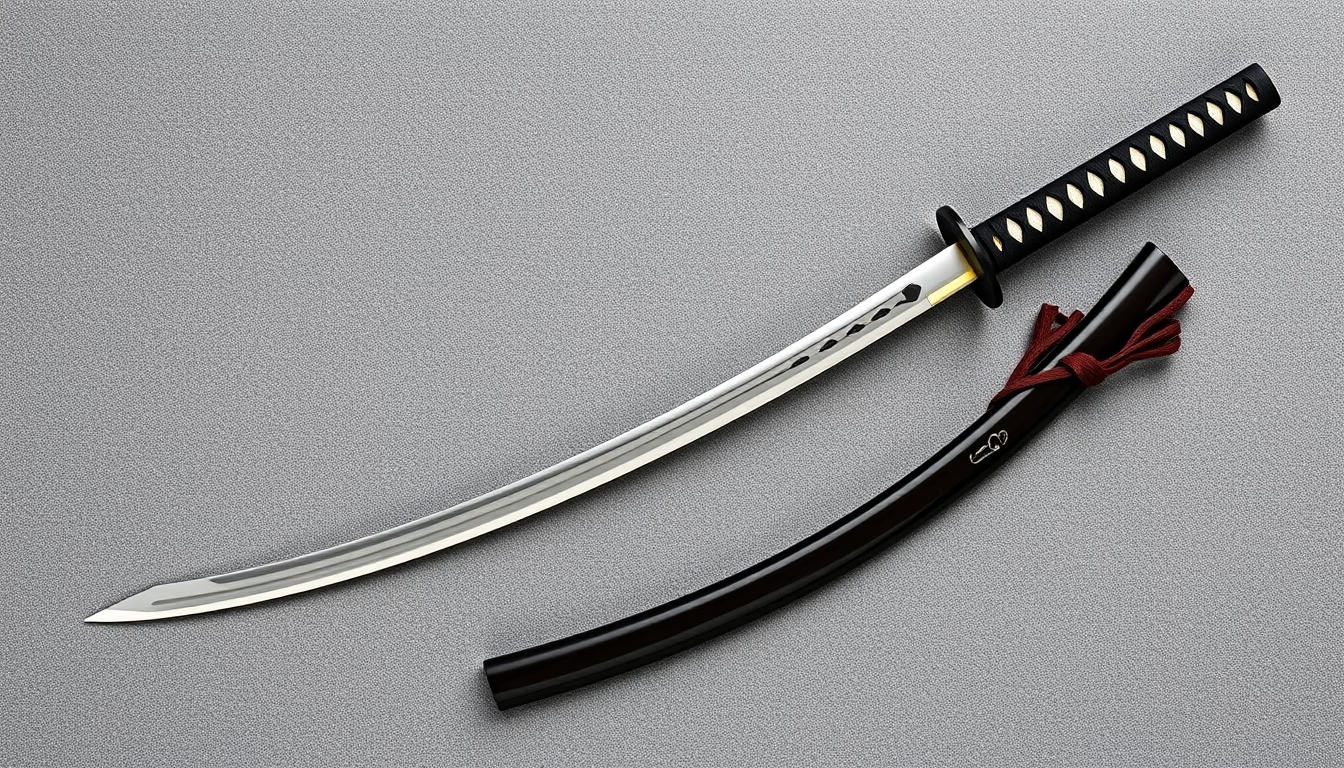
Claymore scottish
1344×768 · AVIF · CC BY 4.0
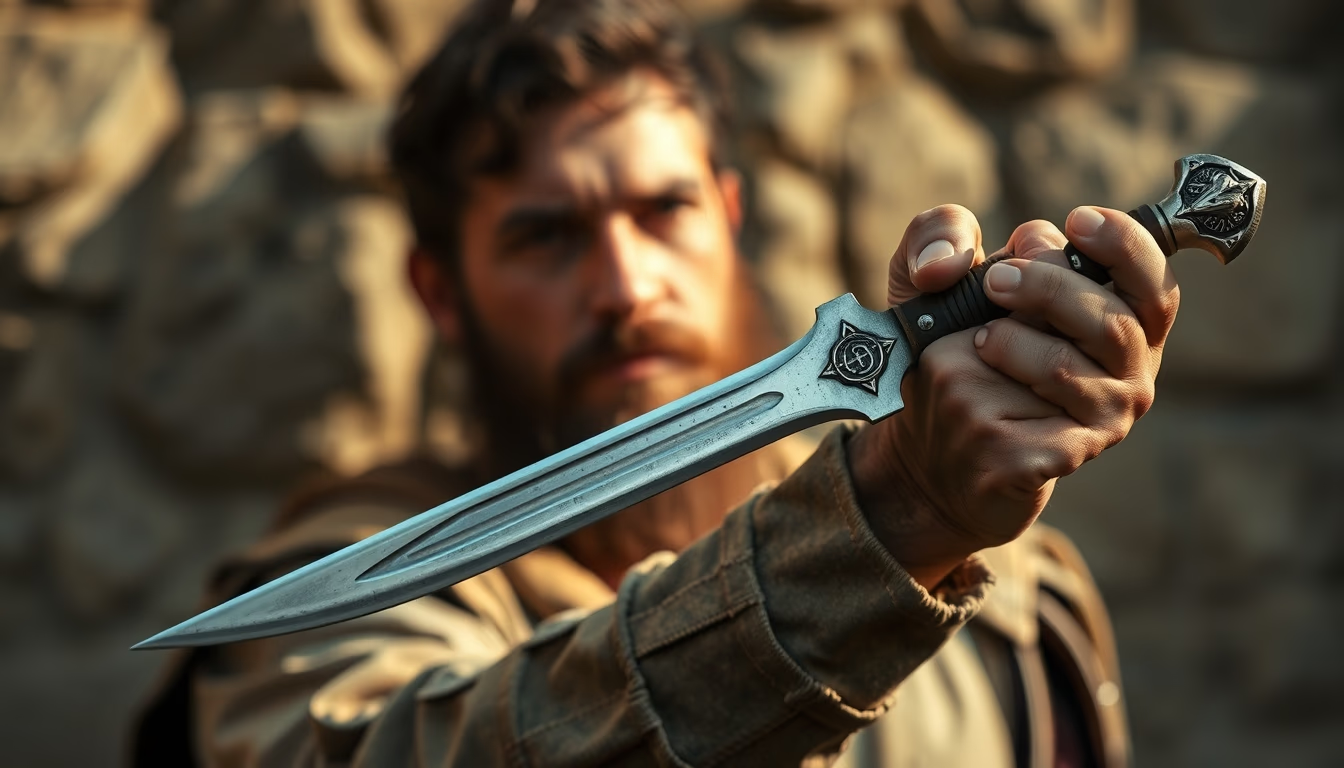
The Scottish claymore, a two-handed sword of the Highlanders, combines an imposing design with historical symbolism in the Scottish Wars of Independence.
About this subject
The claymore (from Gaelic claidheamh-mór, 'great sword') is a two-handed sword used primarily by Highland warriors in Scotland between the 15th and 17th centuries. With a straight blade of approximately 100 to 120 centimeters and a long hilt allowing a two-handed grip, it weighed between 2.5 and 4 kilograms. Unlike other European swords of the period, the claymore featured a crossguard that slanted forward toward the tip, forming a distinctive 'V' shape, often decorated with trefoils or geometric patterns. This curvature helped trap opponent blades, a common technique in period combat.
Historically, the claymore was immortalized in the Scottish Wars of Independence against England, especially under the leadership of William Wallace and Robert the Bruce. Although Wallace's famous sword (displayed at the Wallace Monument in Stirling) is actually a larger two-handed sword than the standard, it represents the myth of the folk hero armed with a claymore. During the Battle of Bannockburn (1314), Scots used schiltron formations (long spears), but two-handed swords were secondary weapons for when spears broke.
In the 18th century, claymores were gradually replaced by sabres and lighter swords, but retained their cultural status. The term 'claymore' came to also designate the Scottish basket-hilted broadsword used by British Highland regiments, causing confusion. The original claymore is often depicted in films and series like 'Braveheart' and 'Outlander', though these representations are not always historically accurate.
Interestingly, the claymore was not a common peasant weapon; it was mainly used by nobles and professional warriors due to cost and required skill. Its design reflects the need for powerful blows against armored opponents but also allowed wide swings, effective in open-field battles where space was ample. Today, replicas are popular in collections and historical reenactments, and the sword remains a symbol of Scottish identity.
Frequently Asked Questions
What is the difference between a claymore and other medieval swords?
The claymore features a distinctive V-shaped crossguard that slants forward and a long two-handed hilt. Unlike longswords used on the continent, it was more specialized for powerful strikes and trapping opponent blades.
Where can I see an original claymore today?
Scottish museums such as the National Museum of Scotland in Edinburgh or the Stirling Smith Art Gallery and Museum display historical examples. Modern replicas are common at medieval fairs and in private collections.
Was the claymore only used by Scottish warriors?
Yes, its use was predominantly in Scotland, especially in the Highlands. Some similar swords existed in Ireland, but the claymore has a distinctly Scottish design and tradition.
Direct URL
https://pub-c7d6a6ea828543ac903a74a341ccb2e1.r2.dev/imagens/claymore-scottish-cinematic-wide-shot-fresh0.avifHow to credit
Include a visible link back to UtilizAí. Copy one of the snippets below:
<a href="https://xn--utiliza-eza.com/en/midia/imagens/claymore-scottish-cinematic-wide-shot-fresh0">Claymore scottish</a> by <a href="https://xn--utiliza-eza.com">UtilizAí</a>, licensed under <a href="https://creativecommons.org/licenses/by/4.0/">CC BY 4.0</a>.
[Claymore scottish](https://xn--utiliza-eza.com/en/midia/imagens/claymore-scottish-cinematic-wide-shot-fresh0) by [UtilizAí](https://xn--utiliza-eza.com), CC BY 4.0
License: CC-BY-4.0