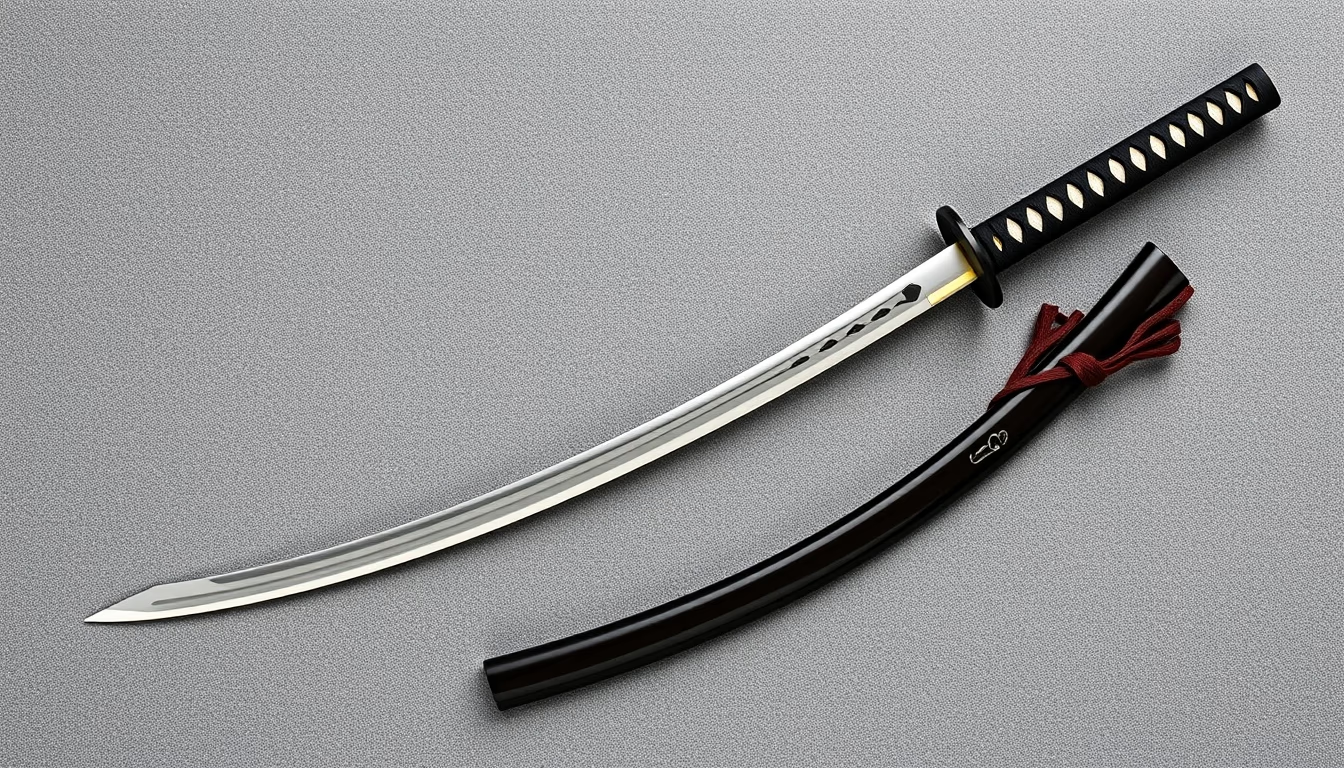
Claymore scottish
1344×768 · AVIF · CC BY 4.0
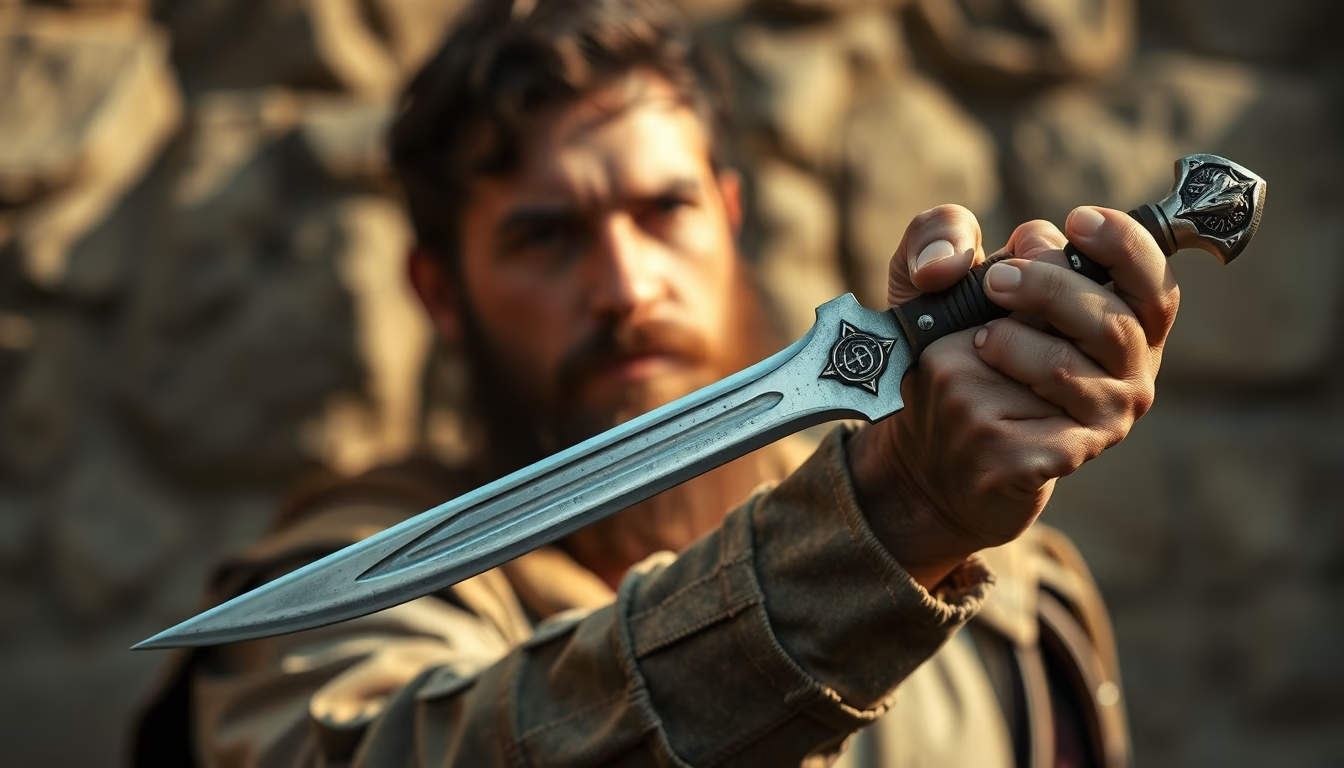
The Scottish claymore, also known as the great sword, was a two-handed weapon used by Highland warriors from the 15th to the 18th century.
About this subject
The claymore (from Scottish Gaelic claidheamh-mòr, meaning 'great sword') is a two-handed sword characteristic of medieval and early modern Scotland. With a long blade, typically between 100 and 120 cm, and a hilt with a crossguard designed to protect the hands, it became a symbol of the Highland clans. Unlike other European swords of the period, the claymore featured a forward-angled guard with two side rings that provided extra protection and helped deflect blows.
Historically, the claymore was employed in the Scottish Wars of Independence, such as the Battle of Bannockburn (1314), and remains an emblematic element of Scottish cultural identity. Its use required great strength and skill, as the weight could reach 2.5 kg, enabling powerful strikes capable of breaking spears and shields. With the advent of firearms, the claymore fell out of use on the battlefield but endured as a ceremonial piece and a symbol of nobility.
Interestingly, the term 'claymore' is also used for a one-handed sword from the 18th century, causing confusion. The larger version is the true historical claymore. In films like 'Braveheart', the weapon was popularized, albeit with cinematic exaggerations. Today, replicas are produced for collectors and historical reenactors.
The claymore also influenced sword designs in games and fantasy, often depicted as the weapon of the barbarian warrior. Its legacy persists in monuments, coats of arms, and pop culture, representing Scottish resistance and pride.
Frequently Asked Questions
What is the difference between the Scottish claymore and other European great swords?
The claymore is distinguished by its forward-angled guard with side rings, which protected the hands and helped deflect blows. Its total length could reach 1.5 meters, making it one of the largest two-handed swords.
Was the claymore actually used in battles?
Yes, mainly between the 15th and 17th centuries. It was effective against lightly armored opponents and for breaking pike formations, but with the rise of firearms, it became obsolete on the battlefield.
Why is the claymore so associated with Scottish culture?
It symbolizes the resistance of the Highland clans against English domination, being depicted in flags, coats of arms, and the works of Sir Walter Scott. It remains an icon of bravery and independence to this day.
Direct URL
https://pub-c7d6a6ea828543ac903a74a341ccb2e1.r2.dev/imagens/claymore-scottish-architectural-photography-fresh10.avifHow to credit
Include a visible link back to UtilizAí. Copy one of the snippets below:
<a href="https://xn--utiliza-eza.com/en/midia/imagens/claymore-scottish-architectural-photography-fresh10">Claymore scottish</a> by <a href="https://xn--utiliza-eza.com">UtilizAí</a>, licensed under <a href="https://creativecommons.org/licenses/by/4.0/">CC BY 4.0</a>.
[Claymore scottish](https://xn--utiliza-eza.com/en/midia/imagens/claymore-scottish-architectural-photography-fresh10) by [UtilizAí](https://xn--utiliza-eza.com), CC BY 4.0
License: CC-BY-4.0