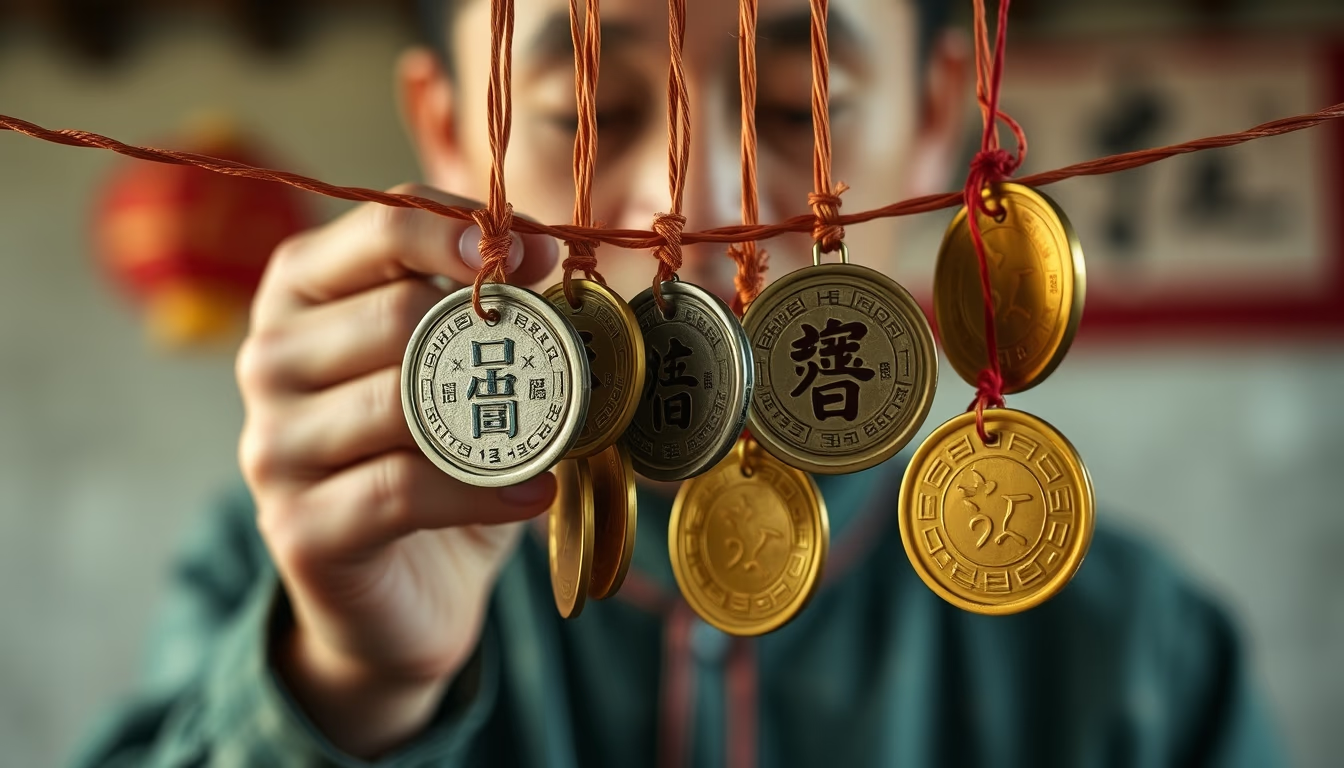
Chinese cash coins string
1344×768 · AVIF · CC BY 4.0
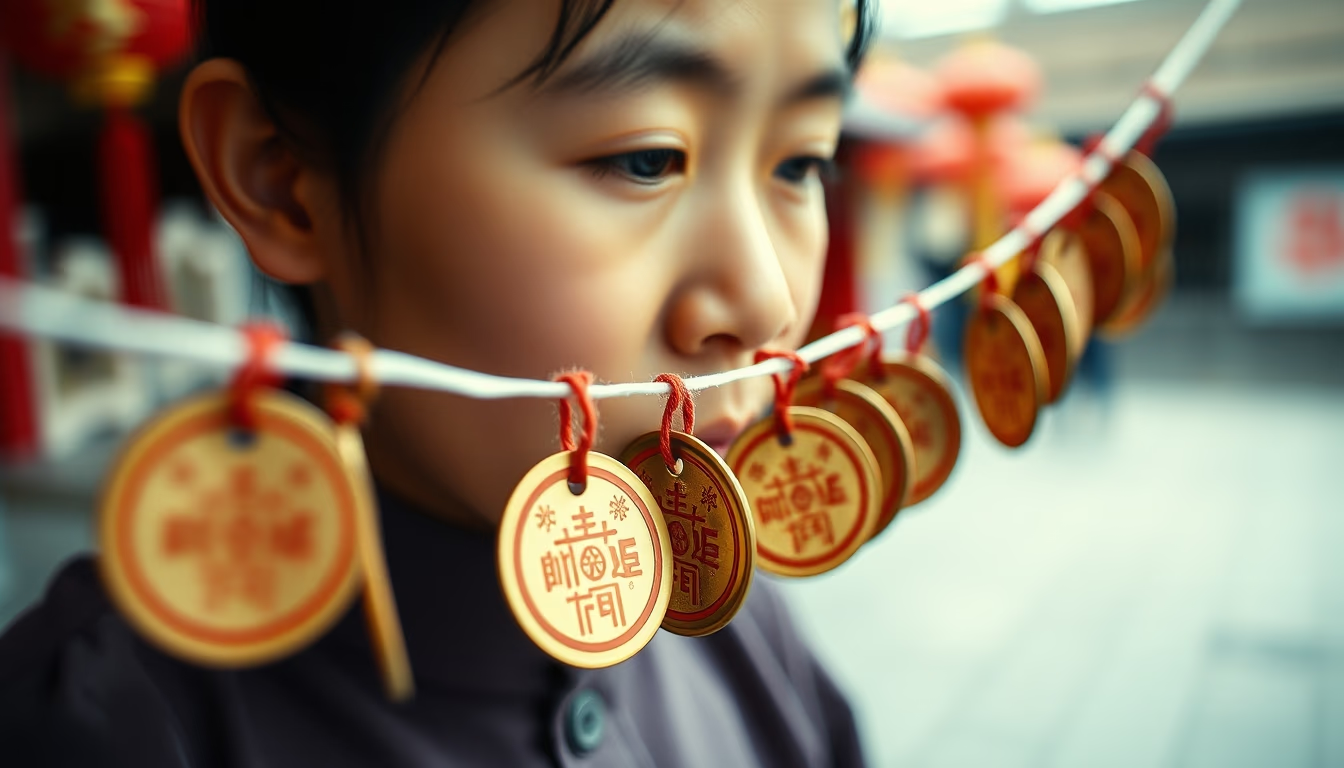
A string of Chinese cash coins, used in imperial China for centuries, weaves economic and cultural history into a single artifact.
About this subject
Chinese cash coins, known as "fang kong qian" (square-hole coin), served as the primary currency in China for over two millennia, from the unification under Qin Shi Huang in 221 BC until the early 20th century. Their iconic design, a round coin with a square hole, symbolized the harmony between heaven (round) and earth (square), reflecting Taoist and Confucian philosophical concepts. Typically cast in bronze or brass, each coin bore inscriptions indicating the reign of the emperor who issued it, acting as a tool of imperial propaganda.
To facilitate transport and counting, coins were strung together on cords, forming a "guan" (串), usually of 100 or 1000 coins. This practice was so widespread that the term "guan" became a monetary unit. In daily commerce, people carried these strings of coins at their waists or hung them on sticks. During the Song dynasty (960-1279), the introduction of paper money began to supplement cash coins, but they remained essential for small transactions until the empire's end.
Beyond economics, cash coins held deep cultural significance. Hanging a string of coins above a door was believed to attract prosperity and ward off evil spirits, a common Feng Shui practice. They were also used in wedding ceremonies as a symbol of unity, and in funerary rites, placed in the deceased's mouth to pay for passage to the afterlife. Today, cheap plastic or metal replicas are sold as talismans, while original coins are sought-after collectibles in the global numismatic market.
Frequently Asked Questions
What is the origin of Chinese cash coins?
They originated in the Qin dynasty (221-206 BC) when Emperor Qin Shi Huang standardized the round coin with a square hole, replacing various forms like cowrie shells and metal knives.
How was the value of a cash coin determined?
Value was based on weight and metal composition, typically bronze or brass. Coins from more prosperous dynasties, such as Tang and Song, had higher copper content and were more valuable.
Are these coins still used today?
No, not as legal tender, but they are widely replicated for decoration and as good luck charms in Feng Shui. Original coins are collectibles and can be found at antique fairs in China and international auctions.
Direct URL
https://pub-c7d6a6ea828543ac903a74a341ccb2e1.r2.dev/imagens/chinese-cash-coins-string-film-grain-authentic-fresh10.avifHow to credit
Include a visible link back to UtilizAí. Copy one of the snippets below:
<a href="https://xn--utiliza-eza.com/en/midia/imagens/chinese-cash-coins-string-film-grain-authentic-fresh10">Chinese cash coins string</a> by <a href="https://xn--utiliza-eza.com">UtilizAí</a>, licensed under <a href="https://creativecommons.org/licenses/by/4.0/">CC BY 4.0</a>.
[Chinese cash coins string](https://xn--utiliza-eza.com/en/midia/imagens/chinese-cash-coins-string-film-grain-authentic-fresh10) by [UtilizAí](https://xn--utiliza-eza.com), CC BY 4.0
License: CC-BY-4.0