Champagne bubbles closeup
1344×768 · AVIF · CC BY 4.0
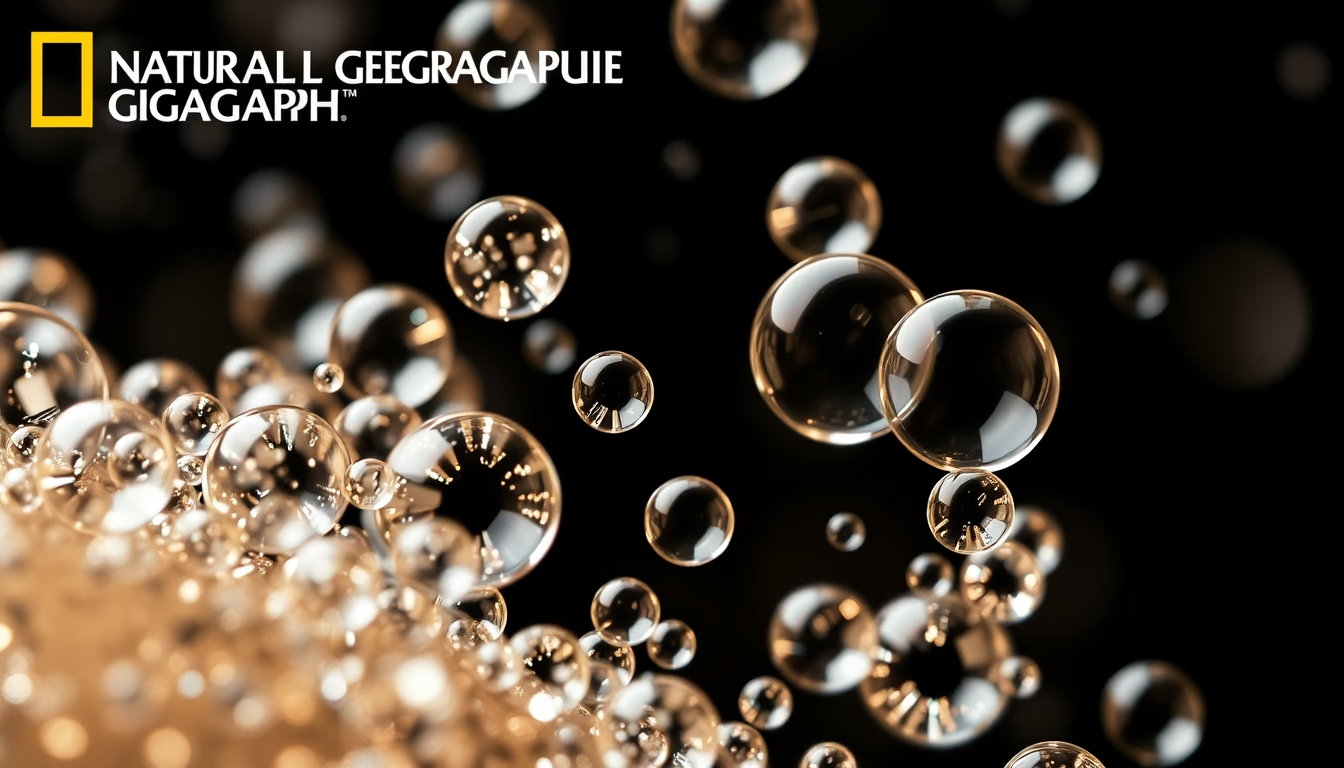
The effervescence of champagne is a fascinating scientific phenomenon: millions of CO₂ bubbles rise continuously, releasing aromas and influencing the sensory experience.
About this subject
Champagne bubbles are formed by carbon dioxide dissolved during the second fermentation in the bottle, a process known as méthode champenoise. When the bottle is opened, pressure drops and CO₂ becomes supersaturated, forming nucleations at microscopic points, imperfections in the glass, cellulose fibers, or suspended particles. These nucleation sites create streams of bubbles that rise to the surface.
Each bubble carries aromatic compounds to the surface, where they burst and release fragrances. Studies indicate that a single glass of champagne can contain about 1 million bubbles, and their size varies with temperature and CO₂ concentration. Smaller bubbles tend to release more subtle aromas, while larger bubbles create a more aggressive mouthfeel.
The ideal serving temperature for champagne is between 6°C and 8°C, as higher temperatures accelerate CO₂ release and may produce overly large bubbles, harming texture. Very low temperatures inhibit bubble formation, reducing aroma perception. Glass shape also matters: tall flutes preserve effervescence longer, while wide coupes dissipate bubbles quickly.
Culturally, champagne is associated with celebrations, but its effervescence has historical roots: sparkling wine was accidentally discovered in the Champagne region in the Middle Ages, and today it is protected by appellation d'origine contrôlée. The science of bubbles continues to be studied by winemakers and physicists, revealing the complexity behind every glass.
Frequently Asked Questions
Why do champagne bubbles rise in straight lines?
Bubbles rise in lines because they form at specific nucleation sites, such as glass imperfections or cellulose fibers. These sites generate bubbles repeatedly, creating visible vertical streams.
What is the ideal serving temperature for champagne and how does it affect bubbles?
The ideal temperature is between 6°C and 8°C. In this range, carbon dioxide is released in a balanced manner, producing fine and persistent bubbles. Higher temperatures produce large bubbles with short duration; very low temperatures inhibit formation.
What determines the size of champagne bubbles?
Bubble size depends on CO₂ concentration and temperature. Higher gas content and warmer temperatures produce larger bubbles. Internal bottle pressure and the presence of nucleating agents also play a role.
Direct URL
https://pub-c7d6a6ea828543ac903a74a341ccb2e1.r2.dev/imagens/champagne-bubbles-closeup-national-geographic-style-p2.avifHow to credit
Include a visible link back to UtilizAí. Copy one of the snippets below:
<a href="https://xn--utiliza-eza.com/en/midia/imagens/champagne-bubbles-closeup-national-geographic-style-p2">Champagne bubbles closeup</a> by <a href="https://xn--utiliza-eza.com">UtilizAí</a>, licensed under <a href="https://creativecommons.org/licenses/by/4.0/">CC BY 4.0</a>.
[Champagne bubbles closeup](https://xn--utiliza-eza.com/en/midia/imagens/champagne-bubbles-closeup-national-geographic-style-p2) by [UtilizAí](https://xn--utiliza-eza.com), CC BY 4.0
License: CC-BY-4.0