Cambodian temple bas relief
1344×768 · AVIF · CC BY 4.0
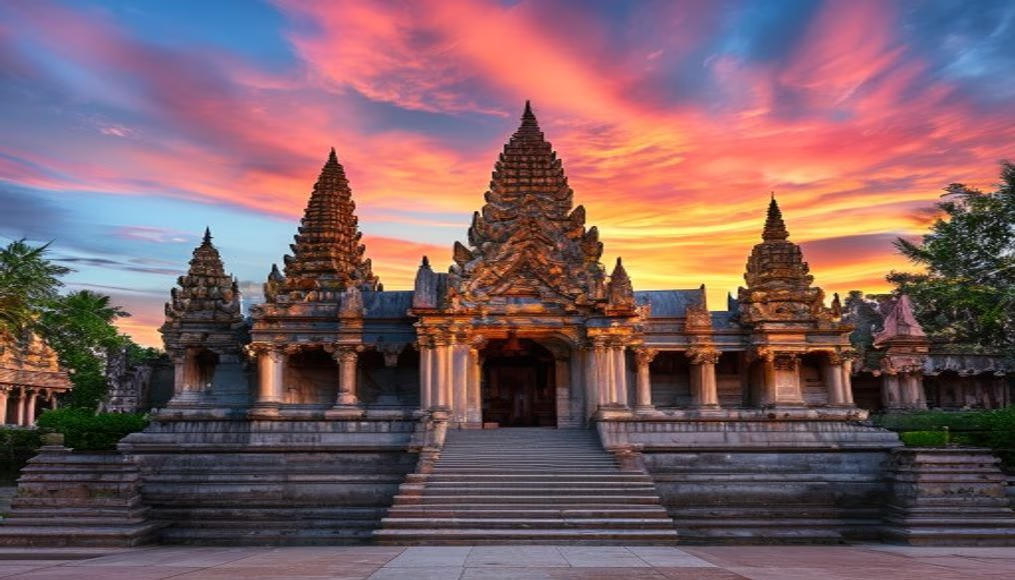
Bas reliefs in Cambodian temples, such as those at Angkor Wat, bear witness to the art and history of the Khmer Empire.
About this subject
The bas reliefs of Cambodian temples are world-renowned for their beauty and complexity. They adorn the walls of structures like Angkor Wat, the largest religious monument in the world, built in the 12th century by King Suryavarman II. Carved in sandstone, the reliefs depict scenes from Hindu epics such as the Ramayana and Mahabharata, alongside historical events and daily life of the era. Each panel tells detailed stories of battles, ceremonies, and mythology, with human and divine figures sculpted in shallow relief that unfold over miles of corridors.
The carving technique reached its peak during the classical Khmer period (9th to 15th centuries). Artisans used simple tools to create layered visual narratives where gods, demons, and mortals interact in dynamic compositions. At Angkor Wat, the western gallery displays the famous 'Churning of the Ocean of Milk', a Hindu allegory about the quest for immortality. These reliefs not only decorated but also educated and inspired devotion, functioning as stone books for a largely illiterate population.
After the decline of the Khmer Empire, many temples were abandoned and overgrown by jungle, yet the bas reliefs endured, albeit suffering from erosion and vandalism. Today, they are a UNESCO World Heritage site and attract millions of visitors annually. Long-exposure photography highlights the texture and fine details of these carvings, revealing how light shapes the forms throughout the day. Preservation faces challenges like pollution and over-tourism, but conservation projects strive to keep this ancient artistic heritage alive.
Frequently Asked Questions
What are bas reliefs and why are they important in Cambodian temples?
Bas reliefs are sculptures where figures project slightly from the background. In Cambodian temples, they narrate religious and historical stories, serving as cultural records and educational tools for the Khmer people.
What material was used and how were they carved?
Most bas reliefs were carved from sandstone, abundant in the region. Artisans used iron or bronze chisels and hammers, and the surface was polished with sand for finishing.
Why is long-exposure photography used to capture these reliefs?
Long exposure enhances subtle details and textures, especially in low light, and softens harsh shadows, revealing the depth and wear of the carving.
Direct URL
https://pub-c7d6a6ea828543ac903a74a341ccb2e1.r2.dev/imagens/cambodian-temple-bas-relief-long-exposure-p2.avifHow to credit
Include a visible link back to UtilizAí. Copy one of the snippets below:
<a href="https://xn--utiliza-eza.com/en/midia/imagens/cambodian-temple-bas-relief-long-exposure-p2">Cambodian temple bas relief</a> by <a href="https://xn--utiliza-eza.com">UtilizAí</a>, licensed under <a href="https://creativecommons.org/licenses/by/4.0/">CC BY 4.0</a>.
[Cambodian temple bas relief](https://xn--utiliza-eza.com/en/midia/imagens/cambodian-temple-bas-relief-long-exposure-p2) by [UtilizAí](https://xn--utiliza-eza.com), CC BY 4.0
License: CC-BY-4.0