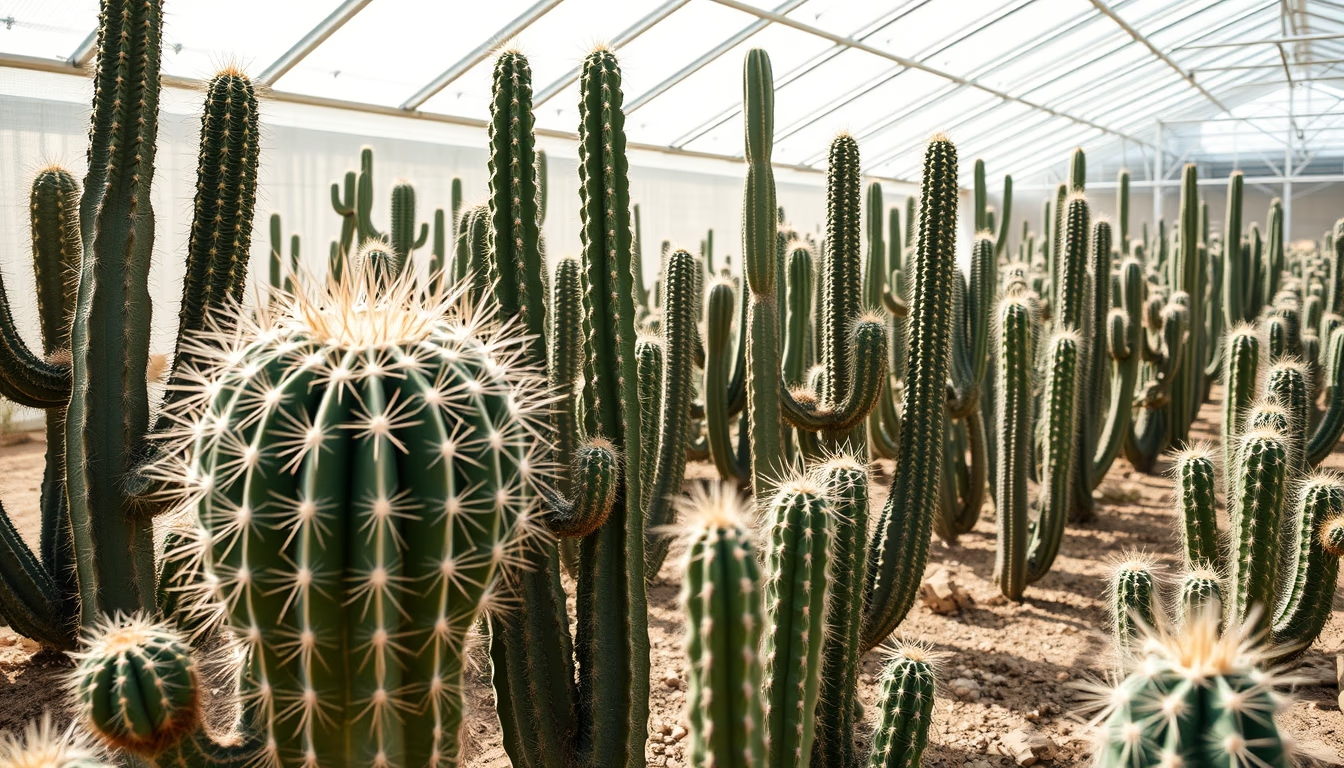
Cactus greenhouse desert
1344×768 · AVIF · CC BY 4.0
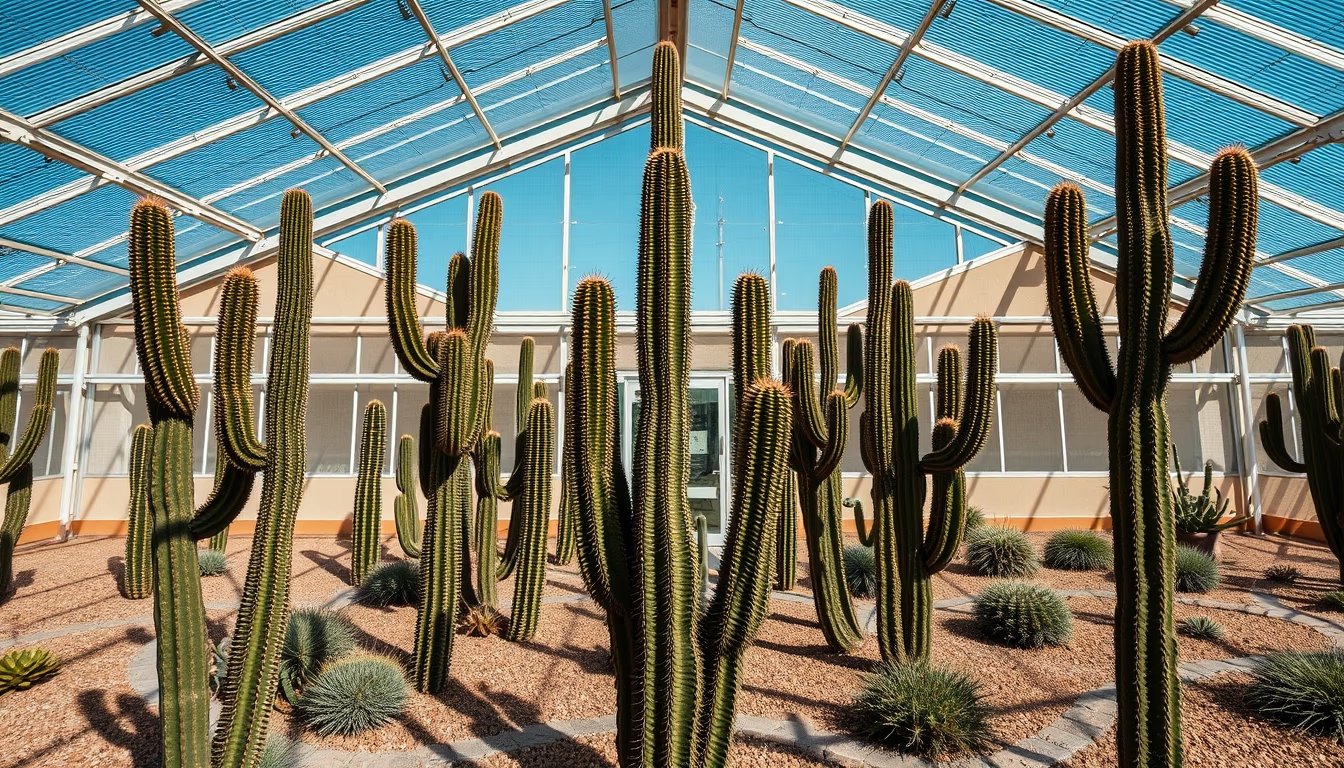
Cactus greenhouses in deserts combine functional architecture and succulent cultivation in arid climates.
About this subject
Cactus greenhouses are specialized structures designed for controlled cultivation of cacti and succulents in desert regions. Unlike standard agricultural greenhouses, these buildings must balance intense solar radiation, high daytime temperatures, and sharp nighttime drops. Many use diffused polycarbonate or tempered glass with UV coatings, along with automated ventilation and shading systems to prevent overheating. The goal is to recreate ideal conditions for native and exotic species, protecting them from dry winds and occasional frosts.
Brazilian landscape architect Roberto Burle Marx, for instance, incorporated cactus greenhouses in projects such as Sítio Santo Antônio in Guaratiba (RJ), where he collected specimens from Brazil's Northeast. On a commercial scale, desert greenhouses are common in Arizona (USA), Mexico, and the Almería region of Spain, where ornamental plants are grown for export. The architecture often features curved shapes or geodesic domes to minimize heat buildup and improve air circulation.
Beyond production, cactus greenhouses have strong educational and tourist appeal. The Desert Botanical Garden in Phoenix (USA) boasts a 3,000 m² greenhouse with over 4,000 cactus species. In Brazil, the Cactus Greenhouse at the São Paulo Botanical Garden houses specimens from the Caatinga and Cerrado biomes, aiding conservation of threatened species. Maintenance requires precise irrigation control (often drip systems) and highly draining substrates like sand and perlite.
A curious fact: some cacti in greenhouses may take decades to reach reproductive maturity, but controlled conditions can accelerate growth. Ideal internal temperatures range from 20°C to 35°C, with relative humidity below 60% to prevent fungi. Modern greenhouses use IoT sensors that automatically adjust skylight openings and irrigation.
Frequently Asked Questions
Why are cactus greenhouses important in desert regions?
They provide protected cultivation for species sensitive to wind, frost, and excessive radiation, while enabling conservation of endangered cacti and research on climate adaptation.
How is a cactus greenhouse different from a regular greenhouse?
Cactus greenhouses require higher ventilation, controlled shading, and fast-draining substrates. They often use diffusing coverings to prevent sunburn on plants.
Which countries have the largest cactus greenhouses?
The United States (Arizona), Mexico, Spain (Almería), and Brazil (São Paulo and Rio de Janeiro) host major cactus greenhouses for research and ornamental trade.
Direct URL
https://pub-c7d6a6ea828543ac903a74a341ccb2e1.r2.dev/imagens/cactus-greenhouse-desert-architectural-photography-fresh4.avifHow to credit
Include a visible link back to UtilizAí. Copy one of the snippets below:
<a href="https://xn--utiliza-eza.com/en/midia/imagens/cactus-greenhouse-desert-architectural-photography-fresh4">Cactus greenhouse desert</a> by <a href="https://xn--utiliza-eza.com">UtilizAí</a>, licensed under <a href="https://creativecommons.org/licenses/by/4.0/">CC BY 4.0</a>.
[Cactus greenhouse desert](https://xn--utiliza-eza.com/en/midia/imagens/cactus-greenhouse-desert-architectural-photography-fresh4) by [UtilizAí](https://xn--utiliza-eza.com), CC BY 4.0
License: CC-BY-4.0