Cactus desert sunset
1344×768 · AVIF · CC BY 4.0
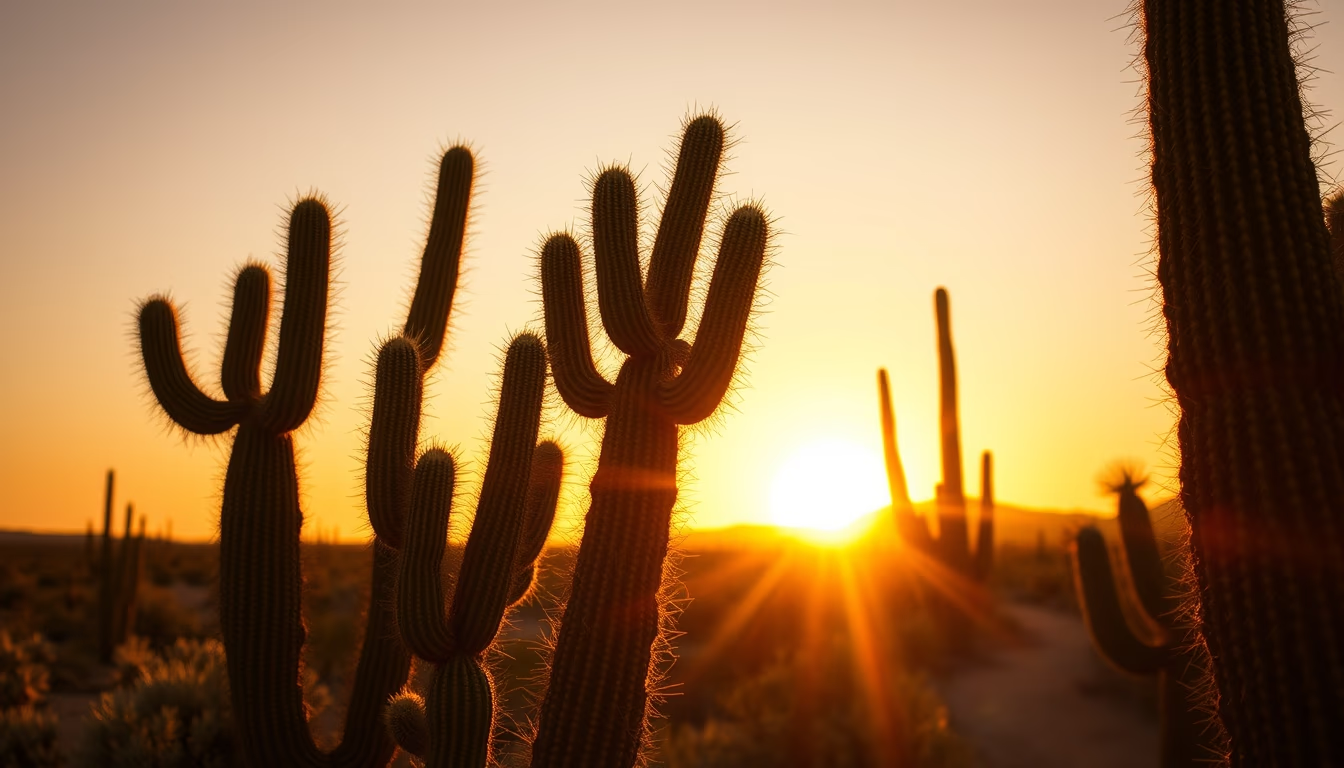
Desert cacti at sunset, their silhouettes outlined against an orange and golden sky.
About this subject
Cacti are emblematic plants of arid and semi-arid regions, adapted to extreme heat and water scarcity. There are over 1,500 species of cacti worldwide, most native to the Americas, with Mexico hosting about 600 species. These plants have evolved mechanisms such as succulent stems for water storage, spines that reduce water loss, and CAM (Crassulacean Acid Metabolism) photosynthesis, which occurs at night to minimize evapotranspiration.
Desert sunsets are visually striking due to low humidity and lack of pollution, allowing sunlight to scatter at longer wavelengths, creating intense orange, red, and purple hues. This natural spectacle attracts photographers and tourists to deserts like Sonora (Mexico/USA), Atacama (Chile), and Sahara (Africa). The combination of cacti and sunset has become a cultural icon of the American West, often depicted in films, paintings, and literature.
Interestingly, some cacti can live for centuries, such as the saguaro (Carnegiea gigantea), which reaches up to 18 meters in height and lives an average of 150 to 200 years. Its flowers, which bloom at night, are pollinated by bats and moths. Despite their resilience, cacti face threats such as illegal collection, habitat destruction, and climate change, which alter rainfall patterns and temperatures in deserts.
In Brazil, the caatinga is the biome most similar to a desert, with cacti like mandacaru (Cereus jamacaru) and xique-xique (Pilosocereus gounellei). Although there are no true deserts in the country, the Northeast region features arid landscapes with cacti that also provide spectacular sunsets, especially in Serra da Capivara National Park (Piauí) and Vale do Catimbau (Pernambuco).
Frequently Asked Questions
Why are cacti so drought-resistant?
Cacti have adaptations such as succulent stems that store water, spines that reduce water loss, and CAM metabolism, which performs photosynthesis at night to avoid daytime evapotranspiration.
What is the largest cactus in the world?
The largest cactus is the saguaro (Carnegiea gigantea), native to the Sonoran Desert, which can reach up to 18 meters in height and live over 150 years.
Are there deserts in Brazil?
Brazil does not have true deserts, but the caatinga in the Northeast is a semi-arid biome with drought-adapted vegetation, including cacti such as mandacaru and xique-xique.
Direct URL
https://pub-c7d6a6ea828543ac903a74a341ccb2e1.r2.dev/imagens/cactus-desert-sunset-cinematic-wide-shot-v2.avifHow to credit
Include a visible link back to UtilizAí. Copy one of the snippets below:
<a href="https://xn--utiliza-eza.com/en/midia/imagens/cactus-desert-sunset-cinematic-wide-shot-v2">Cactus desert sunset</a> by <a href="https://xn--utiliza-eza.com">UtilizAí</a>, licensed under <a href="https://creativecommons.org/licenses/by/4.0/">CC BY 4.0</a>.
[Cactus desert sunset](https://xn--utiliza-eza.com/en/midia/imagens/cactus-desert-sunset-cinematic-wide-shot-v2) by [UtilizAí](https://xn--utiliza-eza.com), CC BY 4.0
License: CC-BY-4.0