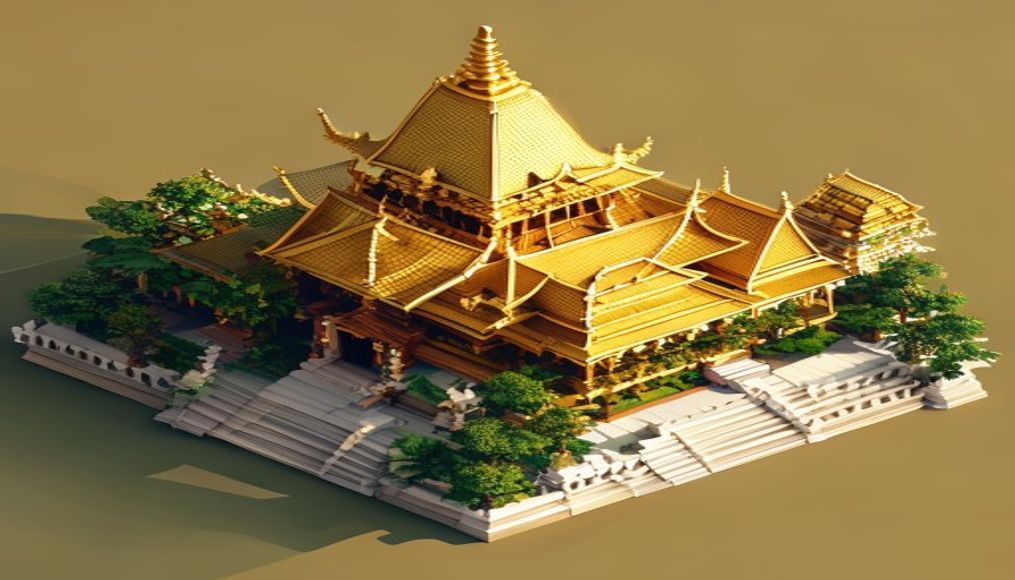
Buddhist stupa golden
1344×768 · JPG · CC BY 4.0
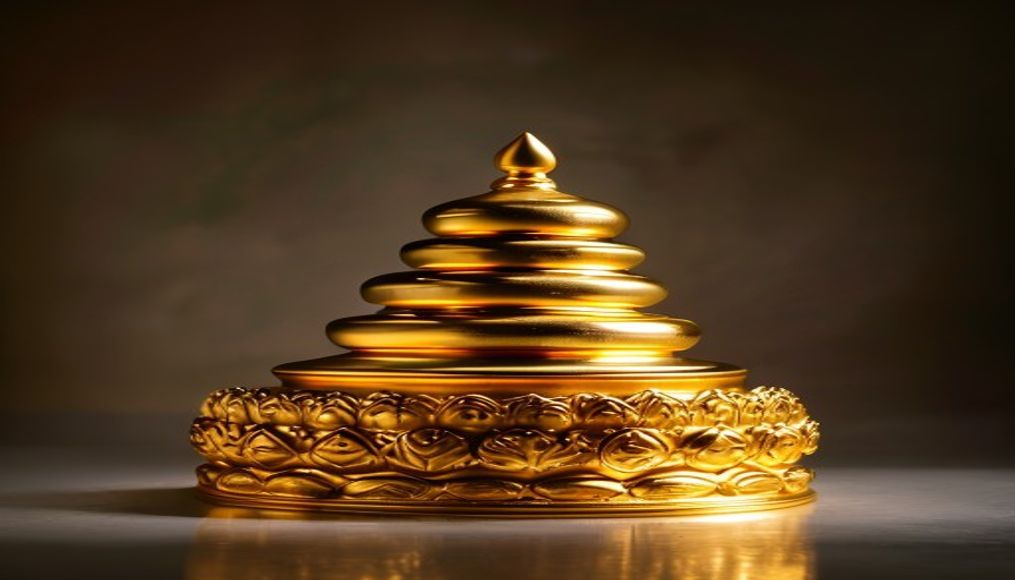
Golden Buddhist stupa: symbol of enlightenment and peace in Buddhism, an architectural structure representing the awakened mind of the Buddha.
About this subject
The stupa is one of the most iconic structures in Buddhism, found throughout the Buddhist world from India to Japan. Traditionally, it houses sacred relics or scriptures and serves as a place for meditation and pilgrimage. Its geometric form carries deep symbolism: the square base represents earth; the hemispherical dome, water; the spire, fire; the umbrella, air; and the top, space or emptiness, reflecting the five elements. The golden color, often used on stupas, symbolizes enlightenment, spiritual wealth, and the precious nature of the Buddha's teachings. A famous example is the Shwedagon Pagoda in Myanmar, covered in gold and located on a hill in Yangon. Built over centuries, it attracts millions of devotees annually. Stupas vary in style by region: in Nepal, they are robust with all-seeing eyes; in Thailand, they are more elongated and pointed; in Tibet, they exhibit conical and colorful forms. Historically, the earliest stupas were burial mounds for relics of the historical Buddha, Siddhartha Gautama, erected shortly after his death in the 5th century BCE. Over time, they became centers of devotion and sacred architecture, even influencing Islamic art and dome architecture in the West. The practice of circumambulating the stupa clockwise is a form of active meditation, generating spiritual merit. In contemporary times, miniature or golden replicas are common in temples and meditation spaces, reminding practitioners of the goal of awakening.
Frequently Asked Questions
What does a golden stupa mean in Buddhism?
The golden color symbolizes enlightenment, spiritual wealth, and the precious nature of the Buddha's teachings. A golden stupa represents the awakened mind and the perfection of Buddha qualities.
What is the main purpose of a stupa?
A stupa serves as a monument housing sacred relics, such as remains of Buddhist masters or scriptures. It is a place for meditation, pilgrimage, and offerings, helping practitioners accumulate merit and focus on the spiritual path.
How do stupas vary among different Buddhist traditions?
In the Theravada tradition (Sri Lanka, Thailand), stupas are usually bell-shaped or elongated domes. In Tibetan Buddhism, they are more conical and colorful, often with thirteen rings on the spire. In Nepal, stupas have painted eyes on all sides, symbolizing the omniscience of the Buddha.
Direct URL
https://pub-c7d6a6ea828543ac903a74a341ccb2e1.r2.dev/imagens/buddhist-stupa-golden-studio-still-life-p4.jpgHow to credit
Include a visible link back to UtilizAí. Copy one of the snippets below:
<a href="https://xn--utiliza-eza.com/en/midia/imagens/buddhist-stupa-golden-studio-still-life-p4">Buddhist stupa golden</a> by <a href="https://xn--utiliza-eza.com">UtilizAí</a>, licensed under <a href="https://creativecommons.org/licenses/by/4.0/">CC BY 4.0</a>.
[Buddhist stupa golden](https://xn--utiliza-eza.com/en/midia/imagens/buddhist-stupa-golden-studio-still-life-p4) by [UtilizAí](https://xn--utiliza-eza.com), CC BY 4.0
License: CC-BY-4.0