Brandenburg gate berlin
1344×768 · AVIF · CC BY 4.0
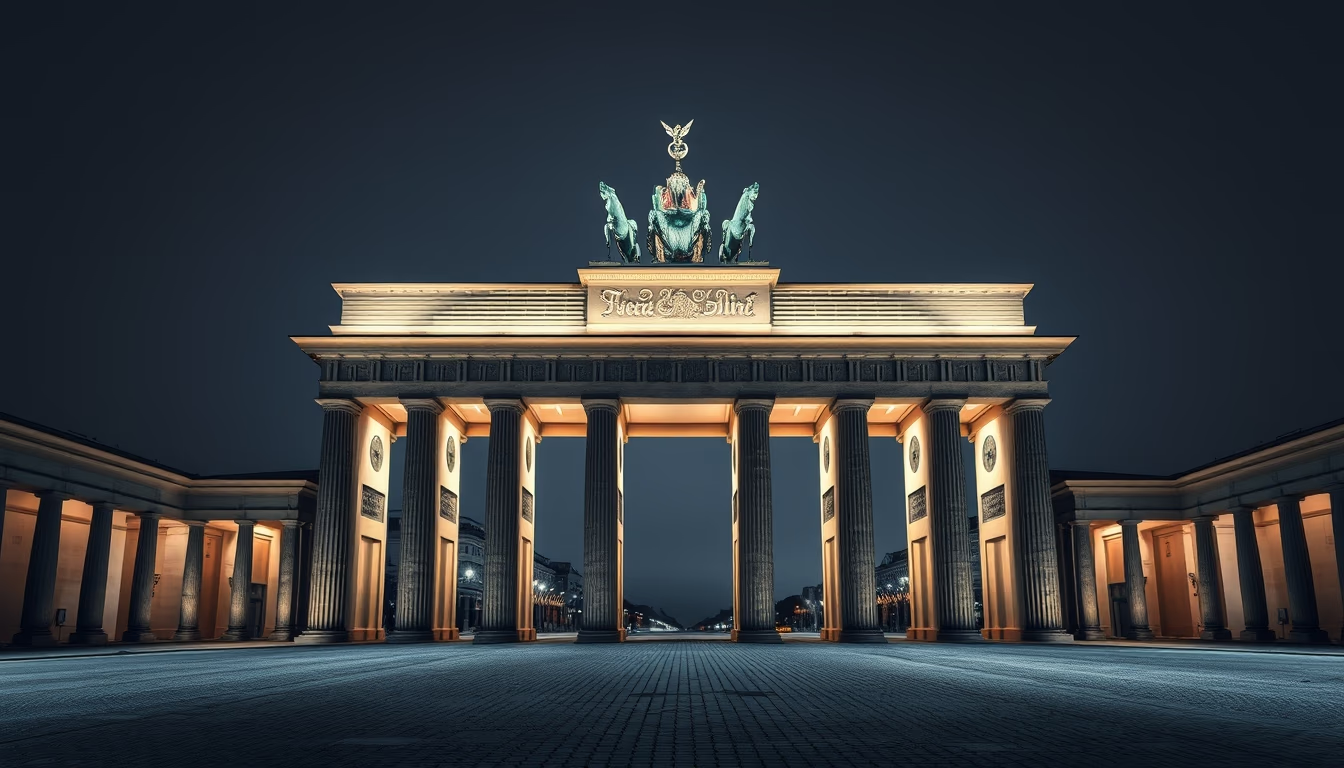
O Portão de Brandemburgo é o símbolo mais icônico de Berlim e um marco da unificação alemã, localizado na Pariser Platz.
Sobre o tema
O Portão de Brandemburgo, construído entre 1788 e 1791 por ordem do rei Frederico Guilherme II da Prússia, é um dos marcos mais reconhecíveis da Alemanha. Projetado por Carl Gotthard Langhans em estilo neoclássico, inspirado nos propileus da Acrópole de Atenas, o portão possui doze colunas dóricas que formam cinco passagens. A estrutura é coroada pela Quadriga, uma estátua de bronze da deusa Vitória (ou Irene, deusa da paz) conduzindo uma carruagem puxada por quatro cavalos. Originalmente, a Quadriga foi criada por Johann Gottfried Schadow em 1793 e simboliza a paz e a vitória.
Ao longo da história, o portão testemunhou eventos cruciais. Durante a Guerra Franco-Prussiana (1870-1871), a estátua foi levada para Paris como troféu, mas retornou em 1814. Na era nazista, o portão foi usado para desfiles militares. Após a Segunda Guerra Mundial, a estrutura ficou danificada e a Quadriga foi destruída; uma cópia foi instalada em 1958. Com a construção do Muro de Berlim em 1961, o portão ficou na zona oriental, mas isolado entre as duas Alemanhas, tornando-se um símbolo da divisão.
Em 1990, após a queda do muro, o Portão de Brandemburgo se transformou no principal símbolo da reunificação alemã. Hoje, é um destino turístico imperdível, localizado na Pariser Platz, próxima ao Reichstag e à Unter den Linden. A área ao redor é um centro cultural e político, com embaixadas e o Memorial do Holocausto. O portão é iluminado à noite e frequentemente palco de celebrações, como a festa de Ano Novo e eventos esportivos.
Curiosidade: a Quadriga original foi levada por Napoleão em 1806 para Paris, mas retornou em 1814 após a queda do imperador. A estátua atual é uma réplica; a original está no Museu de História Local de Berlim. O portão também foi palco do discurso de Ronald Reagan em 1987, quando ele desafiou Mikhail Gorbachev a "derrubar este muro".
Perguntas frequentes
Quando o Portão de Brandemburgo foi construído?
Foi construído entre 1788 e 1791 por ordem do rei Frederico Guilherme II da Prússia, com projeto de Carl Gotthard Langhans.
O que simboliza a Quadriga no topo do portão?
A Quadriga representa a deusa Vitória (ou Irene, deusa da paz) conduzindo uma carruagem, simbolizando paz e vitória.
Qual foi o papel do Portão de Brandemburgo na Guerra Fria?
Após a construção do Muro de Berlim em 1961, o portão ficou na zona oriental, mas inacessível, tornando-se um símbolo da divisão da Alemanha e da Europa.
URL direta
https://pub-c7d6a6ea828543ac903a74a341ccb2e1.r2.dev/imagens/brandenburg-gate-berlin-studio-still-life-p7.avifComo creditar
Inclua um link visível de volta pro UtilizAí. Copie um dos snippets abaixo:
<a href="https://xn--utiliza-eza.com/midia/imagens/brandenburg-gate-berlin-studio-still-life-p7">Brandenburg gate berlin</a> by <a href="https://xn--utiliza-eza.com">UtilizAí</a>, licensed under <a href="https://creativecommons.org/licenses/by/4.0/">CC BY 4.0</a>.
[Brandenburg gate berlin](https://xn--utiliza-eza.com/midia/imagens/brandenburg-gate-berlin-studio-still-life-p7) by [UtilizAí](https://xn--utiliza-eza.com), CC BY 4.0
Licença: CC-BY-4.0