Bonsai tree minimalist
1344×768 · AVIF · CC BY 4.0
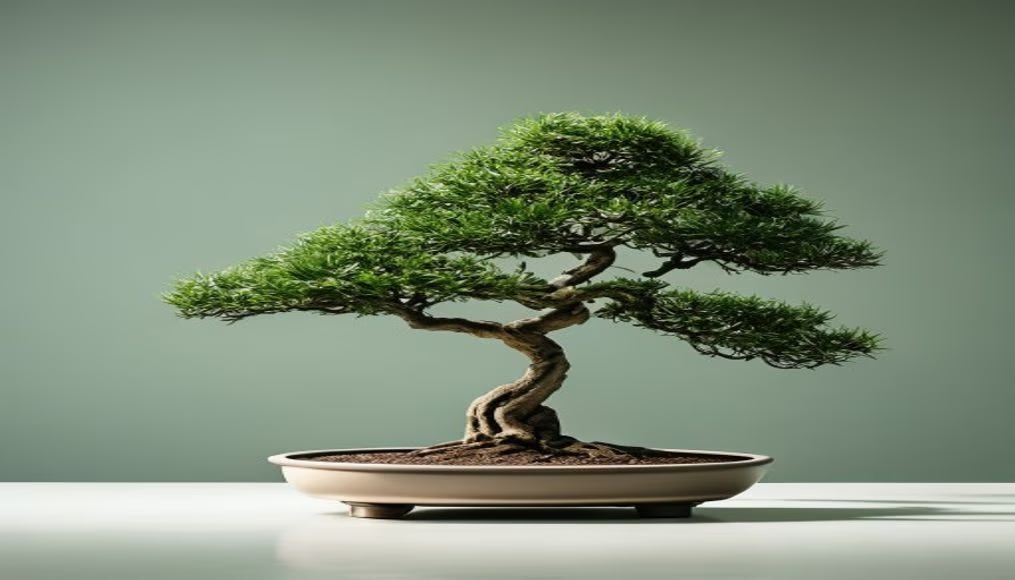
Bonsai is a centuries-old Japanese art of cultivating miniature trees, symbolizing harmony and patience.
About this subject
Bonsai, meaning 'tree in a tray' in Japanese, is a practice that originated in China over a thousand years ago and was refined in Japan. Unlike a common houseplant, a bonsai is a miniature tree cultivated in a container, following strict techniques of pruning, wiring, and shaping to create a stylized representation of nature. The art of bonsai reflects Zen Buddhist aesthetic principles such as simplicity, balance, and the beauty of aging.
In Japan, bonsai is valued as a symbol of status and tradition, often given as gifts on special occasions. Common species include pines, maples, and junipers, each requiring specific care. A bonsai can live for decades or even centuries, passed down through generations. Maintenance involves controlled watering, fertilization, proper light exposure, and repotting every few years.
The minimalist aesthetic of bonsai aligns with modern design trends like wabi-sabi, which appreciates imperfection and simplicity. In corporate or residential settings, a minimalist bonsai can serve as a focal point, conveying calm and focus. Despite its natural association, bonsai is also appreciated in technological contexts as a symbol of sustainable growth and innovation rooted in the past.
Interestingly, the world's smallest bonsai, the 'rice grain bonsai', fits on a fingertip and grows in a sand substrate. The largest known bonsai, a Japanese white pine over 400 years old, resides at the Shunkaen Temple in Tokyo. These examples showcase the art's versatility, adaptable to any scale while maintaining the principle of representing nature's grandeur in miniature.
Frequently Asked Questions
What is the origin of bonsai?
Bonsai originated in China as 'penjing' over a thousand years ago and was brought to Japan, where it developed as an independent art form, especially influenced by Zen Buddhism.
How long does a bonsai live?
With proper care, a bonsai can live for decades, centuries, or even millennia. There are specimens over 400 years old, like the white pine at Shunkaen Temple.
What does 'minimalist' mean in bonsai?
It refers to a cultivation style that emphasizes simple lines, sparse foliage, and a discreet pot, following the wabi-sabi aesthetic that values simplicity and natural imperfection.
Direct URL
https://pub-c7d6a6ea828543ac903a74a341ccb2e1.r2.dev/imagens/bonsai-tree-minimalist-commercial-product-photography-v9.avifHow to credit
Include a visible link back to UtilizAí. Copy one of the snippets below:
<a href="https://xn--utiliza-eza.com/en/midia/imagens/bonsai-tree-minimalist-commercial-product-photography-v9">Bonsai tree minimalist</a> by <a href="https://xn--utiliza-eza.com">UtilizAí</a>, licensed under <a href="https://creativecommons.org/licenses/by/4.0/">CC BY 4.0</a>.
[Bonsai tree minimalist](https://xn--utiliza-eza.com/en/midia/imagens/bonsai-tree-minimalist-commercial-product-photography-v9) by [UtilizAí](https://xn--utiliza-eza.com), CC BY 4.0
License: CC-BY-4.0