Bonsai tools workshop
1344×768 · AVIF · CC BY 4.0

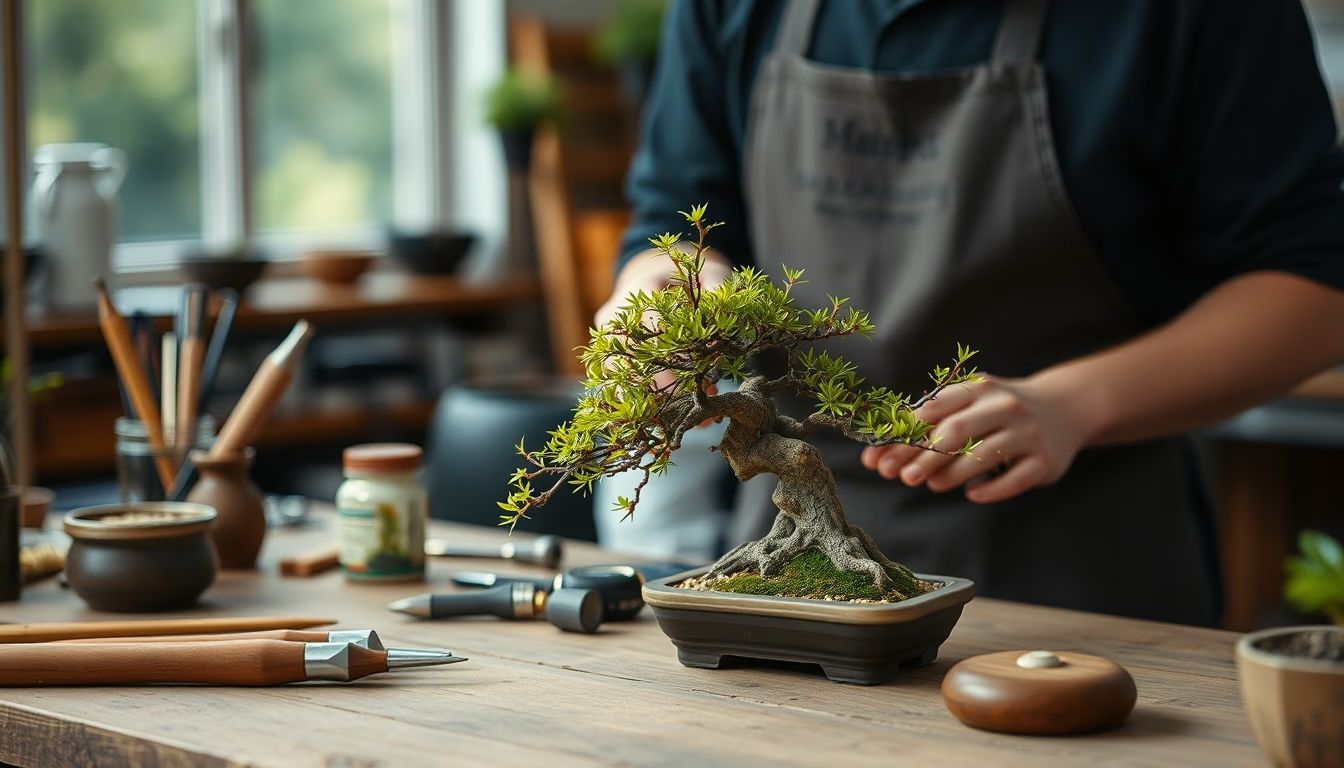
Bonsai tools workshops teach maintenance techniques and the use of specialized instruments, essential for the ancient art.
About this subject
Bonsai tools are meticulously designed instruments for pruning, shaping, and maintaining miniature trees. They differ from common gardening tools by having thinner blades, ergonomic handles, and high-hardness steels such as Japanese carbon steel (hagane) or stainless steel. Each tool serves a specific purpose: pruning shears (hasami) for fine branches, concave cutters (tonkiri) for removing thick branches without leaving scars, and carving knives (kogatana) for bark trimming. Specialized workshops offer the opportunity to learn how to sharpen, clean, and correctly use each piece under the guidance of masters with decades of experience.
The tradition of bonsai tool workshops dates back to feudal Japan, where blacksmiths (kajiya) forged instruments on order for samurai who practiced miniature cultivation. Today, these events occur worldwide, from Osaka to São Paulo, gathering enthusiasts seeking to improve the precision of their cuts. During the workshops, participants learn the differences between steels and tempers, as well as maintenance techniques that extend tool lifespan. A crucial aspect is the sharpening angle: the blade must be kept between 15 and 20 degrees to ensure clean cuts that avoid harming the tree.
Workshops also address the relationship between tool and tree, emphasizing that a well-maintained instrument reflects the artist's respect for the plant. Many instructors teach that each cut is a decision shaping the future of the living artwork, and the tool is the extension of the cultivator's hand. Moreover, hands-on sessions allow students to test different brands and models, from traditional masakuni to modern innovations with titanium handles. At the end, participants receive personalized guidance on which tools to acquire for their learning stage, avoiding unnecessary expenses on inadequate equipment.
Frequently Asked Questions
What basic tools are necessary to start in bonsai?
To start, it is recommended to have a fine-tip pruning shear (hasami), a concave cutter (tonkiri), and a cleaning brush. These three tools allow most initial cuts and keep the tree healthy.
Where can I find bonsai tool workshops in English-speaking countries?
Workshops are often offered by bonsai associations such as the Bonsai Society of America or the Bonsai Association of the United Kingdom. Specialized nurseries and online platforms like Bonsai Empire also host regular sessions in major cities.
How should I care for bonsai tools to extend their lifespan?
After each use, wipe the blades with a dry cloth and apply camellia or mineral oil to prevent rust. Sharpen regularly with a water stone (1000 to 6000 grit) and store in a dry place, preferably in a dedicated case. Avoid cutting wire with pruning shears.
Direct URL
https://pub-c7d6a6ea828543ac903a74a341ccb2e1.r2.dev/imagens/bonsai-tools-workshop-long-exposure-fresh1.avifHow to credit
Include a visible link back to UtilizAí. Copy one of the snippets below:
<a href="https://xn--utiliza-eza.com/en/midia/imagens/bonsai-tools-workshop-long-exposure-fresh1">Bonsai tools workshop</a> by <a href="https://xn--utiliza-eza.com">UtilizAí</a>, licensed under <a href="https://creativecommons.org/licenses/by/4.0/">CC BY 4.0</a>.
[Bonsai tools workshop](https://xn--utiliza-eza.com/en/midia/imagens/bonsai-tools-workshop-long-exposure-fresh1) by [UtilizAí](https://xn--utiliza-eza.com), CC BY 4.0
License: CC-BY-4.0