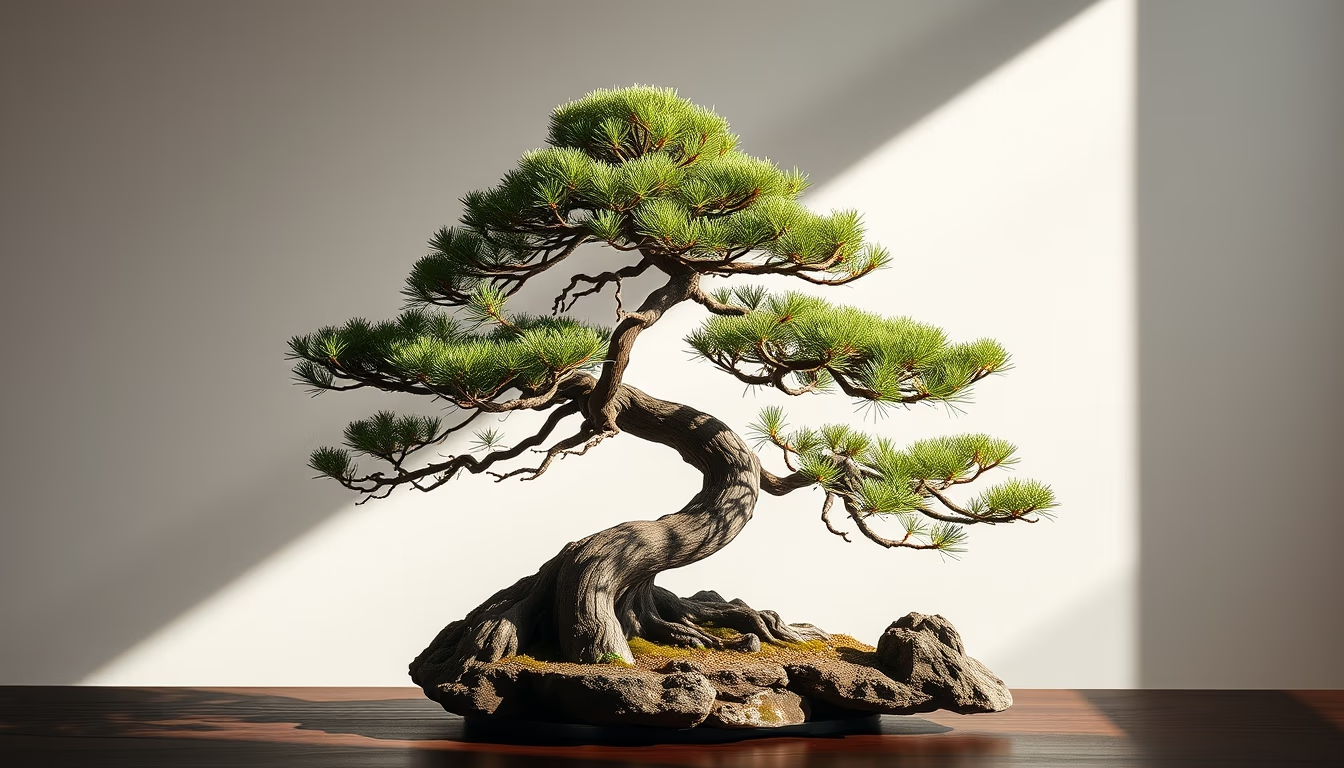
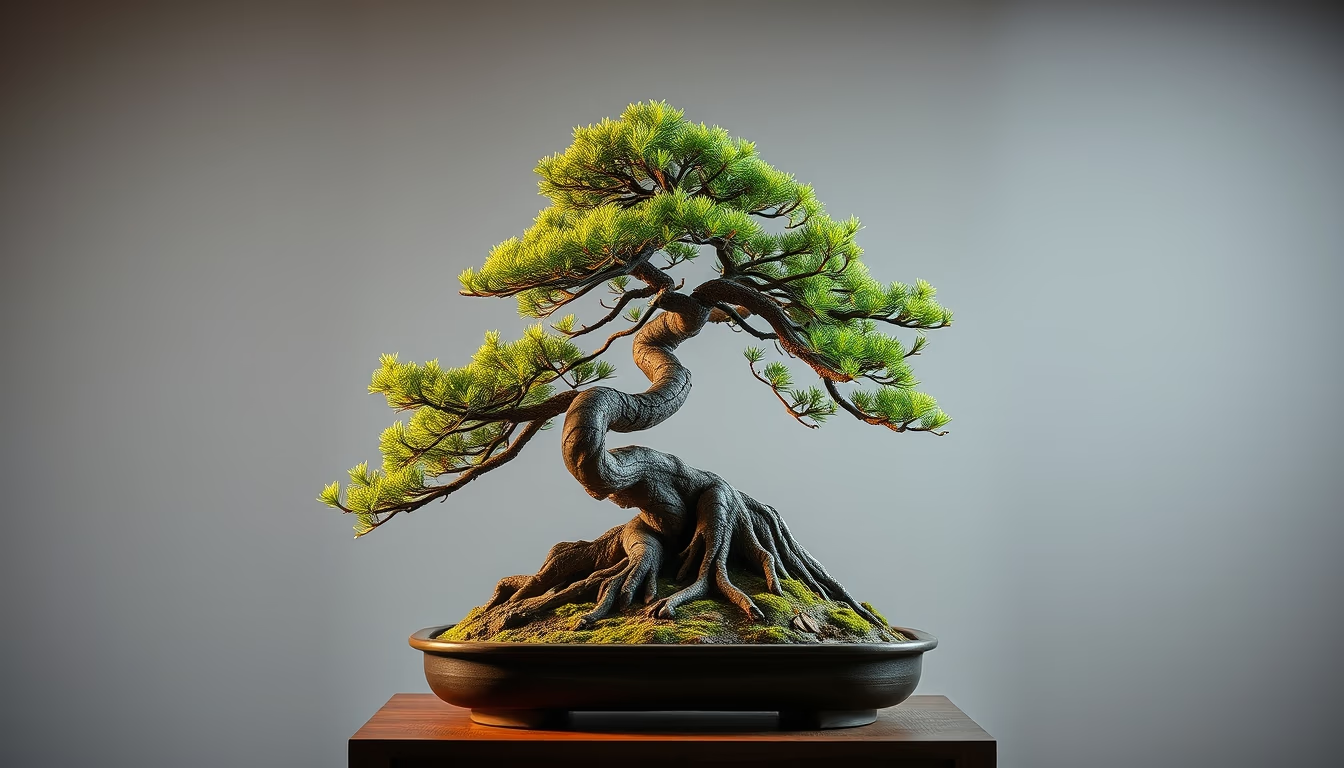
Bonsai forest landscape
1344×768 · AVIF · CC BY 4.0
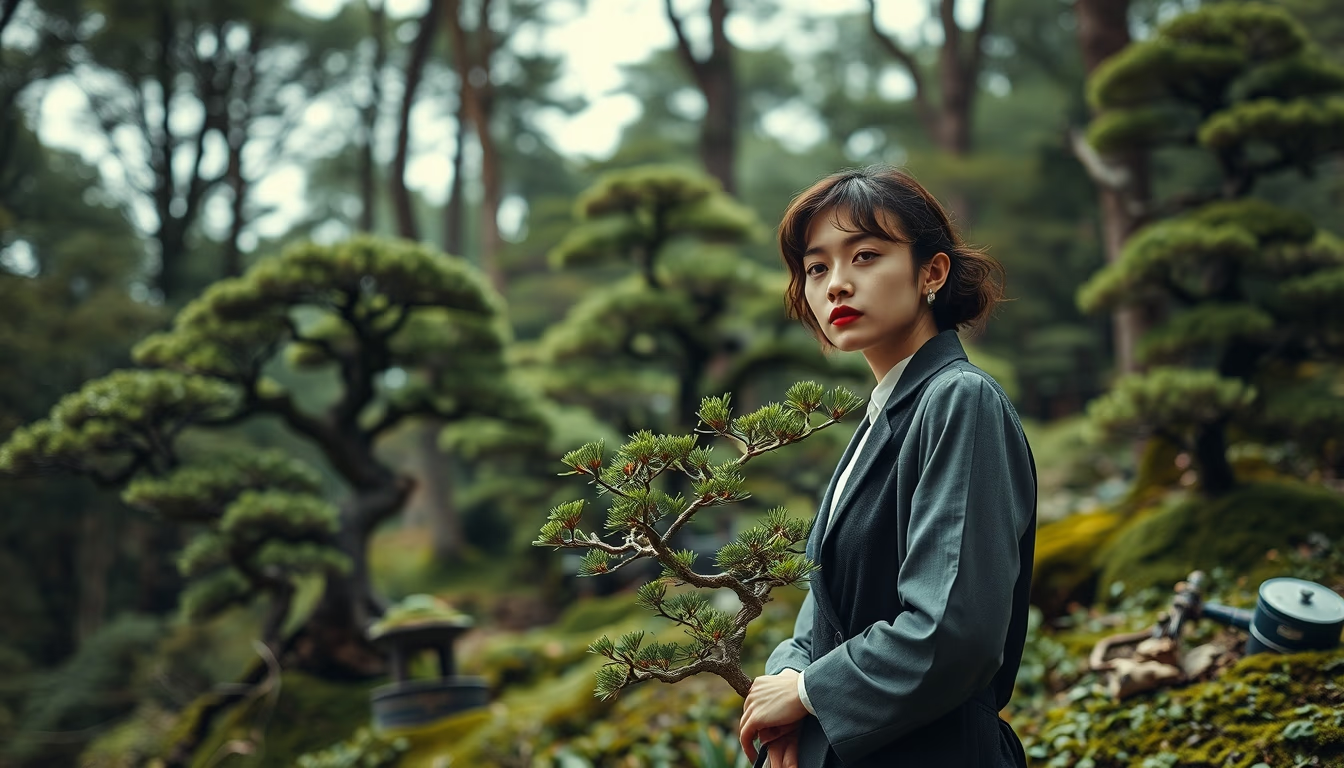
The art of bonsai forest landscape combines multiple miniature trees to recreate natural ecosystems, requiring years of technique and patience.
About this subject
The bonsai forest, known in Japan as yose-ue, is a composition that gathers several miniature trees in a single container, recreating the depth and scale of a natural landscape. Unlike the traditional single-tree bonsai, the forest style aims to simulate a scene from nature, with trunks of varying heights and thicknesses arranged harmoniously, usually in shallow, wide pots that suggest a field or hillside.
The technique originated in China as penjing and was refined in Japan over centuries. The forest arrangement is particularly valued for conveying a sense of vastness and ecological balance on a small scale. In the West, it gained popularity in the 20th century, adopted by enthusiasts seeking a greater design and maintenance challenge.
To create a convincing bonsai forest, the artist selects species that share similar leaf characteristics and growth habits, such as pines, maples, or zelkovas. The layout follows perspective rules: taller trees are placed in the back or center, while shorter, thinner ones occupy the front or edges. The number of trees is typically odd (3, 5, or 7) to avoid rigid symmetry. Beyond pruning and wiring, surface moss is used to unify the visual and retain moisture.
Interestingly, although they appear independent, the trees in a bonsai forest share the same root system in the pot, requiring careful repotting every two or three years to prevent excessive competition. The final result can take decades to reach aesthetic maturity, making each composition a living work in constant evolution.
Frequently Asked Questions
How many trees are used in a bonsai forest?
An odd number of trees is typically used, such as 3, 5, or 7, to avoid symmetry and create a more natural composition.
What is the origin of the bonsai forest style?
The technique derives from Chinese penjing and was refined in Japan over centuries, known as yose-ue.
Which tree species are most common in forest arrangements?
Species like pines, Japanese maples (Acer palmatum), zelkovas, and elms are often used due to their small leaves and compatible growth habits.
Direct URL
https://pub-c7d6a6ea828543ac903a74a341ccb2e1.r2.dev/imagens/bonsai-forest-landscape-high-fashion-editorial-fresh18.avifHow to credit
Include a visible link back to UtilizAí. Copy one of the snippets below:
<a href="https://xn--utiliza-eza.com/en/midia/imagens/bonsai-forest-landscape-high-fashion-editorial-fresh18">Bonsai forest landscape</a> by <a href="https://xn--utiliza-eza.com">UtilizAí</a>, licensed under <a href="https://creativecommons.org/licenses/by/4.0/">CC BY 4.0</a>.
[Bonsai forest landscape](https://xn--utiliza-eza.com/en/midia/imagens/bonsai-forest-landscape-high-fashion-editorial-fresh18) by [UtilizAí](https://xn--utiliza-eza.com), CC BY 4.0
License: CC-BY-4.0