Bonsai maple autumn red
1344×768 · AVIF · CC BY 4.0
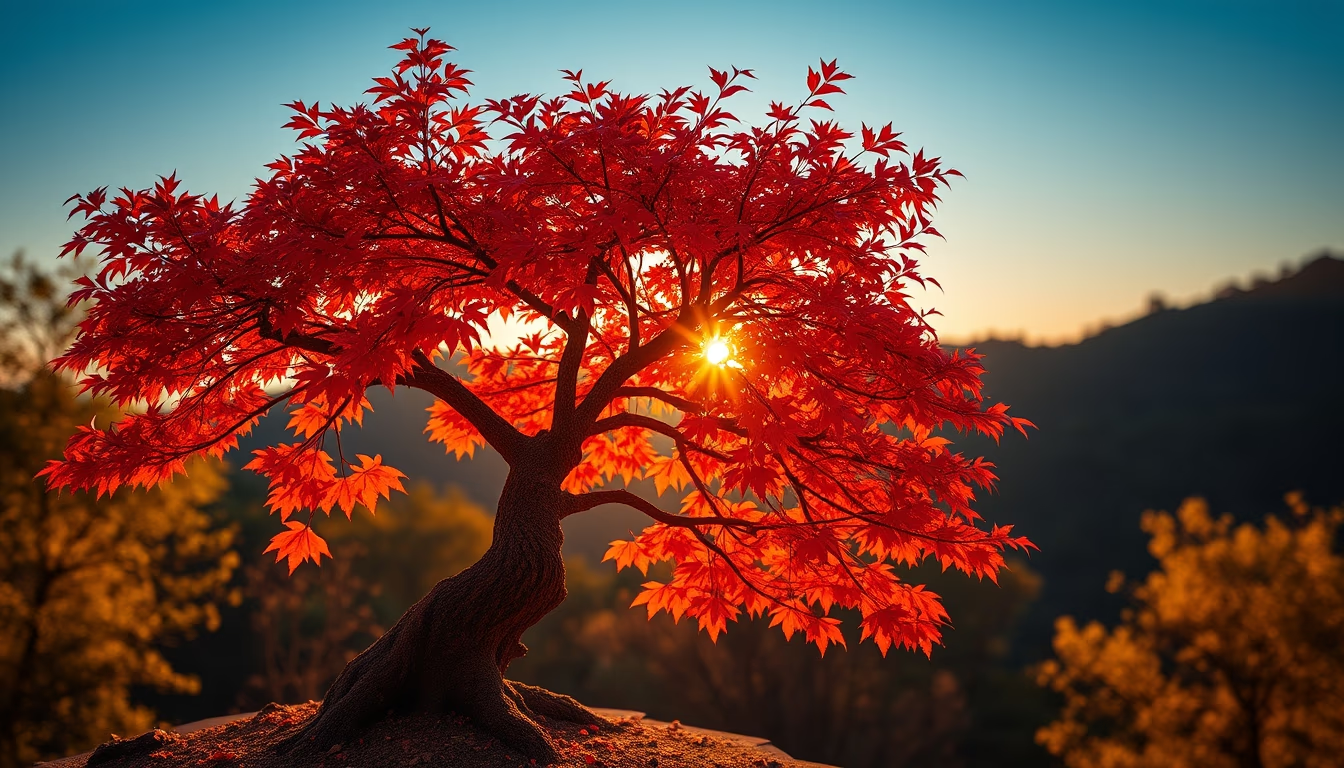
The Japanese maple bonsai displays vibrant red autumn leaves, merging ancient horticultural technique with seasonal Asian tree beauty.
About this subject
The Japanese maple, scientifically known as Acer palmatum, is one of the most prized species in the art of bonsai. Native to Japan, China, and Korea, its delicate leaves and naturally sculptural form make it ideal for miniaturization. During autumn, the leaves undergo a spectacular senescence process, where chlorophyll degrades and reveals anthocyanins, pigments that produce shades ranging from orange to deep red, depending on the genetic variety and climatic conditions.
The practice of cultivating trees in pots dates back over a thousand years in China, but it was in Japan that bonsai developed as a refined art, with aesthetic principles such as balance, asymmetry, and the imitation of nature in miniature. The maple is particularly valued for its ability to produce vibrant autumn colors, a phenomenon known as "kōyō" in Japanese, which draws admirers to forests and gardens. Adequate sun exposure and temperature variation between day and night are crucial to enhance the coloration.
Caring for a maple bonsai requires special attention. Pruning should be done in late winter or early spring, before the first leaves emerge. Watering needs to be frequent but without waterlogging, as the maple is sensitive to excess water. During autumn, after leaf fall, the bonsai enters dormancy and needs protection from severe frost. Many enthusiasts keep their maples in sheltered spots during winter.
The beauty of autumn red maple has inspired countless works of art, poetry, and photography. In Japan, the contemplation of autumn leaves is a cultural tradition called "momijigari", similar to "hanami" for cherry blossoms. This cinematic wide shot captures the majesty of a maple bonsai at its peak coloration, surrounded by an environment that enhances its shape and color.
Frequently Asked Questions
What is the best time to prune a maple bonsai?
Pruning should be done in late winter or early spring, before the first leaves emerge, to stimulate growth and maintain shape.
Why do maple leaves turn red in autumn?
The red color results from chlorophyll degradation and the production of anthocyanins, pigments that protect the leaves and attract pollinators. Sun exposure and temperature variation enhance the color.
Does a maple bonsai need special winter care?
Yes, during winter the bonsai enters dormancy and must be protected from severe frost. Many growers keep it in sheltered spots or use cold frames.
Direct URL
https://pub-c7d6a6ea828543ac903a74a341ccb2e1.r2.dev/imagens/bonsai-maple-autumn-red-cinematic-wide-shot-fresh11.avifHow to credit
Include a visible link back to UtilizAí. Copy one of the snippets below:
<a href="https://xn--utiliza-eza.com/en/midia/imagens/bonsai-maple-autumn-red-cinematic-wide-shot-fresh11">Bonsai maple autumn red</a> by <a href="https://xn--utiliza-eza.com">UtilizAí</a>, licensed under <a href="https://creativecommons.org/licenses/by/4.0/">CC BY 4.0</a>.
[Bonsai maple autumn red](https://xn--utiliza-eza.com/en/midia/imagens/bonsai-maple-autumn-red-cinematic-wide-shot-fresh11) by [UtilizAí](https://xn--utiliza-eza.com), CC BY 4.0
License: CC-BY-4.0