Blue mosque istanbul
1344×768 · AVIF · CC BY 4.0
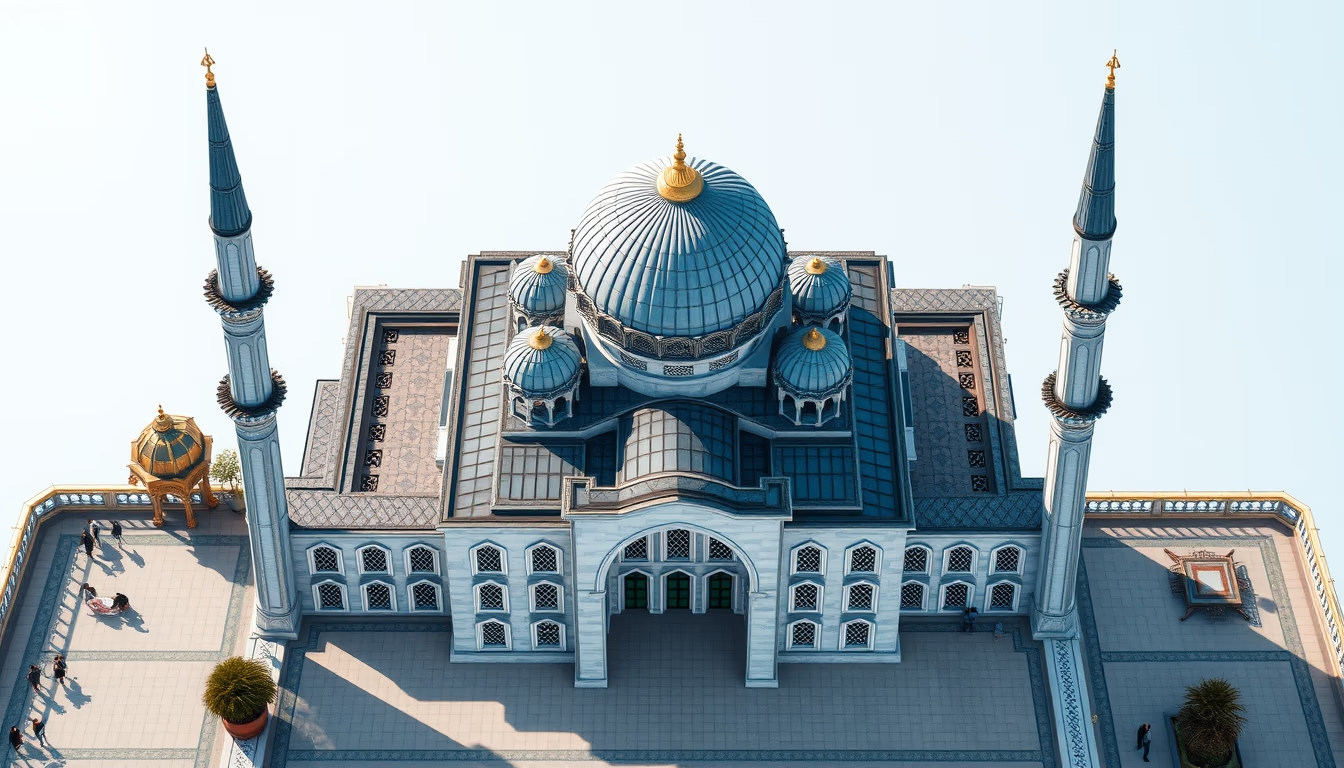
The Blue Mosque, also known as the Sultan Ahmed Mosque, is one of Istanbul's most iconic landmarks, renowned for its six minarets and blue tiles.
About this subject
The Blue Mosque, officially the Sultan Ahmed Mosque, was constructed between 1609 and 1616 during the reign of Ottoman Sultan Ahmed I. Located in the historic Sultanahmet district of Istanbul, it stands across from the Hagia Sophia, forming one of the world's most impressive architectural pairings. The architect was Sedefkar Mehmed Aga, a pupil of the legendary Mimar Sinan, who aimed to surpass the grandeur of the Hagia Sophia. The mosque is famous for its six minarets, a rarity at the time because only the Great Mosque of Mecca had six. To resolve the controversy, the sultan funded the addition of a seventh minaret in Mecca.
The interior features over 20,000 Iznik ceramic tiles, predominantly in blue and green tones, which give the mosque its popular name. The main dome rises 43 meters high, supported by four massive pillars, while more than 200 stained glass windows filter natural light. The mosque remains an active place of worship, open to visitors outside prayer times. A notable detail: the carpet is always clean, and visitors must remove their shoes before entering.
The Blue Mosque has been a UNESCO World Heritage Site since 1985 as part of the Historic Areas of Istanbul. Its location on Sultanahmet Square makes it a central tourist hub, close to other attractions like Topkapi Palace and the Grand Bazaar. Despite the nickname, the mosque was never officially called Blue; the name derives from the tiles adorning its interior. For worshippers, it is a place of devotion; for tourists, a symbol of the rich Ottoman heritage.
Frequently Asked Questions
Why does the Blue Mosque have six minarets?
The Blue Mosque has six minarets because Sultan Ahmed I wanted an unusual number to impress. This caused controversy, as only the Great Mosque of Mecca had six. To resolve it, the sultan funded the addition of a seventh minaret in Mecca.
What is the best time to visit the Blue Mosque?
The best time is outside prayer times (which occur five times a day). Visits are generally allowed between prayers, but the mosque closes during prayer. Early morning or late afternoon are good options to avoid crowds.
Do I need to cover my head to enter the Blue Mosque?
Yes, all female visitors must cover their heads with a scarf, and everyone must wear clothing covering shoulders and knees. Shoes must be removed at the entrance. Scarves and skirts are provided free of charge by the mosque.
Direct URL
https://pub-c7d6a6ea828543ac903a74a341ccb2e1.r2.dev/imagens/blue-mosque-istanbul-isometric-flat-lay-p3.avifHow to credit
Include a visible link back to UtilizAí. Copy one of the snippets below:
<a href="https://xn--utiliza-eza.com/en/midia/imagens/blue-mosque-istanbul-isometric-flat-lay-p3">Blue mosque istanbul</a> by <a href="https://xn--utiliza-eza.com">UtilizAí</a>, licensed under <a href="https://creativecommons.org/licenses/by/4.0/">CC BY 4.0</a>.
[Blue mosque istanbul](https://xn--utiliza-eza.com/en/midia/imagens/blue-mosque-istanbul-isometric-flat-lay-p3) by [UtilizAí](https://xn--utiliza-eza.com), CC BY 4.0
License: CC-BY-4.0