Bayon temple faces
1344×768 · AVIF · CC BY 4.0
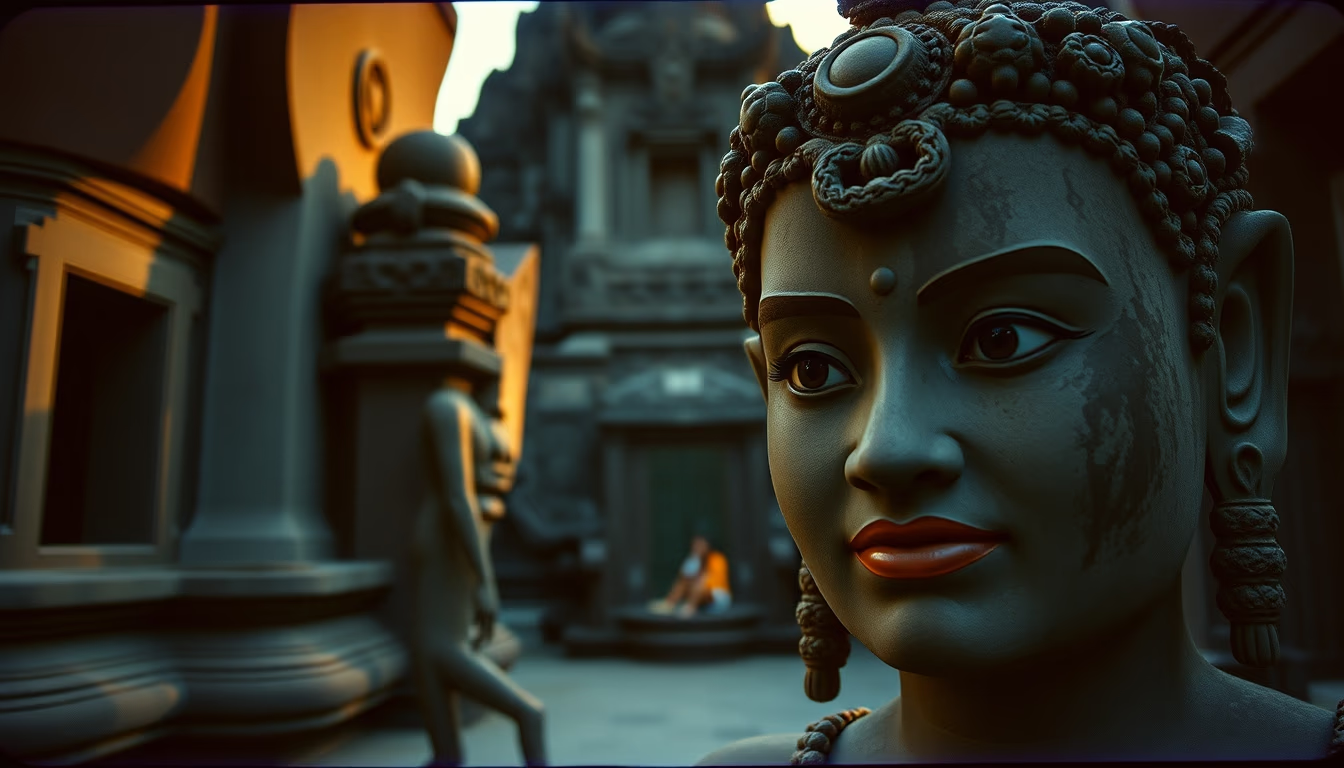
The Bayon temple in Cambodia is renowned for its dozens of serene stone faces adorning its towers, an icon of Khmer architecture.
About this subject
The Bayon temple, located at the center of the Angkor Thom complex in Cambodia, was built in the late 12th century by King Jayavarman VII, one of the most important monarchs of the Khmer Empire. Bayon is renowned for its numerous stone faces carved into the towers, representing Avalokiteshvara, the bodhisattva of compassion in Mahayana Buddhism, or possibly the king himself as a devotee. It is estimated that there are over 200 faces on the temple, each with a serene expression and half-closed eyes, creating an atmosphere of mystery and reverence.
The faces face the four cardinal directions, suggesting a protective and watchful role over the kingdom. The construction of Bayon reflects the religious transition from Hinduism to Buddhism in the Khmer Empire. Unlike other temples in the Angkor complex, Bayon is more compact and has a unique structure of clustered towers. The bas-reliefs on the temple walls depict daily life, battles, and processions, offering valuable historical records.
The temple was dedicated to Buddhism but later underwent modifications to incorporate Hindu elements. The stone faces of Bayon are one of the greatest archaeological treasures of Southeast Asia, attracting millions of visitors each year. The carving technique and symmetry of the faces impress with their precision, considering they were carved from sandstone using hand tools. Bayon has been a UNESCO World Heritage site since 1992.
Frequently Asked Questions
How many stone faces are there at the Bayon temple?
It is estimated that there are over 200 stone faces adorning the towers of Bayon, though the exact number varies with excavations and restorations.
What do the faces of Bayon temple represent?
The faces represent Avalokiteshvara, the bodhisattva of compassion in Mahayana Buddhism, or possibly King Jayavarman VII as a devotee. They symbolize watchfulness and protection.
When was the Bayon temple built?
Bayon was built in the late 12th century during the reign of King Jayavarman VII as part of the Angkor Thom complex.
Direct URL
https://pub-c7d6a6ea828543ac903a74a341ccb2e1.r2.dev/imagens/bayon-temple-faces-lo-fi-disposable-camera-p5.avifHow to credit
Include a visible link back to UtilizAí. Copy one of the snippets below:
<a href="https://xn--utiliza-eza.com/en/midia/imagens/bayon-temple-faces-lo-fi-disposable-camera-p5">Bayon temple faces</a> by <a href="https://xn--utiliza-eza.com">UtilizAí</a>, licensed under <a href="https://creativecommons.org/licenses/by/4.0/">CC BY 4.0</a>.
[Bayon temple faces](https://xn--utiliza-eza.com/en/midia/imagens/bayon-temple-faces-lo-fi-disposable-camera-p5) by [UtilizAí](https://xn--utiliza-eza.com), CC BY 4.0
License: CC-BY-4.0