Bassoon double reed
1344×768 · AVIF · CC BY 4.0
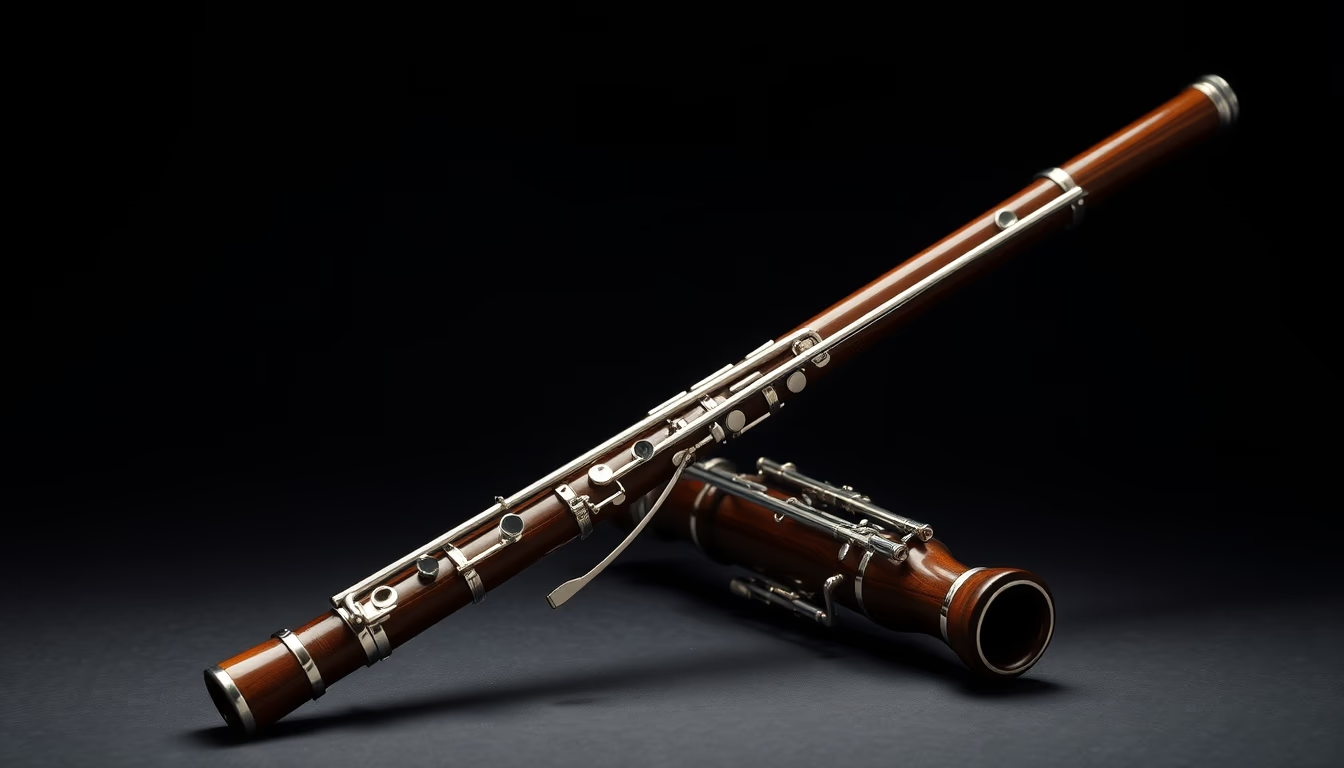
The bassoon double reed is a small handmade component that defines the instrument's timbre and response.
About this subject
The bassoon double reed is one of the most critical and delicate components of the instrument. Unlike single reeds (such as those of clarinets or saxophones), it consists of two blades of cane (Arundo donax) bound to a metal tube (the “staple”), which fits into the instrument's bocal. Handcrafting the reed requires great skill: the musician (or a specialist) scrapes the blades with razor blades or specific tools to adjust the thickness, shape, and opening length (the “window”).
Reed quality directly affects ease of sound production, intonation stability, and harmonic richness. Hard reeds demand more air pressure and can cause fatigue; soft reeds tend to sound weak and out of tune. Therefore, most bassoonists own several reeds at different adjustment stages and switch them depending on the piece being played and environmental conditions such as temperature and humidity.
Historically, double reeds evolved from medieval instruments like the chirimia. In the modern bassoon, the double reed is essential for producing the instrument's characteristic rich, versatile sound, capable of deep lows and piercing highs. The cane is typically grown in specific regions, such as southern France and Spain, where climate and soil produce high-quality fibers.
Interestingly, many bassoonists prefer making their own reeds, dedicating exclusive time to maintenance and fine-tuning. There are even forums and workshops focused solely on the art of making double reeds, highlighting how central this small object is to a professional bassoonist's life.
Frequently Asked Questions
Why is the bassoon double reed so expensive?
The high cost is due to the handcrafted process: the cane (Arundo donax) is grown in specific regions, cut, dried, and worked manually by skilled artisans. Each reed takes time and skill to produce, and it is a consumable item that wears out quickly.
How often does a bassoonist need to replace the reed?
It depends on usage, but on average a reed lasts from a few weeks to a month if used daily. Factors like saliva, humidity, and intensity of practice affect its lifespan. Many musicians carry several reeds and rotate them.
Is it difficult to learn to make your own bassoon reed?
Yes, it requires patience and practice. Making double reeds is considered an art; many bassoonists take years to master fine adjustments. Courses and tutorials exist, but hands-on experience is irreplaceable.
Direct URL
https://pub-c7d6a6ea828543ac903a74a341ccb2e1.r2.dev/imagens/bassoon-double-reed-studio-still-life-p0.avifHow to credit
Include a visible link back to UtilizAí. Copy one of the snippets below:
<a href="https://xn--utiliza-eza.com/en/midia/imagens/bassoon-double-reed-studio-still-life-p0">Bassoon double reed</a> by <a href="https://xn--utiliza-eza.com">UtilizAí</a>, licensed under <a href="https://creativecommons.org/licenses/by/4.0/">CC BY 4.0</a>.
[Bassoon double reed](https://xn--utiliza-eza.com/en/midia/imagens/bassoon-double-reed-studio-still-life-p0) by [UtilizAí](https://xn--utiliza-eza.com), CC BY 4.0
License: CC-BY-4.0