Bassoon double reed
1344×768 · AVIF · CC BY 4.0
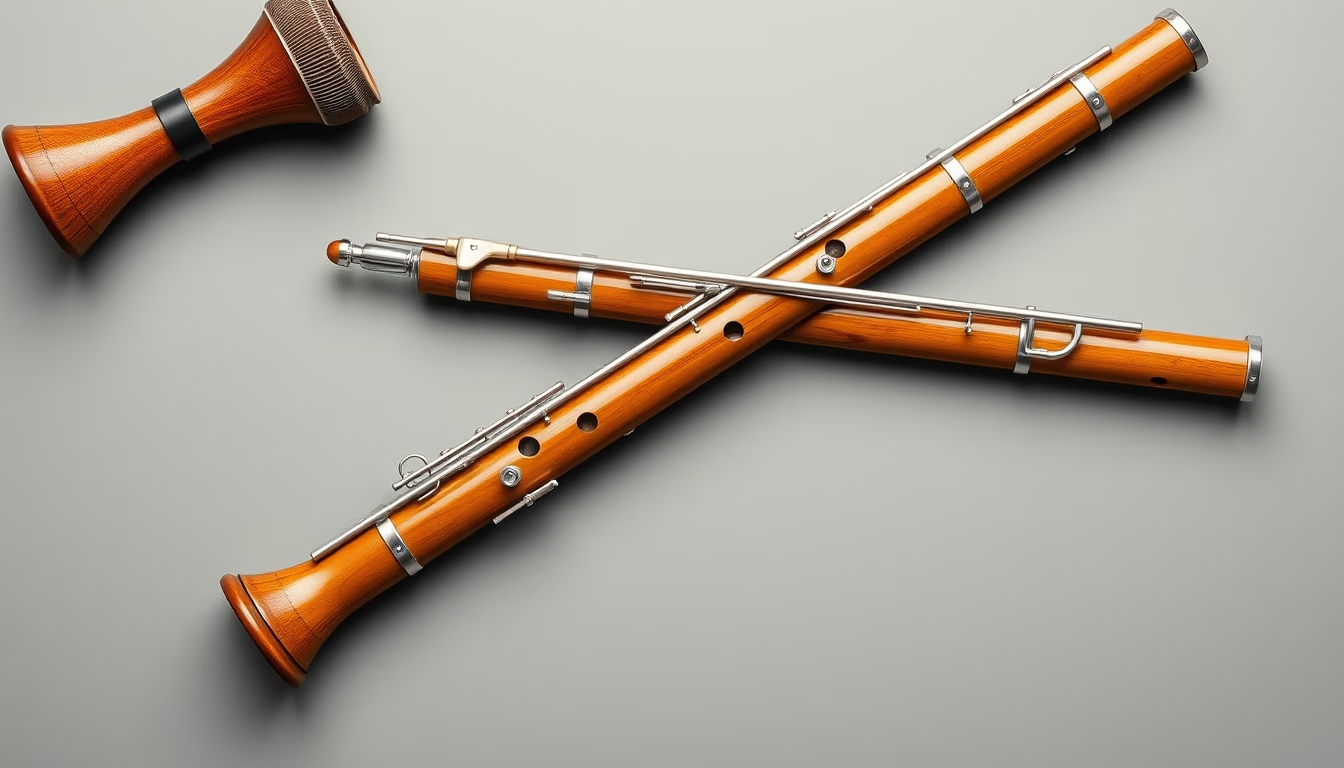
The bassoon double reed is an essential component made of cane, responsible for the instrument's characteristic timbre.
About this subject
The bassoon double reed is a handmade piece crafted from Arundo donax cane, primarily grown in regions of France, Italy, and Spain. Each reed is individually sculpted: the cane is cut, scraped, and tied to a metal tube (bocal) that fits into the bassoon's bore. The thickness and shape of the scraping determine the reed's resistance and response, directly affecting pitch and sound projection.
Unlike single reeds (such as those for clarinet or saxophone), the double reed vibrates through the friction of two cane blades. This vibration produces a sound rich in harmonics, giving the bassoon its deep, expressive voice. Professional bassoonists often spend hours customizing their reeds, as minor variations can dramatically alter playability and tone.
Historically, double reeds evolved from early reed instruments like the dulcian, the Renaissance precursor to the bassoon. The manufacturing technique has remained largely unchanged for centuries, though modern tools like electric scrapers exist. On average, a well-maintained reed lasts two to four weeks of intensive use, but factors such as humidity, temperature, and player technique affect its lifespan.
Interestingly, many beginners purchase pre-made reeds, while advanced players make their own. Choosing the hardness (soft, medium, hard) depends on repertoire and personal preference. In orchestras, it is common to see musicians adjusting reeds during intermissions, highlighting the importance of this small object in bassoon performance.
Frequently Asked Questions
How long does a bassoon double reed last?
On average, 2 to 4 weeks of daily use, depending on care, humidity, and playing intensity. Poorly maintained reeds may last only a few days.
Why do bassoonists make their own reeds?
To have control over response, tuning, and tone. Each player has specific preferences, and handmade reeds allow precise adjustments that commercial reeds do not offer.
How can you tell if a bassoon reed is good?
A good reed should produce a consistent sound without hisses, respond easily at all dynamics, and maintain stable pitch. The ideal resistance is one that allows comfortable playing without excessive effort.
Direct URL
https://pub-c7d6a6ea828543ac903a74a341ccb2e1.r2.dev/imagens/bassoon-double-reed-isometric-flat-lay-p2.avifHow to credit
Include a visible link back to UtilizAí. Copy one of the snippets below:
<a href="https://xn--utiliza-eza.com/en/midia/imagens/bassoon-double-reed-isometric-flat-lay-p2">Bassoon double reed</a> by <a href="https://xn--utiliza-eza.com">UtilizAí</a>, licensed under <a href="https://creativecommons.org/licenses/by/4.0/">CC BY 4.0</a>.
[Bassoon double reed](https://xn--utiliza-eza.com/en/midia/imagens/bassoon-double-reed-isometric-flat-lay-p2) by [UtilizAí](https://xn--utiliza-eza.com), CC BY 4.0
License: CC-BY-4.0