Barista pouring milk
1344×768 · AVIF · CC BY 4.0
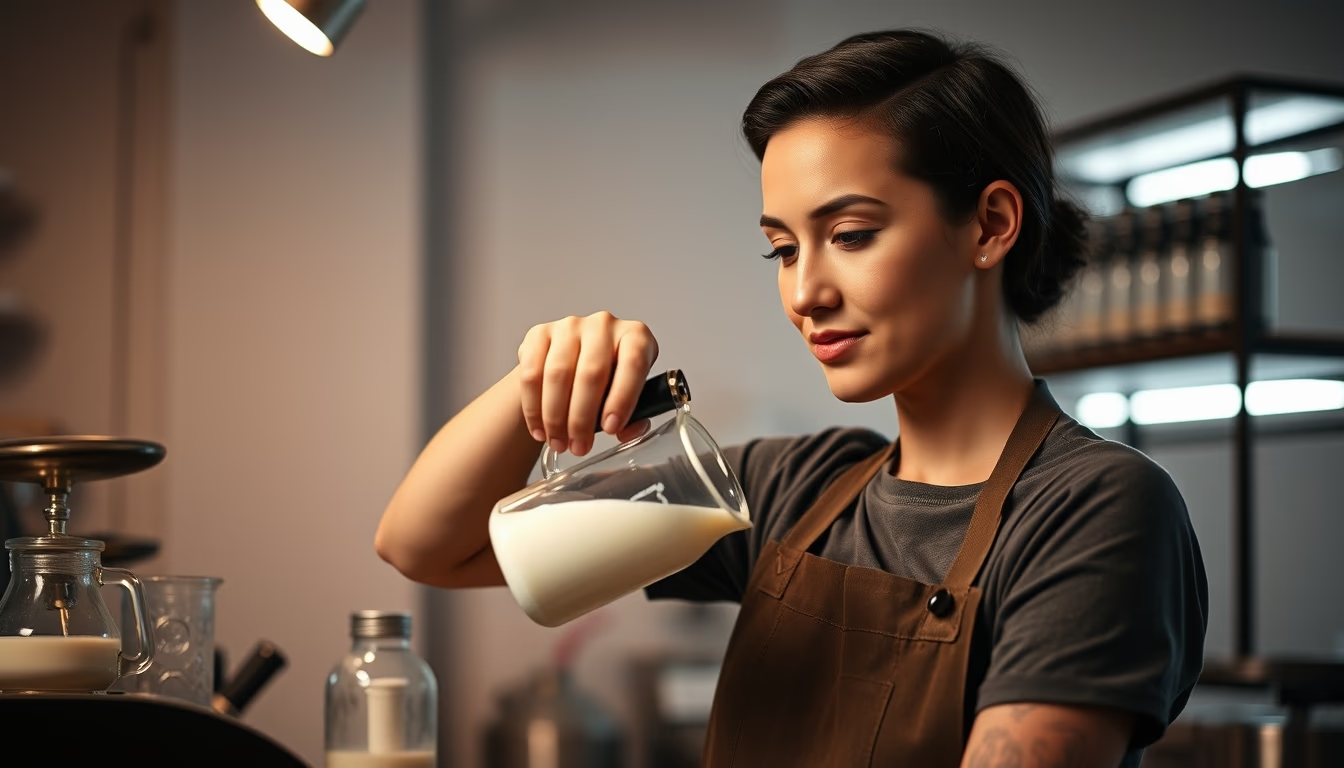
The skill of an expert barista pouring steamed milk over espresso, creating patterns that delight both eyes and taste buds.
About this subject
At the heart of specialty coffee culture, the barista plays an essential role in turning simple ingredients into a sensory experience. The act of pouring steamed milk over espresso, known as latte art, demands precision, practice, and technical knowledge. The ideal milk temperature falls between 60°C and 65°C; above that, proteins denature and the flavor burns. The microfoam texture, achieved through proper steaming technique, enables designs like tulips, rosettas, and hearts, requiring fine control of flow rate and pitcher height.
Brazil, the world's largest coffee producer and exporter, also has a growing specialty coffee scene. Cities like São Paulo, Belo Horizonte, and Curitiba are home to award-winning baristas in national and international competitions. The barista profession, regulated in Brazil since 2015, demands knowledge of beans, roast, grind, and extraction, as well as interpersonal skills to interact with customers.
The third wave coffee movement, which values traceability and coffee terroir, has brought recognition to the barista's craft. The attention to detail in preparing a cappuccino or latte is not just aesthetic: the quality of the foam directly affects the beverage's flavor and creaminess. For many, watching the barista pour the milk is the first step in an experience that engages all senses.
In the studio portrait, the barista focuses on the pitcher's movement. The studio lighting highlights the fluidity of the liquid and the coffee surface, emphasizing the contrast between the dark espresso and white milk. More than a technique, latte art represents the care and passion that turn a cup of coffee into a small work of art.
Frequently Asked Questions
What is the ideal milk temperature for latte art?
The ideal temperature is between 60°C and 65°C. Above that, the milk scalds and loses natural sweetness, and the microfoam becomes unstable for designs.
Do I need a specific type of milk to create patterns on coffee?
Milk with higher protein content, like whole milk, produces more stable microfoam. Plant-based milks, such as soy or oat, require barista-specific versions that contain stabilizers.
How long does it take to learn latte art?
Basic shapes like a heart can be learned in a few weeks of daily practice. Advanced designs like rosettas and tulips require months of consistent training and technique adjustment.
Direct URL
https://pub-c7d6a6ea828543ac903a74a341ccb2e1.r2.dev/imagens/barista-pouring-milk-studio-editorial-portrait-p3.avifHow to credit
Include a visible link back to UtilizAí. Copy one of the snippets below:
<a href="https://xn--utiliza-eza.com/en/midia/imagens/barista-pouring-milk-studio-editorial-portrait-p3">Barista pouring milk</a> by <a href="https://xn--utiliza-eza.com">UtilizAí</a>, licensed under <a href="https://creativecommons.org/licenses/by/4.0/">CC BY 4.0</a>.
[Barista pouring milk](https://xn--utiliza-eza.com/en/midia/imagens/barista-pouring-milk-studio-editorial-portrait-p3) by [UtilizAí](https://xn--utiliza-eza.com), CC BY 4.0
License: CC-BY-4.0