Barcode scanner at checkout
1344×768 · AVIF · CC BY 4.0
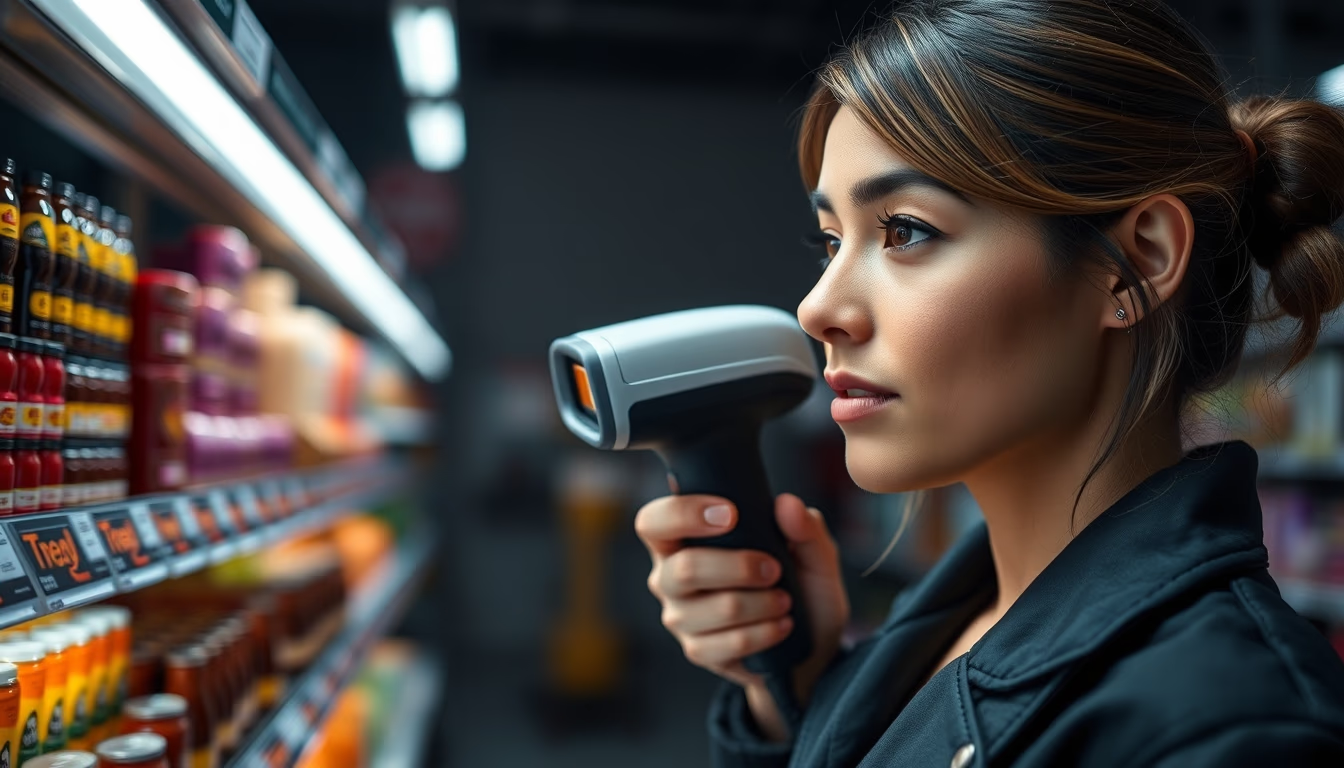
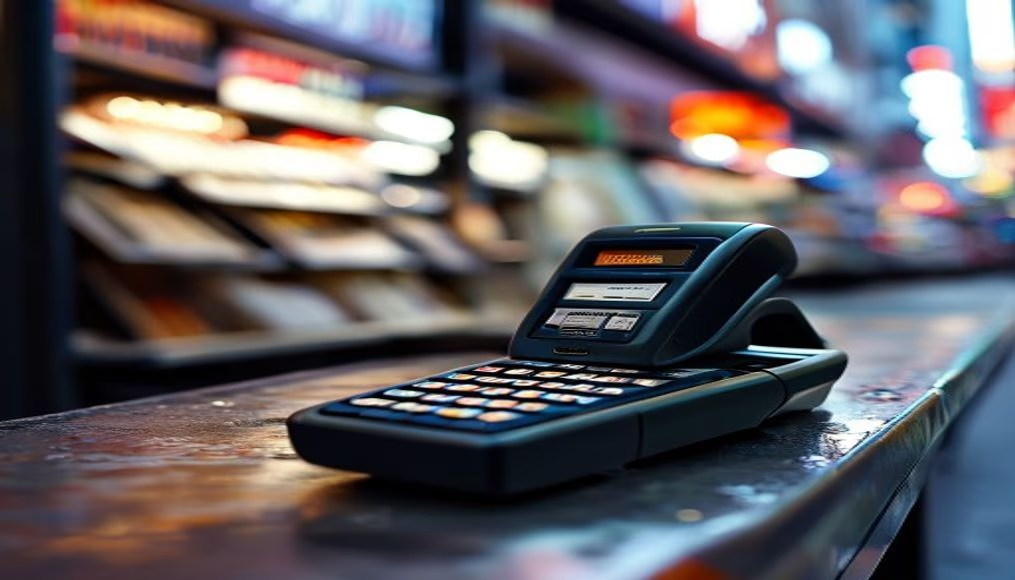
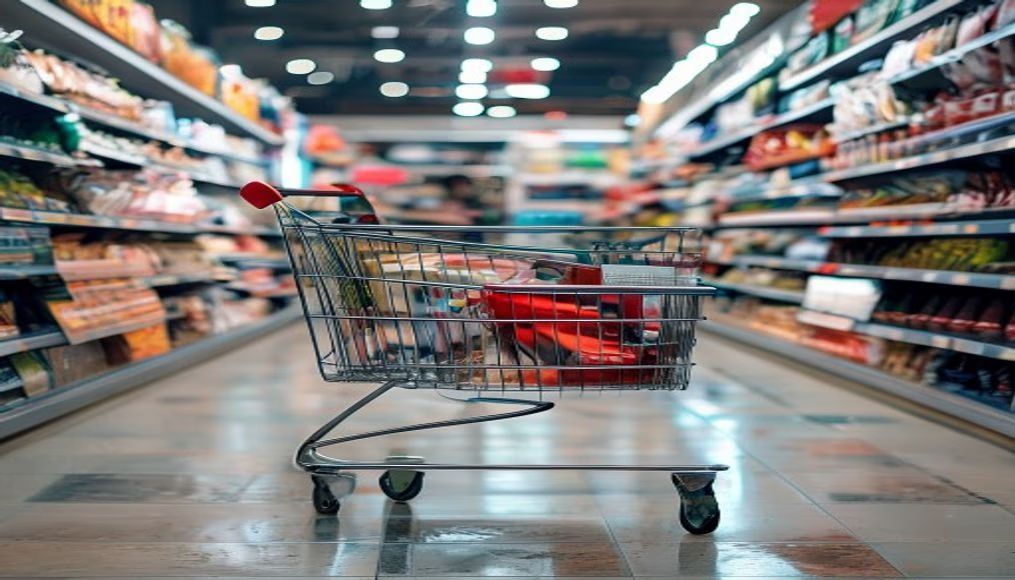
Barcode scanner at a supermarket checkout, essential technology for speeding up purchases and inventory control.
About this subject
The barcode scanner is an optical device that captures and decodes information contained in linear or two-dimensional barcodes. Widely used at supermarket checkouts, retail stores, and warehouses, it enables quick product identification, reducing typing errors and speeding up the checkout process. The technology was patented in 1952 by Norman Woodland and Bernard Silver, but only became popular in the 1970s with the standardization of the UPC (Universal Product Code).
In Brazil, barcode usage is regulated by GS1 Brasil, which assigns unique identification numbers to products. It is estimated that over 5 billion barcodes are scanned daily worldwide, in sectors beyond retail, such as healthcare (medication identification), logistics (package tracking), and libraries (collection control).
Modern scanners use laser or camera-based imaging (such as 2D readers), capable of reading codes even when damaged or poorly positioned. Fixed models, like those embedded in checkout counters, are common in supermarkets, while portable versions are used in warehouses. Integration with POS (Point of Sale) systems allows automatic inventory updates and sales report generation.
A curious fact: the first item to receive a barcode in a store was a pack of Wrigley's gum, in 1974, at Marsh supermarket in Ohio. Since then, technology has evolved to include QR Codes and RFID, but the traditional barcode remains the global standard due to low cost and simplicity.
Frequently Asked Questions
How does a barcode scanner work?
The scanner emits a beam of light (laser or LED) that reflects off the barcode. Dark bars absorb light, while light spaces reflect. The sensor captures the reflected pattern and decodes it into numbers or letters.
What is the difference between 1D and 2D barcodes?
1D (linear) barcodes store data in a single horizontal line, like UPC. 2D barcodes (such as QR Code) store information in two dimensions, allowing more data and reading by smartphone cameras.
Can barcode scanners read damaged codes?
Yes, modern scanners with 2D imaging technology can read scratched, crumpled, or poorly printed codes, thanks to error correction algorithms and image processing.
Direct URL
https://pub-c7d6a6ea828543ac903a74a341ccb2e1.r2.dev/imagens/barcode-scanner-at-checkout-studio-editorial-portrait-v3.avifHow to credit
Include a visible link back to UtilizAí. Copy one of the snippets below:
<a href="https://xn--utiliza-eza.com/en/midia/imagens/barcode-scanner-at-checkout-studio-editorial-portrait-v3">Barcode scanner at checkout</a> by <a href="https://xn--utiliza-eza.com">UtilizAí</a>, licensed under <a href="https://creativecommons.org/licenses/by/4.0/">CC BY 4.0</a>.
[Barcode scanner at checkout](https://xn--utiliza-eza.com/en/midia/imagens/barcode-scanner-at-checkout-studio-editorial-portrait-v3) by [UtilizAí](https://xn--utiliza-eza.com), CC BY 4.0
License: CC-BY-4.0