Barcode scanner at checkout
1344×768 · AVIF · CC BY 4.0
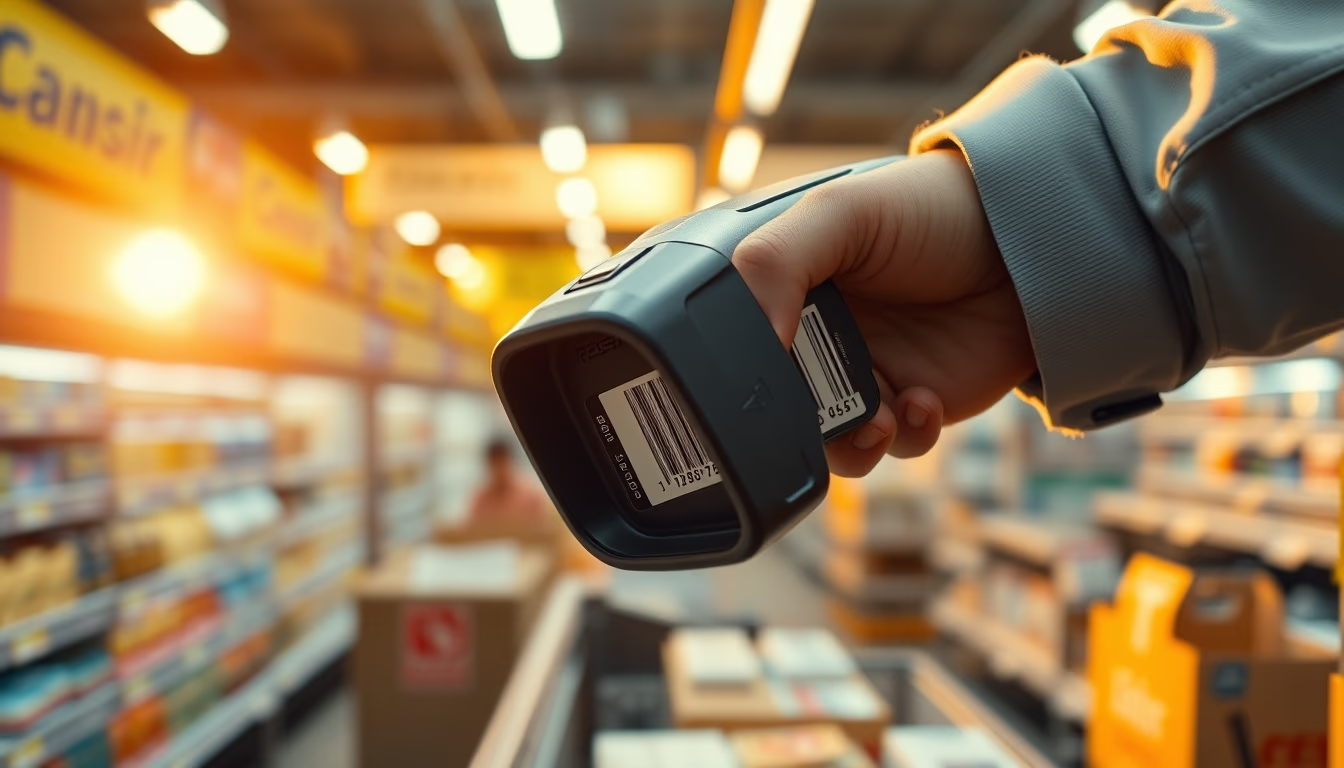
Leitor de código de barras no caixa de supermercado, ferramenta essencial para agilizar compras e gerenciar estoques.
Sobre o tema
O leitor de código de barras é um dispositivo óptico que decodifica informações de produtos impressas em etiquetas com barras verticais. Inventado em 1952 por Norman Woodland e Bernard Silver, o código de barras revolucionou o varejo ao permitir a identificação rápida de itens. No Brasil, sua adoção em massa ocorreu a partir dos anos 1990, impulsionada pela modernização dos supermercados e pela necessidade de controle de estoque. Hoje, praticamente todos os produtos embalados possuem um código de barras único, padronizado pelo sistema EAN/UPC.
O scanner no caixa utiliza um feixe de laser ou LED para ler o código, enviando o número ao sistema de ponto de venda (PDV). Isso reduz erros de digitação, acelera o atendimento e permite que o varejista monitore vendas em tempo real. A tecnologia também é usada em logística, saúde e bibliotecas. Curiosamente, o primeiro produto a ter um código de barras escaneado em um supermercado foi um pacote de chicletes Wrigley's, em 1974, nos EUA.
No contexto brasileiro, a popularização dos leitores de código de barras coincidiu com o Plano Real e a estabilização econômica, que exigiram maior eficiência no comércio. Grandes redes como Pão de Açúcar e Carrefour foram pioneiras na automação de caixas. Atualmente, sistemas de autoatendimento e leitores portáteis estão se tornando comuns, mas o scanner fixo no caixa tradicional continua sendo o padrão. A tecnologia também evoluiu para ler QR Codes e códigos 2D, ampliando suas aplicações.
Apesar da digitalização, o código de barras linear (1D) ainda responde por mais de 90% das leituras no varejo global. Sua simplicidade e baixo custo garantem sua permanência, mesmo com o avanço de RFID e outras tecnologias. No Brasil, a GS1 Brasil é a entidade responsável pela gestão dos padrões de códigos de barras, garantindo que cada produto tenha um número único.
Perguntas frequentes
Como funciona um leitor de código de barras?
O leitor emite um feixe de luz (laser ou LED) que reflete nas barras do código. O padrão de reflexão é convertido em um sinal elétrico, decodificado pelo sistema para identificar o produto.
Qual a diferença entre código de barras 1D e 2D?
O código 1D (linear) armazena dados apenas na horizontal, como números. O 2D (como QR Code) armazena informações na horizontal e vertical, permitindo mais dados, como URLs ou imagens.
Quem criou o código de barras?
O código de barras foi inventado por Norman Woodland e Bernard Silver em 1952. A primeira patente foi registrada em 1949, mas a tecnologia só se popularizou nos anos 1970.
URL direta
https://pub-c7d6a6ea828543ac903a74a341ccb2e1.r2.dev/imagens/barcode-scanner-at-checkout-cinematic-wide-shot-v2.avifComo creditar
Inclua um link visível de volta pro UtilizAí. Copie um dos snippets abaixo:
<a href="https://xn--utiliza-eza.com/midia/imagens/barcode-scanner-at-checkout-cinematic-wide-shot-v2">Barcode scanner at checkout</a> by <a href="https://xn--utiliza-eza.com">UtilizAí</a>, licensed under <a href="https://creativecommons.org/licenses/by/4.0/">CC BY 4.0</a>.
[Barcode scanner at checkout](https://xn--utiliza-eza.com/midia/imagens/barcode-scanner-at-checkout-cinematic-wide-shot-v2) by [UtilizAí](https://xn--utiliza-eza.com), CC BY 4.0
Licença: CC-BY-4.0