Bacterial colony petri dish
1344×768 · AVIF · CC BY 4.0
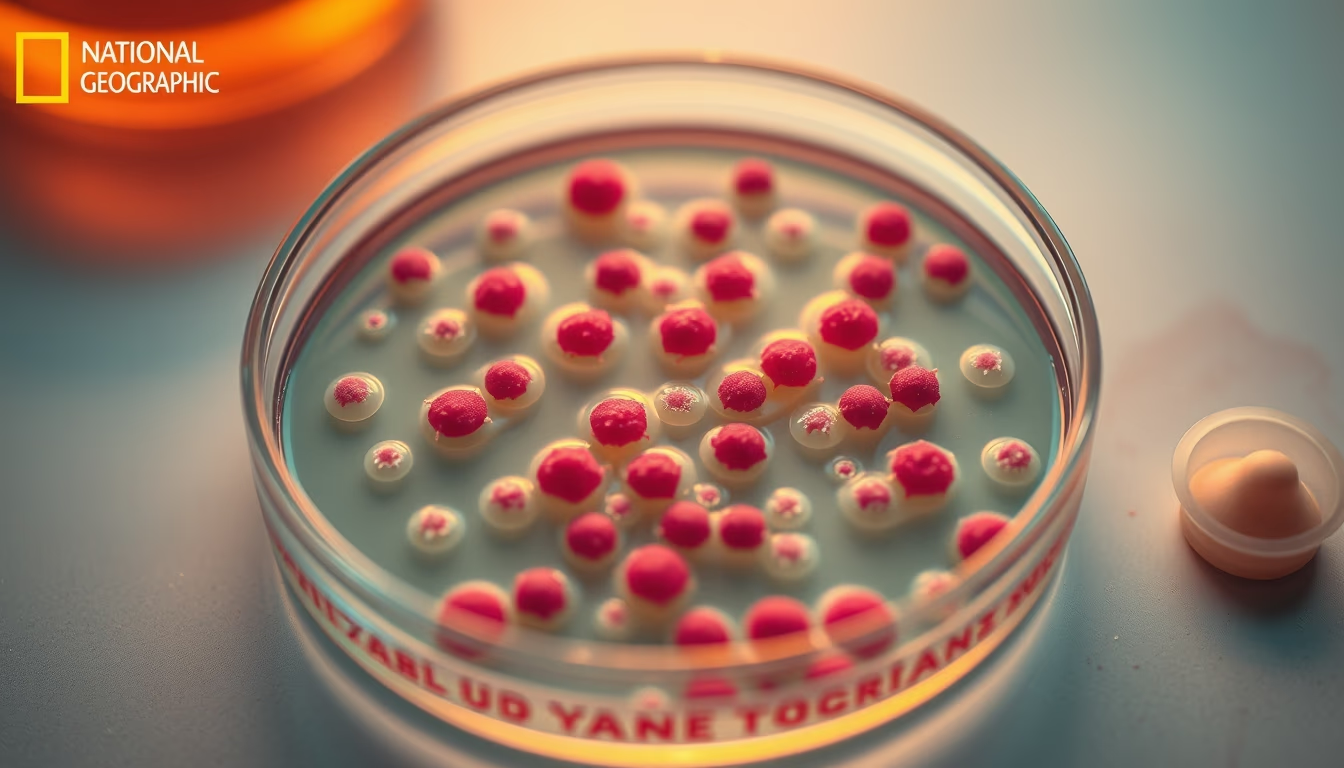
Bacterial colonies on petri dishes are essential for microbiological study, enabling the identification and analysis of microorganisms in the laboratory.
About this subject
A bacterial colony is a visible cluster of bacteria growing on a solid surface, typically on a petri dish containing culture medium. Each colony originates from a single bacterial cell that multiplies thousands of times, forming a structure with macroscopic features such as color, shape, and texture. These characteristics are used by microbiologists to identify different bacterial species, a crucial process in medical diagnostics, food quality control, and scientific research.
Colony development depends on controlled conditions of temperature, pH, and nutrients. Agar, extracted from seaweed, is the most common solidifying agent in culture media, as it remains solid at typical incubation temperatures for bacteria. Techniques like streak plating allow isolation of individual colonies from a mixed sample, ensuring pure cultures for further testing.
Culturally and historically, the petri dish was invented in 1887 by Julius Richard Petri, assistant to Robert Koch, revolutionizing microbiology. Before that, cultures were grown on liquid surfaces or potatoes. The simplicity and effectiveness of the method persist today, with the petri dish being a universal symbol of laboratory science. In hospital settings, bacterial colonies on plates are used to test antibiotic efficacy through the disk diffusion method, measuring inhibition zones.
A curiosity: some bacteria produce natural pigments that color the colonies, such as the red of Serratia marcescens or the green of Pseudomonas aeruginosa. Additionally, colonies can be smooth, rough, mucoid, or dry, providing clues about cell wall structure and capsule production. This detailed study of colonial morphology, although complemented by modern molecular techniques, remains a fundamental skill for microbiologists worldwide.
Frequently Asked Questions
What is a bacterial colony?
It is a group of genetically identical bacteria, originating from a single cell, that grows on solid medium and forms a visible structure with the naked eye.
How are bacterial colonies cultured in the laboratory?
They are cultured on petri dishes with culture medium (such as nutrient agar), incubated at appropriate temperatures for 24 to 48 hours, allowing cell multiplication.
Why is studying colony morphology important?
Colony morphology (color, shape, edge, texture) aids in the preliminary identification of bacteria, helping diagnoses and therapeutic decisions before more specific tests.
Direct URL
https://pub-c7d6a6ea828543ac903a74a341ccb2e1.r2.dev/imagens/bacterial-colony-petri-dish-national-geographic-style-p11.avifHow to credit
Include a visible link back to UtilizAí. Copy one of the snippets below:
<a href="https://xn--utiliza-eza.com/en/midia/imagens/bacterial-colony-petri-dish-national-geographic-style-p11">Bacterial colony petri dish</a> by <a href="https://xn--utiliza-eza.com">UtilizAí</a>, licensed under <a href="https://creativecommons.org/licenses/by/4.0/">CC BY 4.0</a>.
[Bacterial colony petri dish](https://xn--utiliza-eza.com/en/midia/imagens/bacterial-colony-petri-dish-national-geographic-style-p11) by [UtilizAí](https://xn--utiliza-eza.com), CC BY 4.0
License: CC-BY-4.0