Bacterial colony petri dish
1344×768 · AVIF · CC BY 4.0
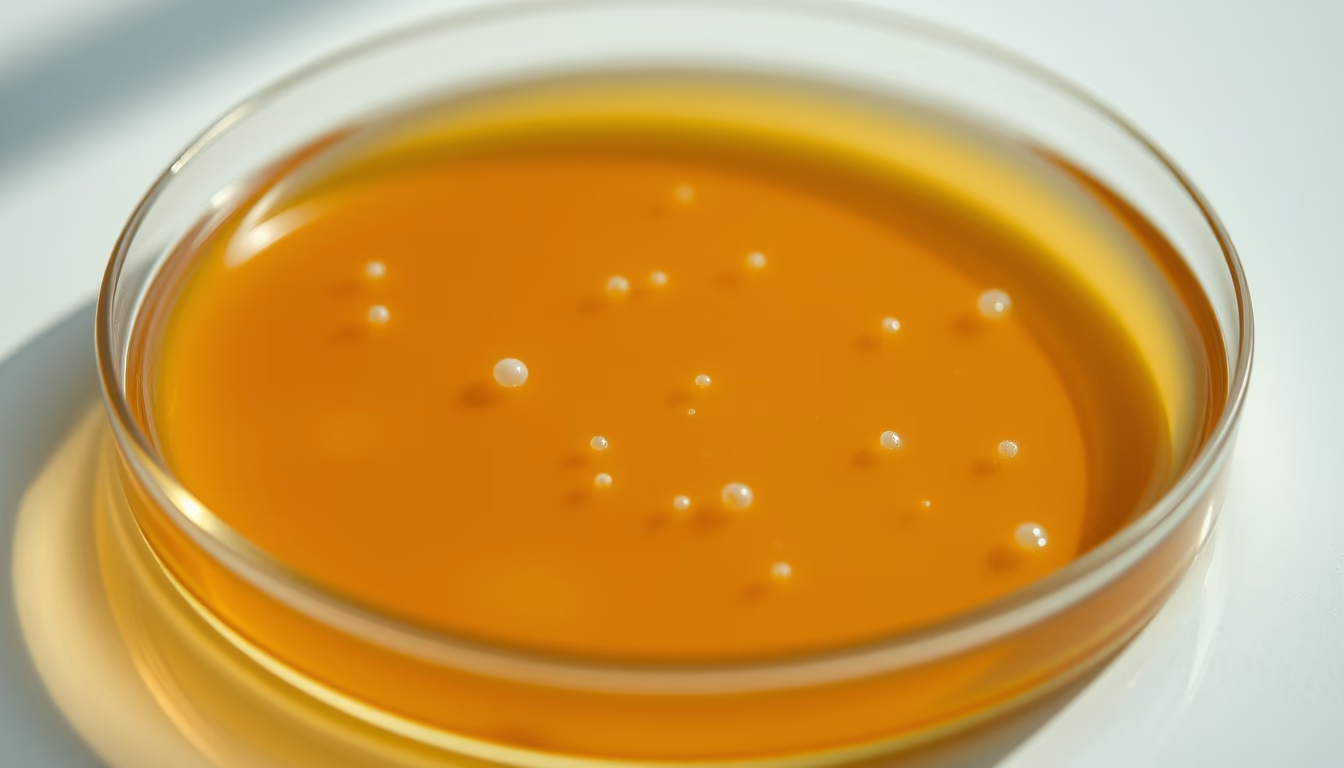
Bacterial colonies on petri dishes are essential for microbiological studies, enabling precise identification and isolation of microorganisms.
About this subject
The Petri dish, invented in 1887 by German bacteriologist Julius Richard Petri while working with Robert Koch, revolutionized microbiology. It allows microorganisms to be cultured on a solid medium, usually agar supplemented with nutrients, forming visible colonies. Each colony is a cluster of identical cells originating from a single bacterial cell, facilitating cloning and the study of specific traits.
Colony morphology is a diagnostic tool: colors, margins, elevation, and texture vary among species and even strains. For instance, Staphylococcus aureus forms golden colonies, while Pseudomonas aeruginosa produces a blue-green pigment. This diversity enables preliminary identification without complex equipment. Additionally, plate streaking techniques are critical for antibiotic sensitivity tests such as the antibiogram, used worldwide to guide treatments.
In modern research, Petri dishes are employed in genetic engineering, such as selecting bacteria transformed with antibiotic-resistant plasmids. They are also used in microbial ecology to isolate and quantify populations from soil or water. The simplicity and efficiency of this method keep it a standard in laboratories globally, even with advances in molecular techniques.
Frequently Asked Questions
What is a bacterial colony?
A bacterial colony is a visible cluster of thousands of genetically identical bacteria, originating from a single cell that repeatedly divided on a solid medium such as agar in a Petri dish.
How do bacteria grow on Petri dishes?
Bacteria are streaked onto the agar surface and incubated under optimal temperature and humidity. They multiply by binary fission, forming colonies within 24 to 48 hours.
Why are Petri dishes important in microbiology?
Petri dishes enable pure culture isolation, identification by colonial morphology, antimicrobial sensitivity testing, and production of vaccines and antibiotics. They are indispensable tools in clinical and research laboratories.
Direct URL
https://pub-c7d6a6ea828543ac903a74a341ccb2e1.r2.dev/imagens/bacterial-colony-petri-dish-minimalist-composition-p6.avifHow to credit
Include a visible link back to UtilizAí. Copy one of the snippets below:
<a href="https://xn--utiliza-eza.com/en/midia/imagens/bacterial-colony-petri-dish-minimalist-composition-p6">Bacterial colony petri dish</a> by <a href="https://xn--utiliza-eza.com">UtilizAí</a>, licensed under <a href="https://creativecommons.org/licenses/by/4.0/">CC BY 4.0</a>.
[Bacterial colony petri dish](https://xn--utiliza-eza.com/en/midia/imagens/bacterial-colony-petri-dish-minimalist-composition-p6) by [UtilizAí](https://xn--utiliza-eza.com), CC BY 4.0
License: CC-BY-4.0