Autonomous delivery robot
1344×768 · AVIF · CC BY 4.0
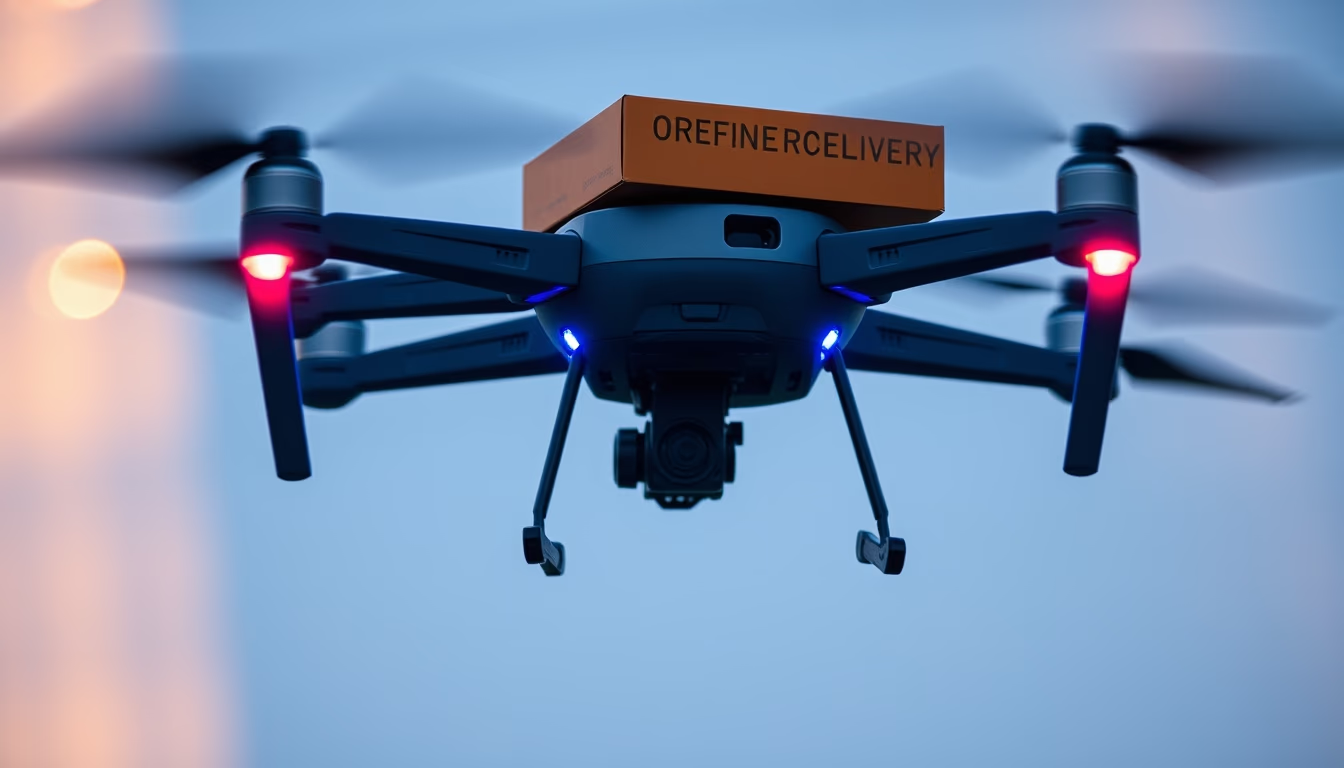
Autonomous delivery robots are transforming urban logistics with drones and ground vehicles, cutting costs and emissions in global cities.
About this subject
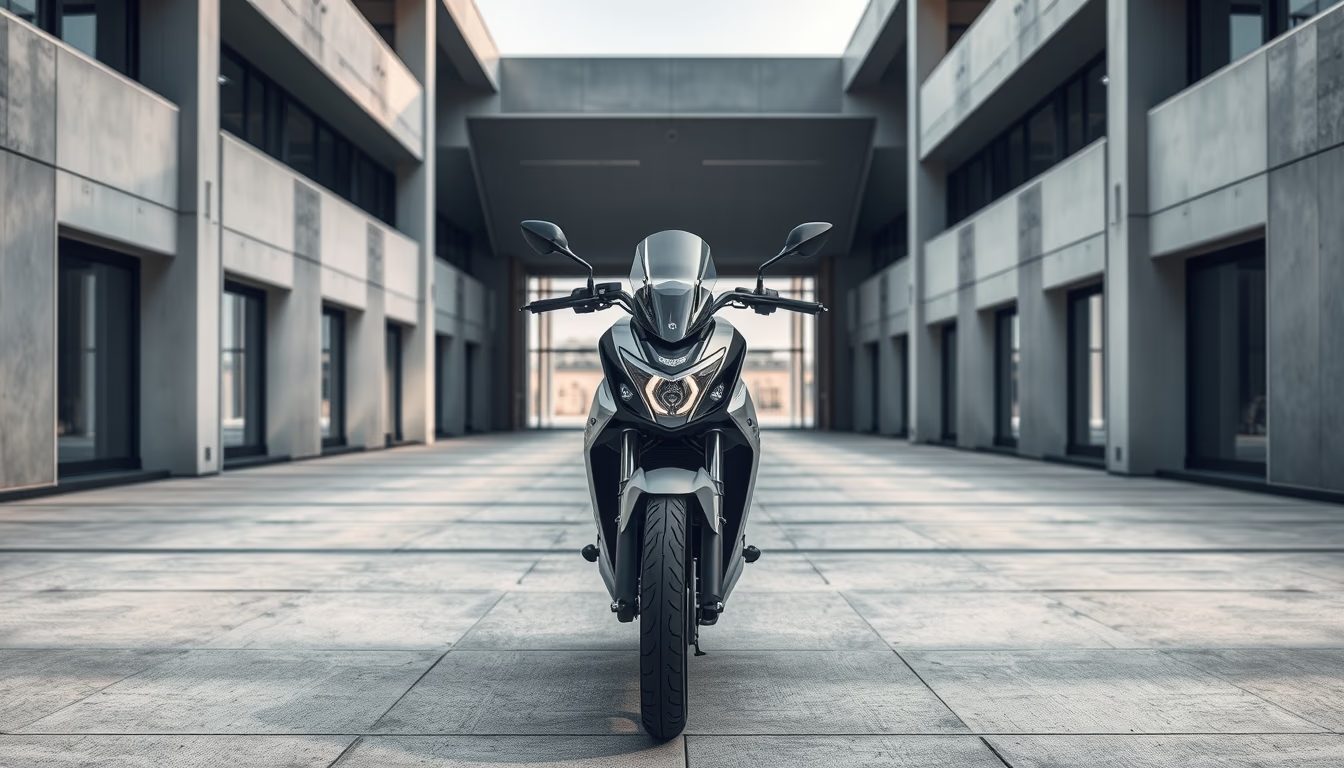
Autonomous delivery robots represent a significant evolution in last-mile logistics, combining artificial intelligence, sensors, and autonomous navigation to transport goods without human intervention. These devices fall into two main categories: ground robots, such as those used by Starship Technologies and Kiwibot, which travel on sidewalks and bike paths, and aerial drones, like those tested by Amazon Prime Air and Wing (Alphabet), which fly at low altitudes for rapid deliveries. As of 2025, over 150 cities worldwide regularly host autonomous deliveries, with notable implementations in urban centers in the United States, China, and Europe.
Adoption is driven by rising demand for fast deliveries, driver shortages in some regions, and the need to cut carbon emissions. For instance, an electric ground robot consumes about 1 to 2 kWh per day, a fraction of a traditional vehicle’s usage. Drones can reduce delivery time by up to 60% in congested areas. However, regulatory and public acceptance challenges persist: in the U.S., the FAA has set rules for beyond-visual-line-of-sight flights, while the European Union's SESAR program permits urban operations with prior approval.
Culturally, these robots are already part of daily life in cities like Tallinn (Estonia) and Pittsburgh (USA), where students and workers receive meals and packages delivered by robots. In Brazil, trials began in 2024 in cities such as São Paulo and Florianópolis, involving local companies and international partnerships. The trend for 2026 points toward full integration with smart mobility systems, where delivery robots share data with traffic lights and urban sensors to optimize routes in real time.
Frequently Asked Questions
How do autonomous delivery robots work?
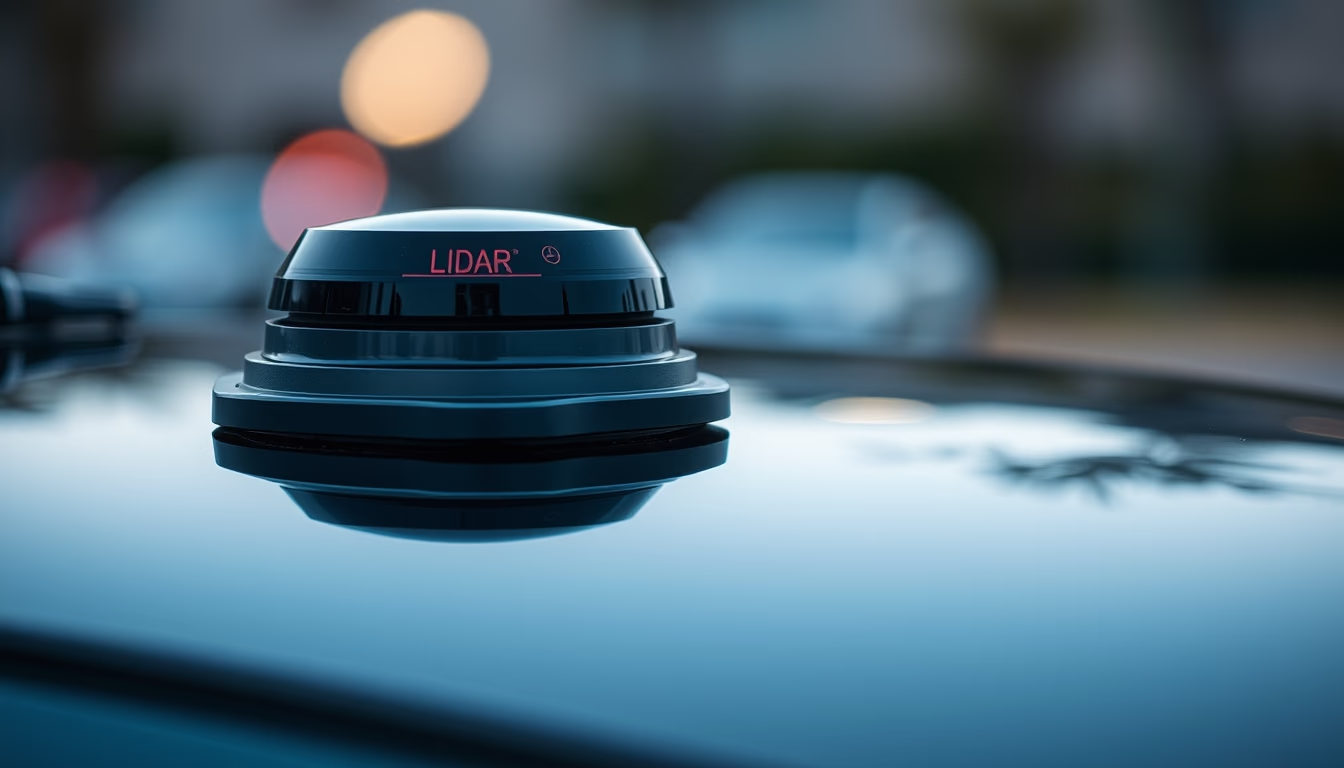
They use sensors such as LIDAR, cameras, and GPS to map the environment, avoid obstacles, and follow pre-planned or real-time adjusted routes via artificial intelligence. Delivery is made through locked compartments accessible via an app.
What are the main challenges for expanding these robots?
Challenges include regulations for airspace and public road use, security against theft or vandalism, and public acceptance. Additionally, batteries limit autonomy to a few hours, requiring strategic charging stations.
Will delivery robots completely replace human couriers?
No, the trend is complementarity. Robots are ideal for short, repetitive deliveries, while humans will remain necessary for complex situations such as deliveries to hard-to-reach places or those requiring personal interaction.
Direct URL
https://pub-c7d6a6ea828543ac903a74a341ccb2e1.r2.dev/imagens/autonomous-delivery-robot-aerial-drone-shot-p0.avifHow to credit
Include a visible link back to UtilizAí. Copy one of the snippets below:
<a href="https://xn--utiliza-eza.com/en/midia/imagens/autonomous-delivery-robot-aerial-drone-shot-p0">Autonomous delivery robot</a> by <a href="https://xn--utiliza-eza.com">UtilizAí</a>, licensed under <a href="https://creativecommons.org/licenses/by/4.0/">CC BY 4.0</a>.
[Autonomous delivery robot](https://xn--utiliza-eza.com/en/midia/imagens/autonomous-delivery-robot-aerial-drone-shot-p0) by [UtilizAí](https://xn--utiliza-eza.com), CC BY 4.0
License: CC-BY-4.0