Art deco perfume
1344×768 · AVIF · CC BY 4.0
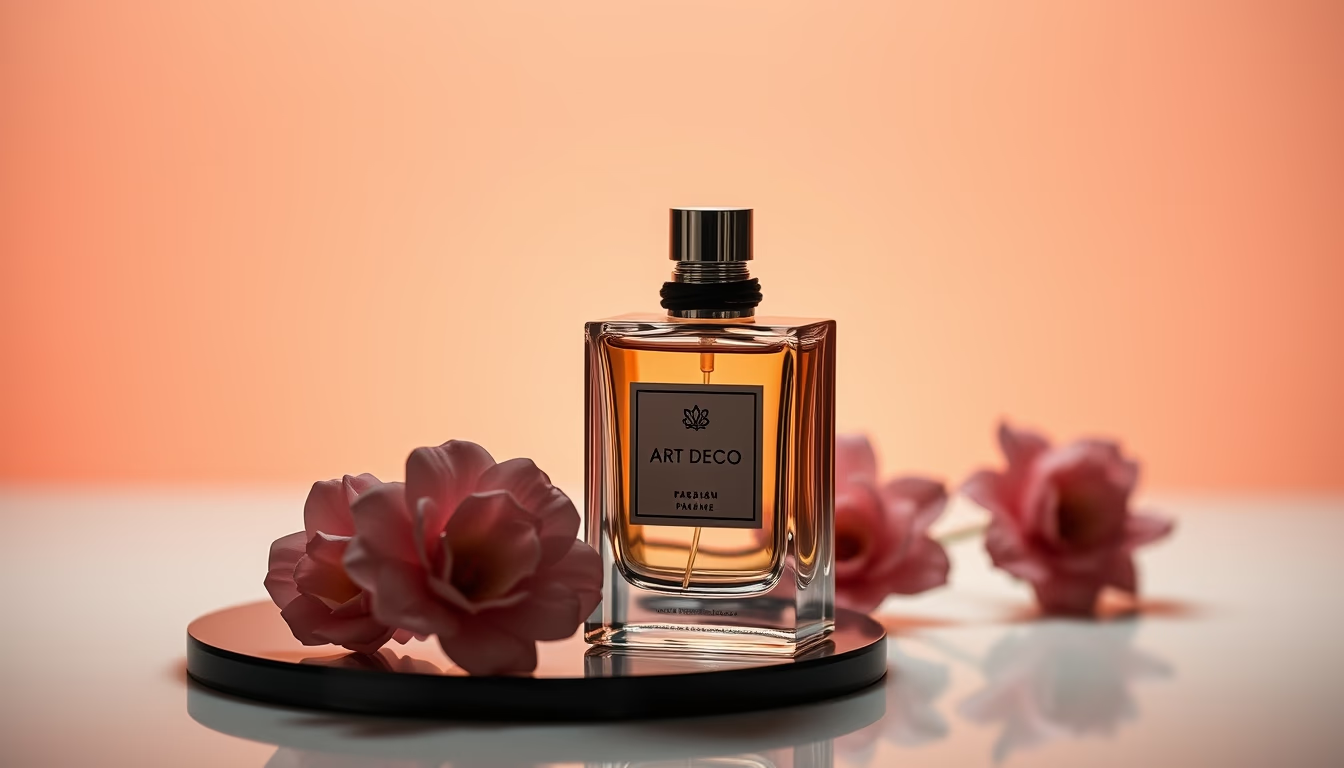
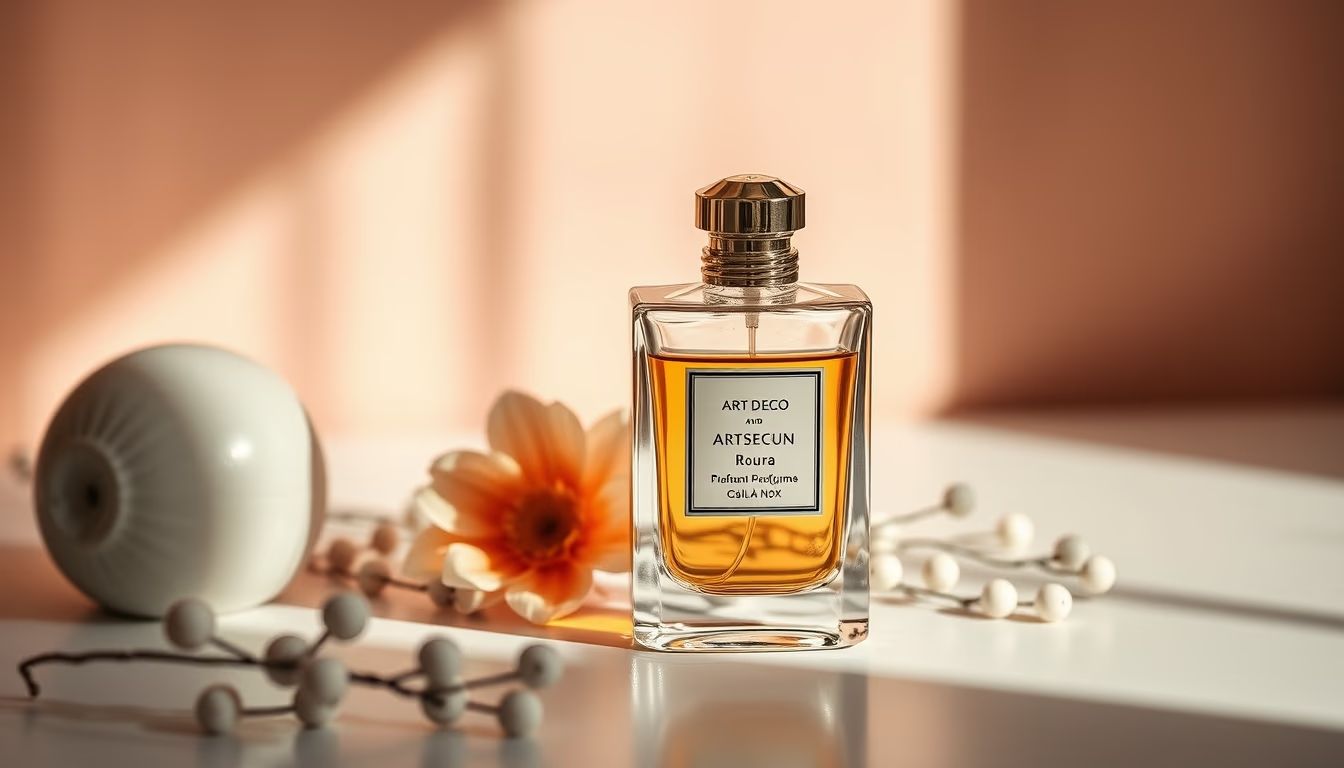
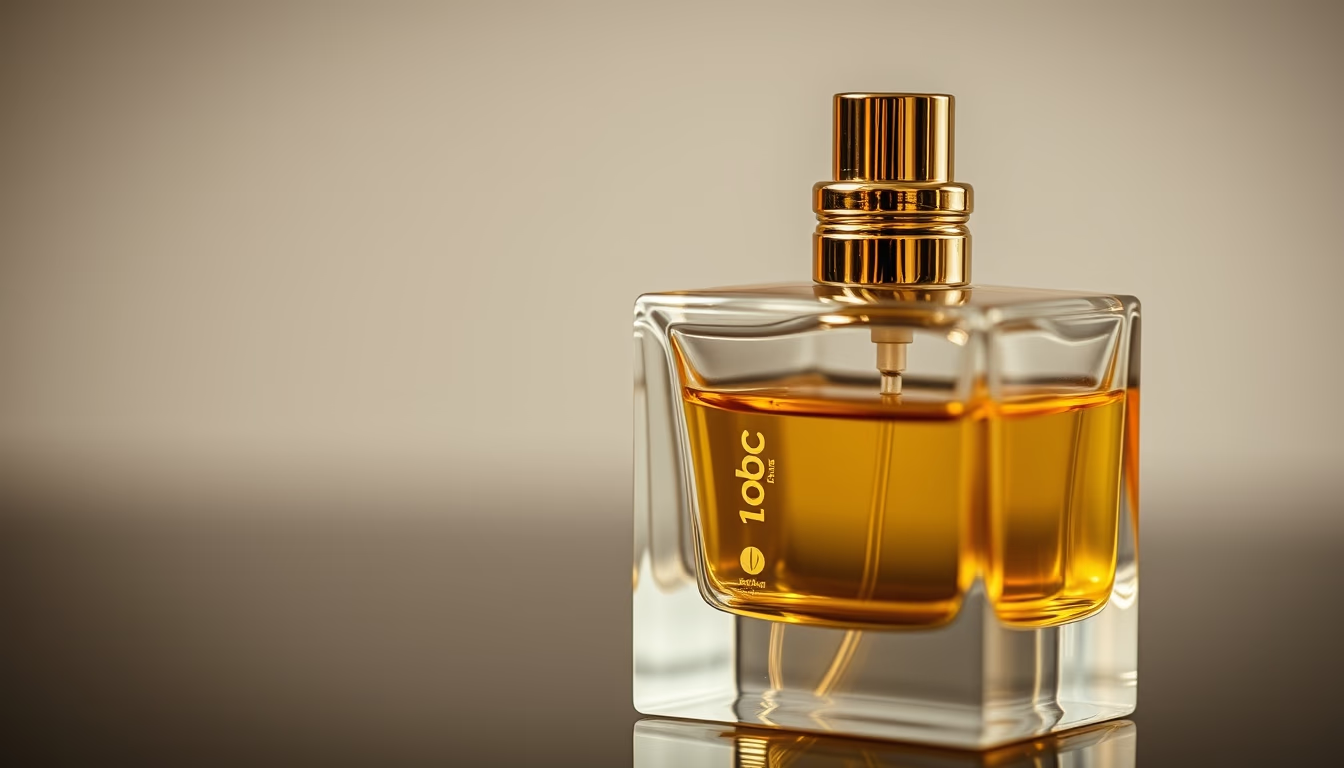
Art Deco perfume combines geometric design and 1920s elegance, with bottles that are true works of art.
About this subject
The Art Deco style emerged in the 1920s in France, influencing architecture, fashion, and object design, including perfume bottles. Characterized by geometric shapes, straight lines, symmetry, and the use of luxurious materials like cut glass, metal, and ivory, Art Deco represented modernity and sophistication in the interwar period.
Art Deco perfume bottles became iconic thanks to master glassmakers like René Lalique, who created pieces for perfumeries such as Guerlain and Coty. Guerlain's 'Shalimar' bottle (1925) is a classic example, with its aerodynamic design and fountain-shaped stopper. Another example is Nina Ricci's 'L'Air du Temps' (1948), which, though later, carries Deco influences in its floral glass. These bottles were not just containers but objects of desire and status.
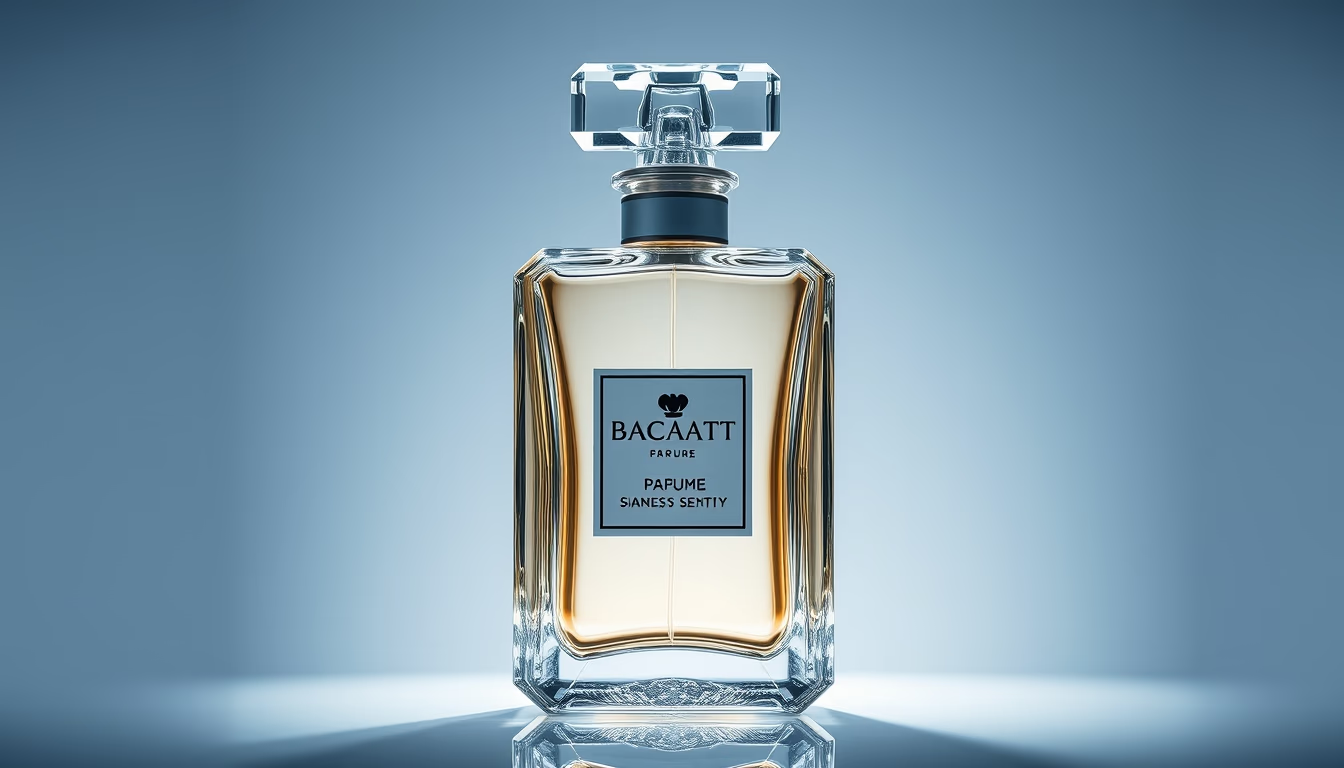
The Art Deco era coincided with the expansion of the perfume industry, which began using bottles as marketing tools. Designers like Lalique, Baccarat, and Daum collaborated with perfumers to create packaging that reflected the glamour of the time. The 1925 International Exhibition of Modern Decorative and Industrial Arts in Paris gave the style its name and cemented the aesthetic still referenced today.
Interestingly, many original Art Deco bottles are so valuable that they are collected separately from the perfume. The antiques market often values these bottles for their design, regardless of the contents. The influence of the style remains strong, with modern brands releasing limited editions paying homage to the movement.
Frequently Asked Questions
What is the origin of the Art Deco style?
Art Deco originated in France in the 1920s, culminating in the 1925 International Exhibition of Modern Decorative and Industrial Arts in Paris. It drew inspiration from movements like Cubism and Expressionism, emphasizing geometric forms and luxurious materials.
Which famous perfumes have Art Deco bottles?
Classic examples include 'Shalimar' (Guerlain, 1925), 'L'Air du Temps' (Nina Ricci, 1948), 'Joy' (Jean Patou, 1929), and 'Chanel No. 5' (1921), the last being more minimal. Many bottles were designed by René Lalique.
How to identify an authentic Art Deco perfume bottle?
Look for geometric shapes (cubes, pyramids, spheres), straight lines, symmetry, and details like cut glass, gear motifs, or stylized florals. Typical materials include heavy glass, chrome metal, and ivory. Marks from makers like Lalique, Baccarat, or Daum also indicate authenticity.
Direct URL
https://pub-c7d6a6ea828543ac903a74a341ccb2e1.r2.dev/imagens/art-deco-perfume-studio-still-life-fresh7.avifHow to credit
Include a visible link back to UtilizAí. Copy one of the snippets below:
<a href="https://xn--utiliza-eza.com/en/midia/imagens/art-deco-perfume-studio-still-life-fresh7">Art deco perfume</a> by <a href="https://xn--utiliza-eza.com">UtilizAí</a>, licensed under <a href="https://creativecommons.org/licenses/by/4.0/">CC BY 4.0</a>.
[Art deco perfume](https://xn--utiliza-eza.com/en/midia/imagens/art-deco-perfume-studio-still-life-fresh7) by [UtilizAí](https://xn--utiliza-eza.com), CC BY 4.0
License: CC-BY-4.0