Arctic fox white snow
1344×768 · AVIF · CC BY 4.0
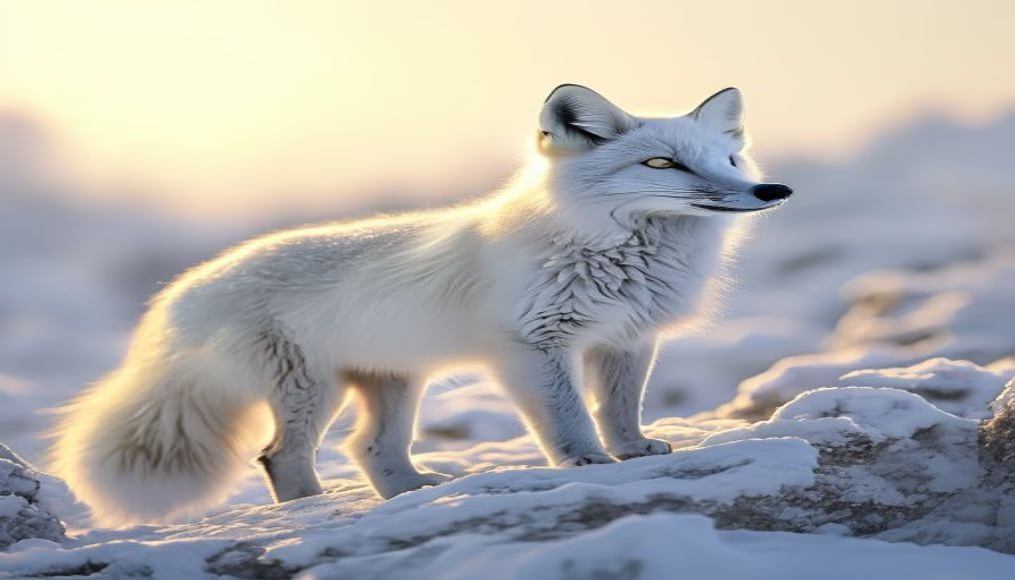
A raposa-do-ártico, com sua pelagem branca, é um símbolo de adaptação extrema ao clima polar, caçando em temperaturas abaixo de -50°C.
Sobre o tema
A raposa-do-ártico (Vulpes lagopus) é um dos mamíferos mais resistentes do planeta, habitando as regiões mais frias do Hemisfério Norte, como a tundra do Alasca, Canadá, Groenlândia, Islândia, Noruega, Suécia, Finlândia e Rússia. Sua pelagem muda de cor conforme a estação: no inverno é branca para camuflagem na neve, e no verão torna-se marrom-acinzentada para se misturar às rochas e vegetação. Esse fenômeno é controlado por hormônios e pela duração da luz solar.
Diferente de muitos canídeos, a raposa-do-ártico possui patas cobertas por pelos densos, que funcionam como raquetes de neve e isolante térmico, permitindo caminhar sobre a neve fofa sem afundar. Sua cauda peluda é usada tanto para equilíbrio quanto para cobrir o focinho enquanto dorme, reduzindo a perda de calor. A dieta é oportunista: inclui lemingues, aves, ovos, peixes, carcaças de focas e até frutas silvestres quando disponíveis. Em épocas de escassez, segue ursos-polares para se alimentar dos restos de suas caças.
A espécie enfrenta ameaças crescentes das mudanças climáticas, que reduzem a extensão de gelo marinho e alteram a disponibilidade de presas. Além disso, a expansão da raposa-vermelha para o norte (favorecida pelo aquecimento) gera competição direta. Estima-se que a população global seja de algumas centenas de milhares de indivíduos, mas com declínio local em áreas como a Escandinávia. A raposa-do-ártico é protegida por legislações nacionais e listada na Convenção de Berna, mas seu futuro depende da mitigação das alterações climáticas.
Perguntas frequentes
Por que a raposa-do-ártico muda de cor?
A mudança de cor é uma adaptação de camuflagem. No inverno, a pelagem branca a esconde na neve; no verão, a pelagem marrom-acinzentada a mistura com rochas e vegetação. Isso é regulado pela quantidade de luz solar.
Como a raposa-do-ártico sobrevive ao frio extremo?
Ela possui várias adaptações: pelagem densa de duas camadas, patas peludas para isolamento e tração, cauda para cobrir o focinho, e metabolismo que pode aumentar a produção de calor. Além disso, reduz a atividade para conservar energia.
A raposa-do-ártico está ameaçada de extinção?
Globalmente, a espécie não está ameaçada, mas populações locais (como na Escandinávia) estão em declínio devido às mudanças climáticas e competição com a raposa-vermelha. A União Internacional para a Conservação da Natureza (IUCN) a classifica como Pouco Preocupante, mas monitora a situação.
URL direta
https://pub-c7d6a6ea828543ac903a74a341ccb2e1.r2.dev/imagens/arctic-fox-white-snow-travel-photography-v10.avifComo creditar
Inclua um link visível de volta pro UtilizAí. Copie um dos snippets abaixo:
<a href="https://xn--utiliza-eza.com/midia/imagens/arctic-fox-white-snow-travel-photography-v10">Arctic fox white snow</a> by <a href="https://xn--utiliza-eza.com">UtilizAí</a>, licensed under <a href="https://creativecommons.org/licenses/by/4.0/">CC BY 4.0</a>.
[Arctic fox white snow](https://xn--utiliza-eza.com/midia/imagens/arctic-fox-white-snow-travel-photography-v10) by [UtilizAí](https://xn--utiliza-eza.com), CC BY 4.0
Licença: CC-BY-4.0