Arctic fox white snow
1344×768 · AVIF · CC BY 4.0
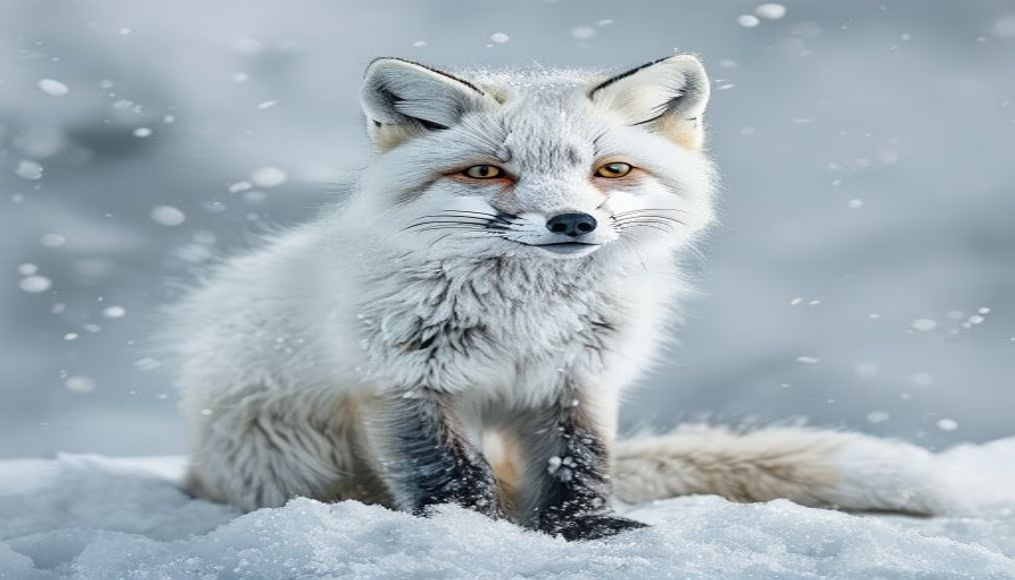
The Arctic fox (Vulpes lagopus) is a canid adapted to the polar climate, famous for its white winter coat.
About this subject
The Arctic fox (Vulpes lagopus) is a canid species native to the Arctic regions of the Northern Hemisphere, including Alaska, Canada, Greenland, Iceland, Svalbard, and Russia. It is one of the northernmost land mammals, tolerating temperatures as low as -50 °C. Its circumpolar distribution makes it a symbol of polar wildlife, found both on tundra and coastal areas.
One of the most notable adaptations of the Arctic fox is its seasonal coat change: in winter, it is white and thick, camouflaging against snow; in summer, it becomes brownish-gray to blend with rocky ground and vegetation. Additionally, it has short ears, a flat muzzle, and furry paws that reduce heat loss and aid movement on ice. Its long, bushy tail serves as a blanket when it curls up to sleep.
The Arctic fox's diet is opportunistic and varies by availability. Its primary prey are lemmings, rodents with fluctuating populations that influence fox reproduction. It also hunts birds, eats eggs, fish, and even carrion from polar bears. During the short Arctic summer, it builds fat reserves to endure the harsh winter. It is a solitary hunter but may form pairs during mating season.
Interestingly, the Arctic fox can travel long distances in search of food, with recorded movements of up to 100 km in a single day. Although not globally threatened, some island populations, such as those in Svalbard, face competition from red foxes expanding northward due to climate change. The species is protected in several regions, and its white coat makes it an icon of nature photography.
Frequently Asked Questions
Why does the Arctic fox change color?
The color change is a camouflage adaptation: white in winter hides it in snow; brown in summer blends it with tundra soil and vegetation.
How does the Arctic fox survive extreme cold?
It has a dense double-layer coat, short ears, and a flat muzzle to minimize heat loss. It also stores body fat and reduces metabolic activity during the coldest periods.
Where does the Arctic fox live?
It lives in Arctic regions of the Northern Hemisphere, such as Alaska, Canada, Greenland, Iceland, Svalbard, and Russia, inhabiting tundra and coastal areas.
Direct URL
https://pub-c7d6a6ea828543ac903a74a341ccb2e1.r2.dev/imagens/arctic-fox-white-snow-commercial-product-photography-v9.avifHow to credit
Include a visible link back to UtilizAí. Copy one of the snippets below:
<a href="https://xn--utiliza-eza.com/en/midia/imagens/arctic-fox-white-snow-commercial-product-photography-v9">Arctic fox white snow</a> by <a href="https://xn--utiliza-eza.com">UtilizAí</a>, licensed under <a href="https://creativecommons.org/licenses/by/4.0/">CC BY 4.0</a>.
[Arctic fox white snow](https://xn--utiliza-eza.com/en/midia/imagens/arctic-fox-white-snow-commercial-product-photography-v9) by [UtilizAí](https://xn--utiliza-eza.com), CC BY 4.0
License: CC-BY-4.0