Archaea extremophile
1344×768 · AVIF · CC BY 4.0

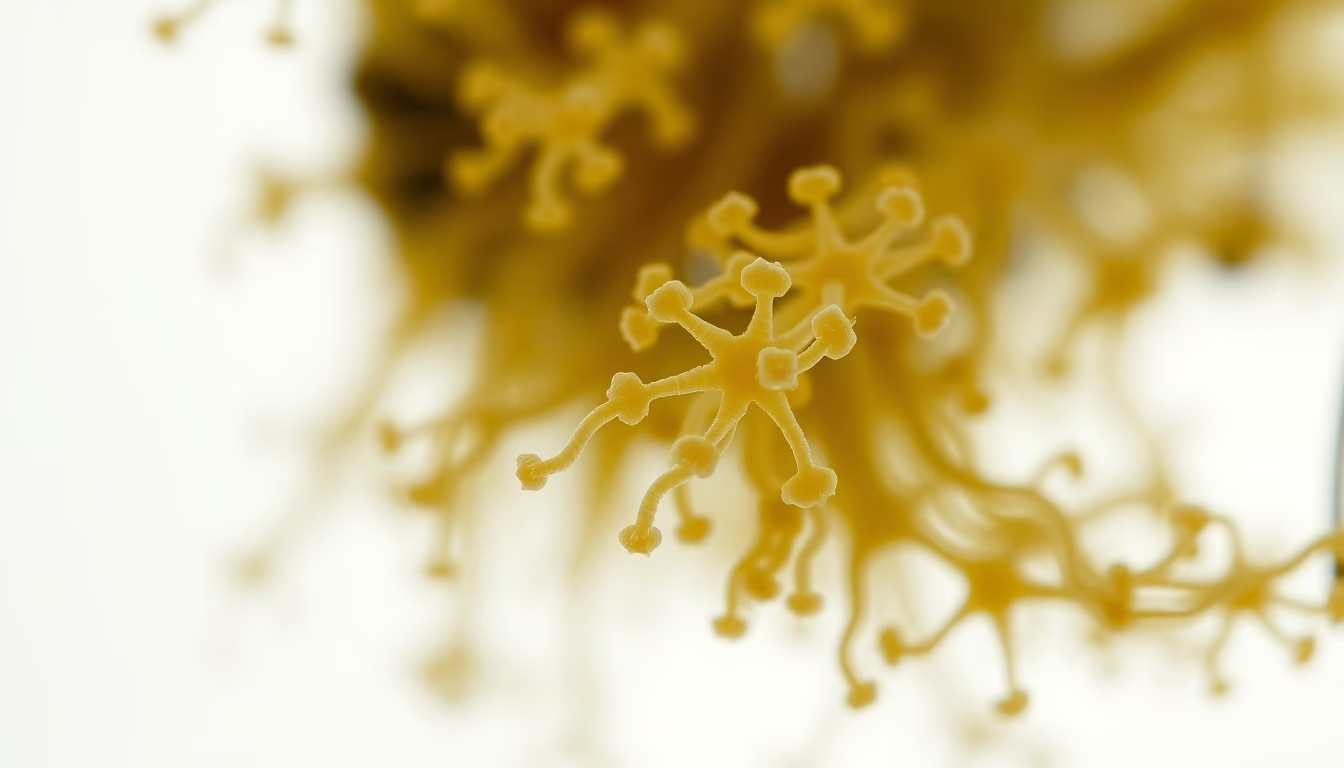
Extremophilic archaea are single-celled microorganisms thriving in extreme environments such as hot springs, glaciers, and hypersaline lakes.
About this subject
Archaea represent one of the three domains of life, alongside Bacteria and Eukaryotes. Extremophilic archaea are renowned for inhabiting conditions lethal to most organisms: temperatures above 100°C in deep-sea hydrothermal vents, nearly zero pH in acid mine drainage, saturating salinity in lakes like the Great Salt Lake, and intense radiation in high-altitude deserts. Their cell membranes are unique, featuring ether-linked lipids instead of ester bonds, granting exceptional chemical and thermal stability.
From an evolutionary perspective, archaea are considered the oldest life forms on Earth, with fossil records dating back 3.5 billion years. They play critical roles in global biogeochemical cycles, such as methanogenesis carried out by archaea in swamps and the digestive tracts of ruminants. Many extremophilic species are sources of valuable industrial enzymes, including polymerases used in PCR (polymerase chain reaction) that withstand high temperatures.
Research on extremophilic archaea also drives astrobiology by providing models for potential life on other planets. For instance, the discovery of archaea in Antarctic ice and deep-sea hydrothermal vents suggests similar life could exist on icy moons like Europa or Enceladus. Additionally, studies of their DNA repair mechanisms and heat-resistant proteins inspire biotechnological applications from bioremediation to biofuel production.
Frequently Asked Questions
What are extremophilic archaea?
They are single-celled microorganisms from the domain Archaea that thrive in extreme environments such as high temperatures, high acidity, high salinity, or radiation. They have unique biochemical adaptations, including ether-linked membrane lipids.
Where are extremophilic archaea found?
They are found in hot springs, deep-sea vents, salt lakes, glaciers, acid deserts, and even animal guts. Examples include Thermococcus and Halobacterium.
Why are extremophilic archaea important to science?
They provide robust enzymes for biotechnology (e.g., Taq polymerase), help understand the origin of life, and serve as models for searching extraterrestrial life on planets like Mars or moons like Europa.
Direct URL
https://pub-c7d6a6ea828543ac903a74a341ccb2e1.r2.dev/imagens/archaea-extremophile-architectural-photography-fresh0.avifHow to credit
Include a visible link back to UtilizAí. Copy one of the snippets below:
<a href="https://xn--utiliza-eza.com/en/midia/imagens/archaea-extremophile-architectural-photography-fresh0">Archaea extremophile</a> by <a href="https://xn--utiliza-eza.com">UtilizAí</a>, licensed under <a href="https://creativecommons.org/licenses/by/4.0/">CC BY 4.0</a>.
[Archaea extremophile](https://xn--utiliza-eza.com/en/midia/imagens/archaea-extremophile-architectural-photography-fresh0) by [UtilizAí](https://xn--utiliza-eza.com), CC BY 4.0
License: CC-BY-4.0