Antibody structure render
1344×768 · AVIF · CC BY 4.0
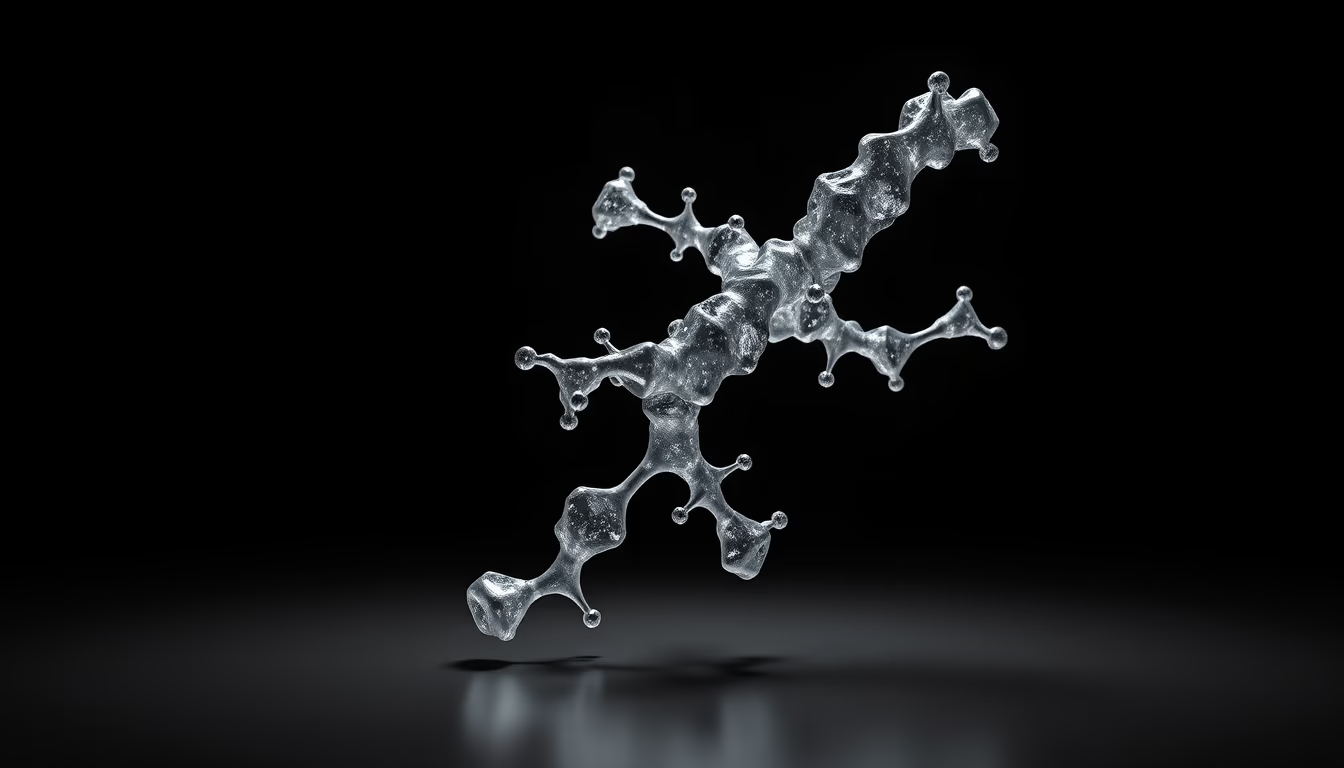
Antibodies are essential immune system proteins that recognize and neutralize pathogens such as viruses and bacteria.
About this subject
Antibodies, also known as immunoglobulins, are Y-shaped glycoproteins produced by B lymphocytes. They serve as the adaptive immune system's primary defense, identifying specific antigens with high precision. Each antibody consists of two heavy chains and two light chains held together by disulfide bonds. The variable region at the tips of the Y contains the antigen-binding site, while the constant region (Fc) interacts with immune cells. There are five main classes: IgG (most abundant in blood), IgA (mucosal surfaces), IgM (first response), IgE (allergies), and IgD (function still under study).
Structurally, the elucidation of antibodies earned Rodney Porter and Gerald Edelman the Nobel Prize in Physiology or Medicine in 1972. They revealed a domain structure with hypervariable regions that generate diversity. This diversity arises from somatic gene rearrangement, enabling the body to recognize millions of antigens. Today, laboratory-produced monoclonal antibodies are used in treatments for cancer, autoimmune diseases, and even COVID-19.
The antibody-antigen interaction is highly specific, akin to a lock and key. This property is exploited in diagnostic tests such as ELISA and Western blot. During the SARS-CoV-2 pandemic, neutralizing antibodies were the focus of vaccines and therapies. The rendered three-dimensional structure clearly shows the symmetry and binding sites, facilitating understanding of its function.
Frequently Asked Questions
What are monoclonal antibodies?
They are identical antibodies produced in the laboratory from a single B lymphocyte clone. They recognize a single specific epitope and are used in targeted therapies, such as cancer and autoimmune disease treatments.
What is the difference between antibody classes?
Each class has distinct functions: IgG is the most abundant and crosses the placenta; IgA protects mucous membranes; IgM is the first produced; IgE is involved in allergies; IgD helps activate B cells.
How do antibodies neutralize viruses?
Neutralizing antibodies bind to viral proteins, blocking the virus from entering host cells. They can also tag the virus for destruction by phagocytes or activate the complement system.
Direct URL
https://pub-c7d6a6ea828543ac903a74a341ccb2e1.r2.dev/imagens/antibody-structure-render-studio-still-life-p5.avifHow to credit
Include a visible link back to UtilizAí. Copy one of the snippets below:
<a href="https://xn--utiliza-eza.com/en/midia/imagens/antibody-structure-render-studio-still-life-p5">Antibody structure render</a> by <a href="https://xn--utiliza-eza.com">UtilizAí</a>, licensed under <a href="https://creativecommons.org/licenses/by/4.0/">CC BY 4.0</a>.
[Antibody structure render](https://xn--utiliza-eza.com/en/midia/imagens/antibody-structure-render-studio-still-life-p5) by [UtilizAí](https://xn--utiliza-eza.com), CC BY 4.0
License: CC-BY-4.0