Antibody structure render
1344×768 · AVIF · CC BY 4.0
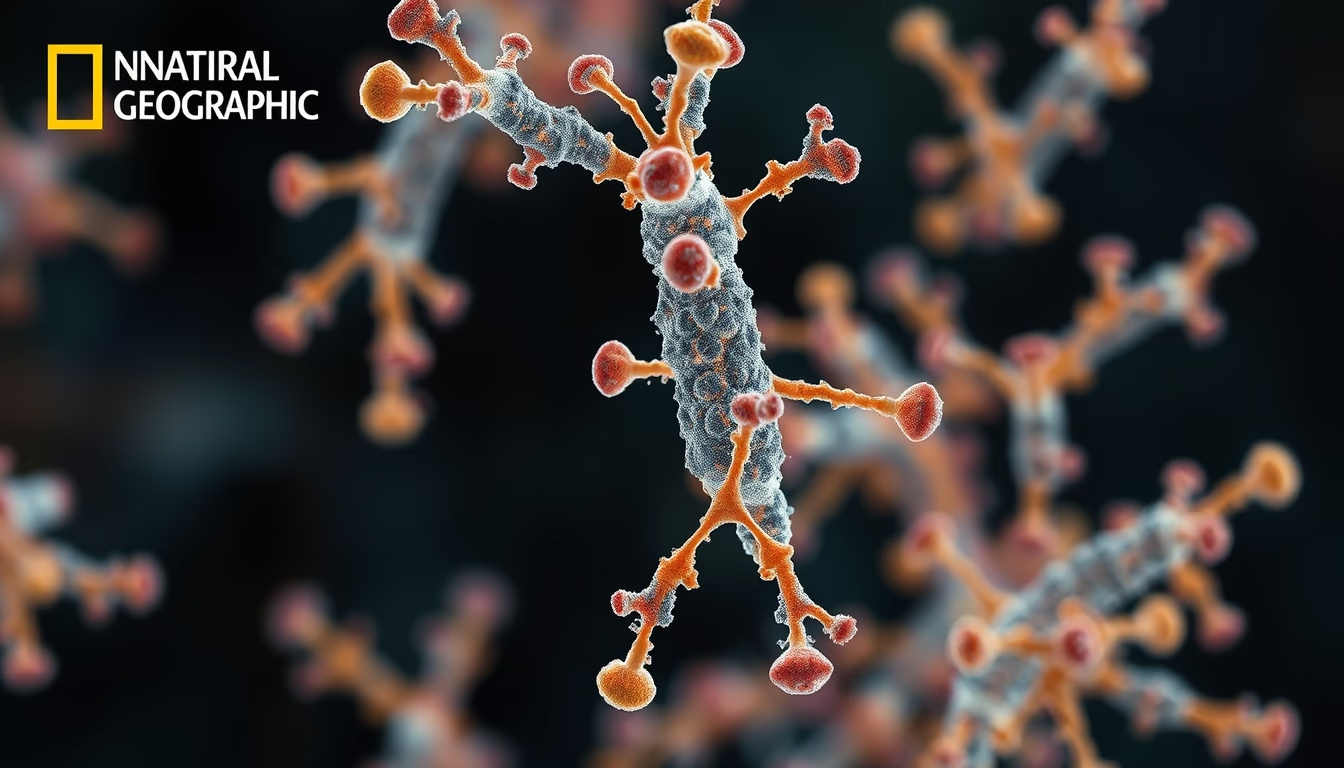
Antibodies are Y-shaped glycoproteins that play a central role in the body's defense against pathogens, with a structure composed of heavy and light chains.
About this subject
Antibodies, also known as immunoglobulins, are specialized proteins produced by B lymphocytes of the immune system. Their classic Y-shaped structure consists of four polypeptide chains: two heavy chains and two light chains, held together by disulfide bonds. Each arm of the Y contains a variable domain (Fab), responsible for specific antigen recognition and binding, while the stem (Fc) interacts with immune cell receptors and complement proteins.
The diversity of antibodies is generated by genetic mechanisms such as V(D)J recombination, somatic hypermutation, and class switching, allowing the immune system to recognize a vast array of pathogens. There are five main classes of antibodies in mammals: IgG, IgA, IgM, IgD, and IgE, each with specific functions, for instance, IgG is the most abundant and acts in late humoral immunity, while IgE is involved in allergic responses and defense against parasites.
Understanding antibody structure revolutionized biomedicine. In the 1970s, the development of monoclonal antibodies by Köhler and Milstein (Nobel Prize 1984) enabled mass production of identical antibodies against specific targets. Today, these antibodies are used in diagnostic tests (such as ELISA and Western blot), targeted therapies against cancer, autoimmune and infectious diseases, and in basic research to locate proteins in cells and tissues.
Interestingly, the three-dimensional structure of antibodies is stabilized by a fold called the 'immunoglobulin fold', forming a beta-sandwich that provides both rigidity and flexibility required for function. The hinge region allows the Fab arms to move, facilitating binding to multiple epitopes. X-ray crystallography and, more recently, cryo-electron microscopy studies have revealed atomic details of these interactions, driving rational design of therapeutic antibodies.
Frequently Asked Questions
What is the main function of an antibody?
The main function of an antibody is to recognize and neutralize pathogens such as viruses and bacteria, by marking them for destruction by other immune cells or directly blocking their activity.
How are antibodies produced by the body?
Antibodies are produced by B lymphocytes in response to a specific antigen. Upon exposure, B cells proliferate and differentiate into plasma cells, which secrete large amounts of antibodies.
What are monoclonal antibodies and what are they used for?
Monoclonal antibodies are identical antibodies produced in the laboratory from a single B lymphocyte clone. They are used in diagnostics (e.g., pregnancy tests) and targeted therapies, including cancer treatment and autoimmune diseases.
Direct URL
https://pub-c7d6a6ea828543ac903a74a341ccb2e1.r2.dev/imagens/antibody-structure-render-national-geographic-style-p0.avifHow to credit
Include a visible link back to UtilizAí. Copy one of the snippets below:
<a href="https://xn--utiliza-eza.com/en/midia/imagens/antibody-structure-render-national-geographic-style-p0">Antibody structure render</a> by <a href="https://xn--utiliza-eza.com">UtilizAí</a>, licensed under <a href="https://creativecommons.org/licenses/by/4.0/">CC BY 4.0</a>.
[Antibody structure render](https://xn--utiliza-eza.com/en/midia/imagens/antibody-structure-render-national-geographic-style-p0) by [UtilizAí](https://xn--utiliza-eza.com), CC BY 4.0
License: CC-BY-4.0