Antarctic ozone hole
1344×768 · AVIF · CC BY 4.0
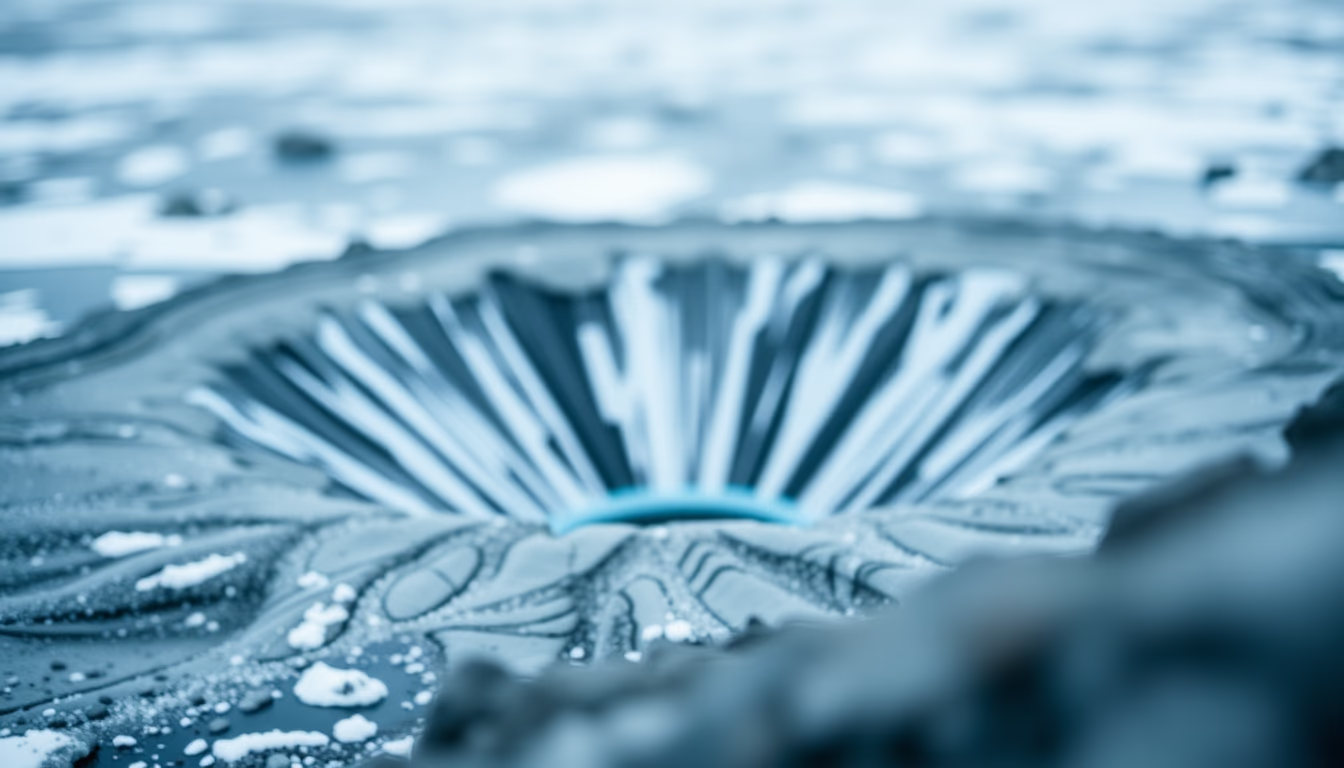
The Antarctic ozone hole is a seasonal phenomenon discovered in the 1980s, with serious implications for human health and the environment.
About this subject
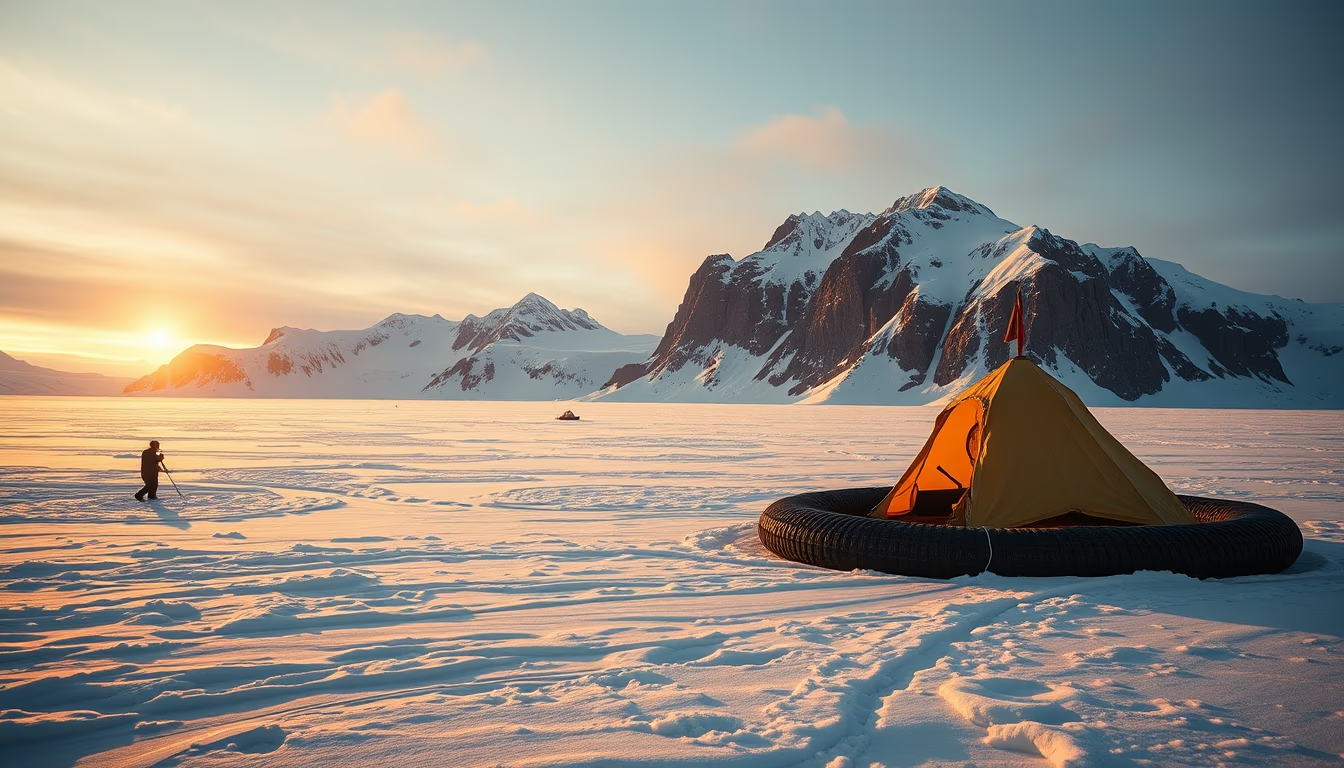
The Antarctic ozone hole was first detected in 1985 by scientists from the British Antarctic Survey. It is a severe depletion of ozone in the stratosphere over Antarctica that occurs annually during the Southern Hemisphere spring, from September to November. The primary cause is the release of chlorofluorocarbons (CFCs) and other ozone-depleting substances, which react with ozone in the presence of sunlight and extremely low temperatures, forming polar stratospheric clouds that accelerate destruction.
The Montreal Protocol, signed in 1987, was a landmark global agreement to phase out these substances. As a result, the ozone layer has been showing signs of recovery. Studies suggest that the Antarctic ozone hole could fully close by the mid-21st century, though climate variability and events such as volcanic eruptions can influence this process. Reduced ozone allows more ultraviolet B (UV-B) radiation to reach the surface, increasing risks of skin cancer, cataracts, and damage to marine ecosystems, particularly phytoplankton.
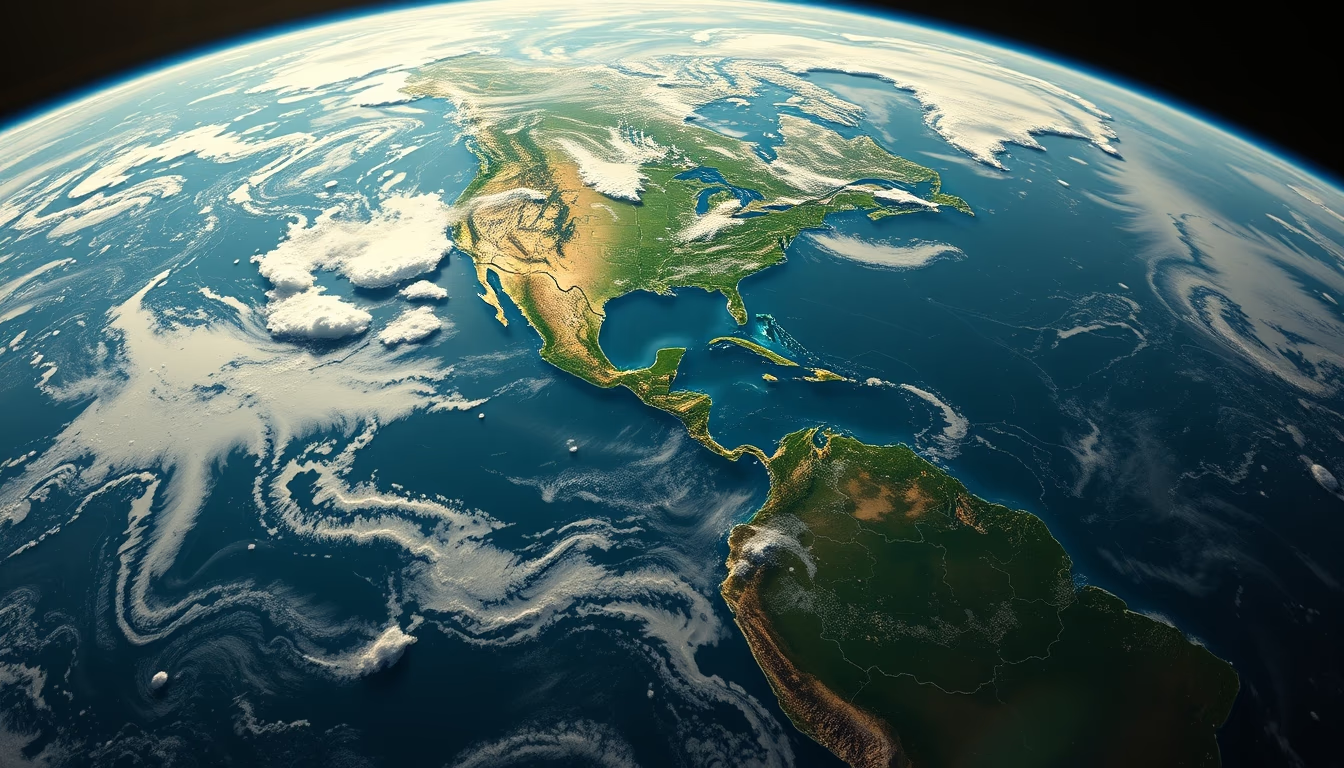
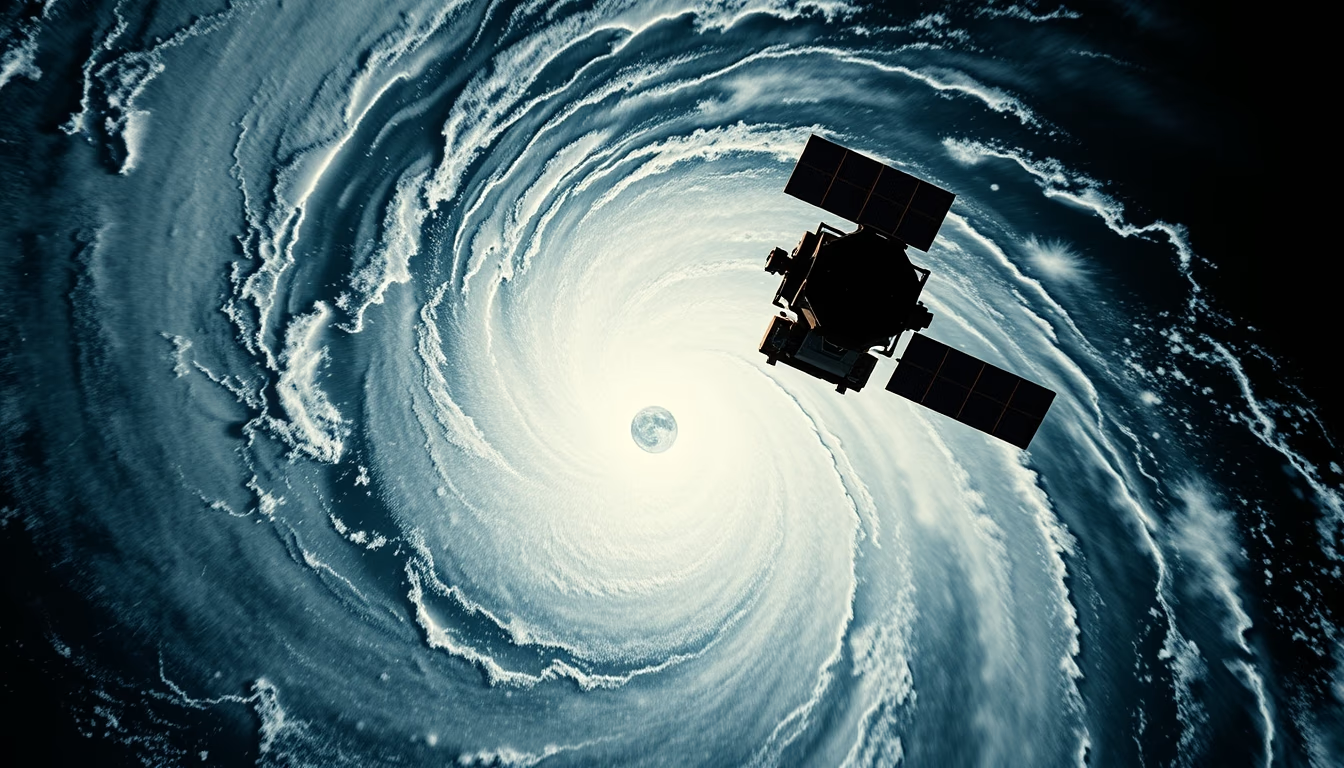
Satellites such as the Total Ozone Mapping Spectrometer (TOMS) and the Ozone Monitoring Instrument (OMI) continuously monitor the extent and depth of the hole. In 2023, the hole reached a maximum area of approximately 26 million square kilometers, one of the largest on record, but still within the overall recovery trend. The affected region covers nearly all of Antarctica, and its dynamics are influenced by wind patterns such as the polar vortex. Understanding this phenomenon is crucial for environmental policy and global health protection.
Frequently Asked Questions
What causes the Antarctic ozone hole?
The ozone hole is primarily caused by CFCs and other ozone-depleting substances that undergo chemical reactions in the polar stratosphere, especially during the Antarctic spring when temperatures are extremely low.
Is the ozone hole recovering?
Yes, thanks to the Montreal Protocol, the ozone layer is slowly recovering. Projections suggest the hole could fully close by around 2060 to 2070.
What are the health effects of the ozone hole?
Increased UV-B radiation can lead to skin cancer, cataracts, and a weakened immune system, as well as negatively impact agriculture and ecosystems.
Direct URL
https://pub-c7d6a6ea828543ac903a74a341ccb2e1.r2.dev/imagens/antarctic-ozone-hole-tilt-shift-miniature-fresh14.avifHow to credit
Include a visible link back to UtilizAí. Copy one of the snippets below:
<a href="https://xn--utiliza-eza.com/en/midia/imagens/antarctic-ozone-hole-tilt-shift-miniature-fresh14">Antarctic ozone hole</a> by <a href="https://xn--utiliza-eza.com">UtilizAí</a>, licensed under <a href="https://creativecommons.org/licenses/by/4.0/">CC BY 4.0</a>.
[Antarctic ozone hole](https://xn--utiliza-eza.com/en/midia/imagens/antarctic-ozone-hole-tilt-shift-miniature-fresh14) by [UtilizAí](https://xn--utiliza-eza.com), CC BY 4.0
License: CC-BY-4.0