Antarctic ozone hole
1344×768 · AVIF · CC BY 4.0
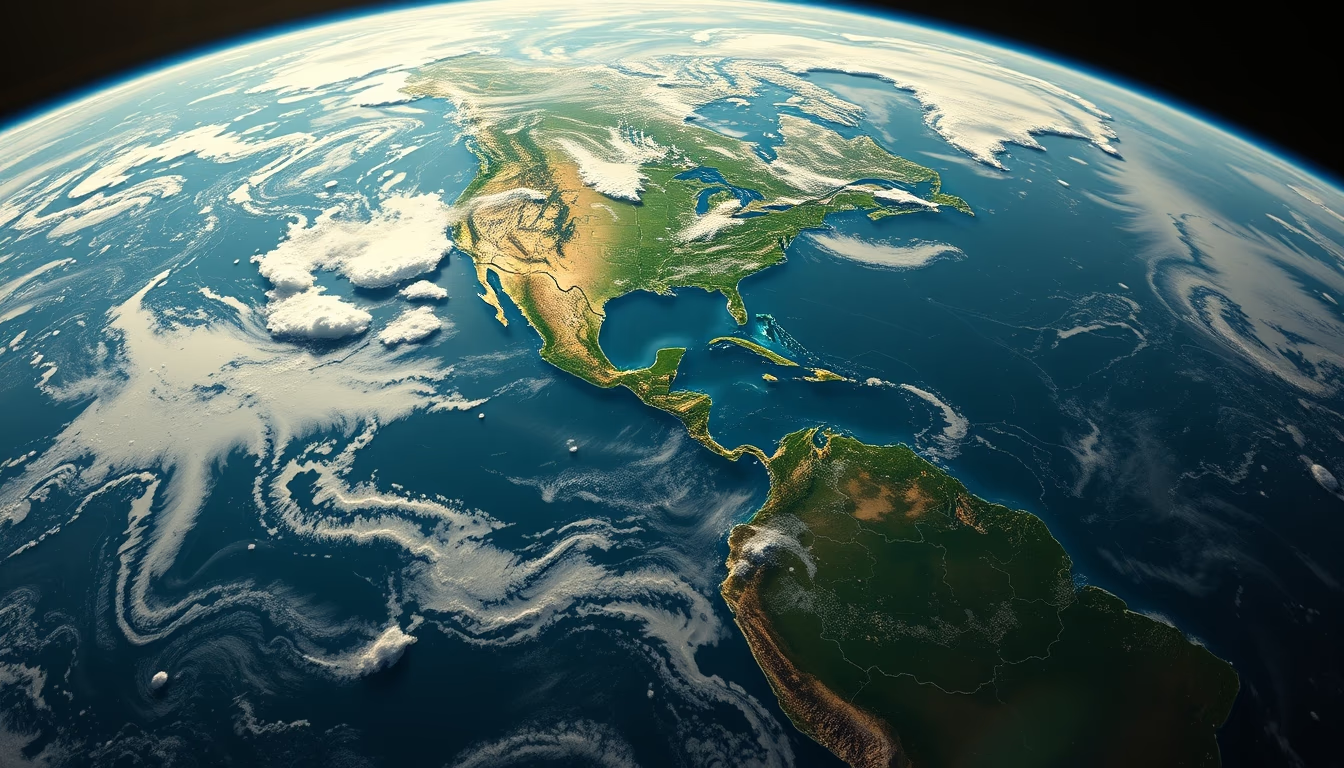
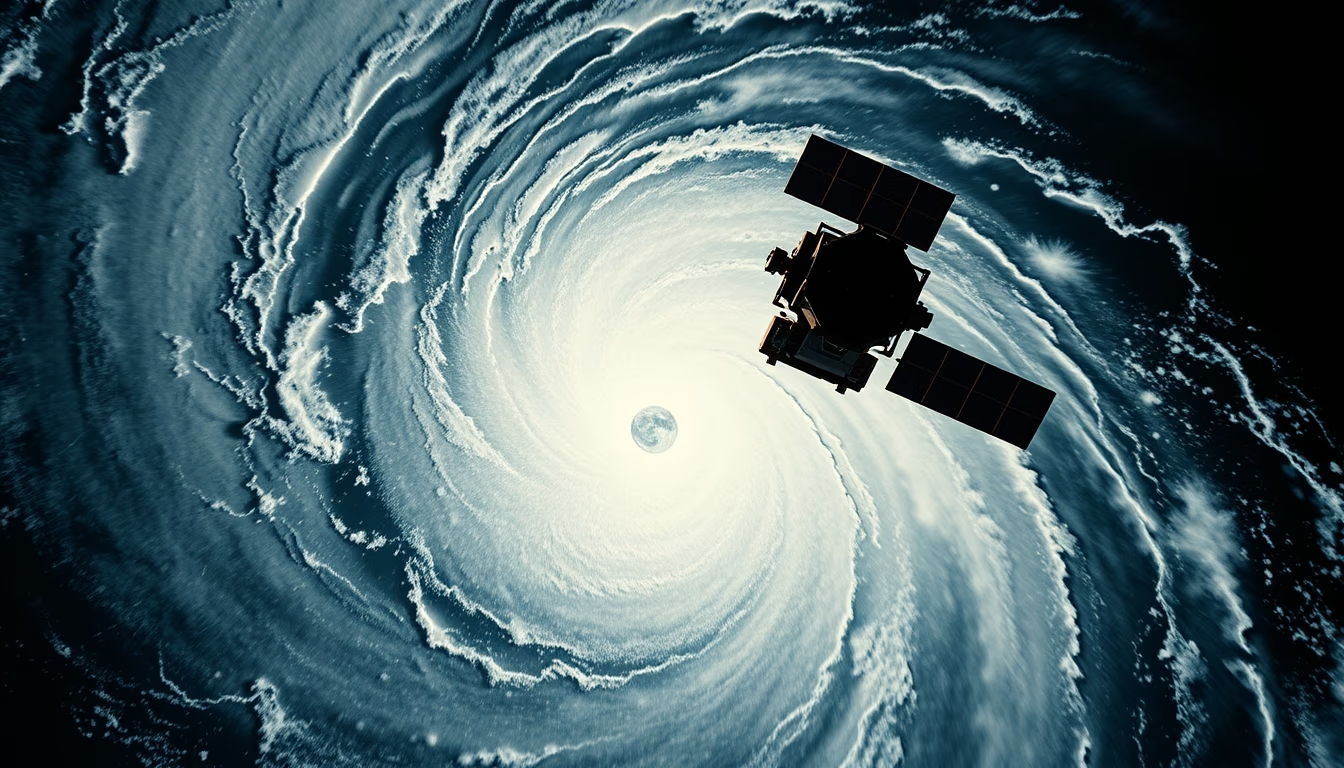
Discovered in 1985, the Antarctic ozone hole is a critical thinning of the ozone layer, caused by CFCs and monitored by satellites.
About this subject
The Antarctic ozone hole was first detected by British scientists in 1985 during the southern winter. It is a seasonal, severe depletion of ozone in the stratosphere, occurring mainly between September and November. This phenomenon results from chemical reactions triggered by ice crystals in polar stratospheric clouds, which activate chlorine and bromine released from chlorofluorocarbons (CFCs) and other industrial compounds.
The primary cause of the ozone hole is CFCs, used in refrigerators, aerosols, and insulating foams. Following the discovery, the international community adopted the Montreal Protocol in 1987, a treaty that progressively banned these substances. This agreement is considered one of the most successful environmental treaties, with nearly universal ratification. Since then, atmospheric CFC concentrations have been slowly declining.
Monitoring is conducted by satellites such as the Total Ozone Mapping Spectrometer (TOMS) and the Ozone Monitoring Instrument (OMI), which measure total ozone columns globally. These data track the hole's size and depth, which vary yearly with weather conditions. In 2023, the hole reached about 26 million km², but signs of recovery are observed, albeit slow.
Full recovery of the ozone layer is expected by mid-century, provided the Montreal Protocol remains enforced. However, climate change may interfere by altering stratospheric circulation and polar cloud formation. Protecting the ozone layer is crucial to prevent increased ultraviolet radiation, which can cause skin cancer, cataracts, and ecosystem damage.
Frequently Asked Questions
What causes the ozone hole?
The ozone hole is caused by chemicals like chlorofluorocarbons (CFCs) from refrigerants and aerosols. They release chlorine and bromine in the stratosphere, which destroy ozone molecules, especially over Antarctica during spring.
How do satellites monitor the ozone hole?
Satellites like the Ozone Monitoring Instrument (OMI) measure ozone amounts using reflected ultraviolet radiation. They generate global maps showing the hole's extent and depth over time.
Is the ozone hole recovering?
Yes, the ozone layer is slowly recovering thanks to the Montreal Protocol. The Antarctic hole is expected to return to 1980 levels by around 2060-2070, but climate change may delay this process.
Direct URL
https://pub-c7d6a6ea828543ac903a74a341ccb2e1.r2.dev/imagens/antarctic-ozone-hole-documentary-nature-style-fresh5.avifHow to credit
Include a visible link back to UtilizAí. Copy one of the snippets below:
<a href="https://xn--utiliza-eza.com/en/midia/imagens/antarctic-ozone-hole-documentary-nature-style-fresh5">Antarctic ozone hole</a> by <a href="https://xn--utiliza-eza.com">UtilizAí</a>, licensed under <a href="https://creativecommons.org/licenses/by/4.0/">CC BY 4.0</a>.
[Antarctic ozone hole](https://xn--utiliza-eza.com/en/midia/imagens/antarctic-ozone-hole-documentary-nature-style-fresh5) by [UtilizAí](https://xn--utiliza-eza.com), CC BY 4.0
License: CC-BY-4.0