Amber baltic trade
1344×768 · AVIF · CC BY 4.0
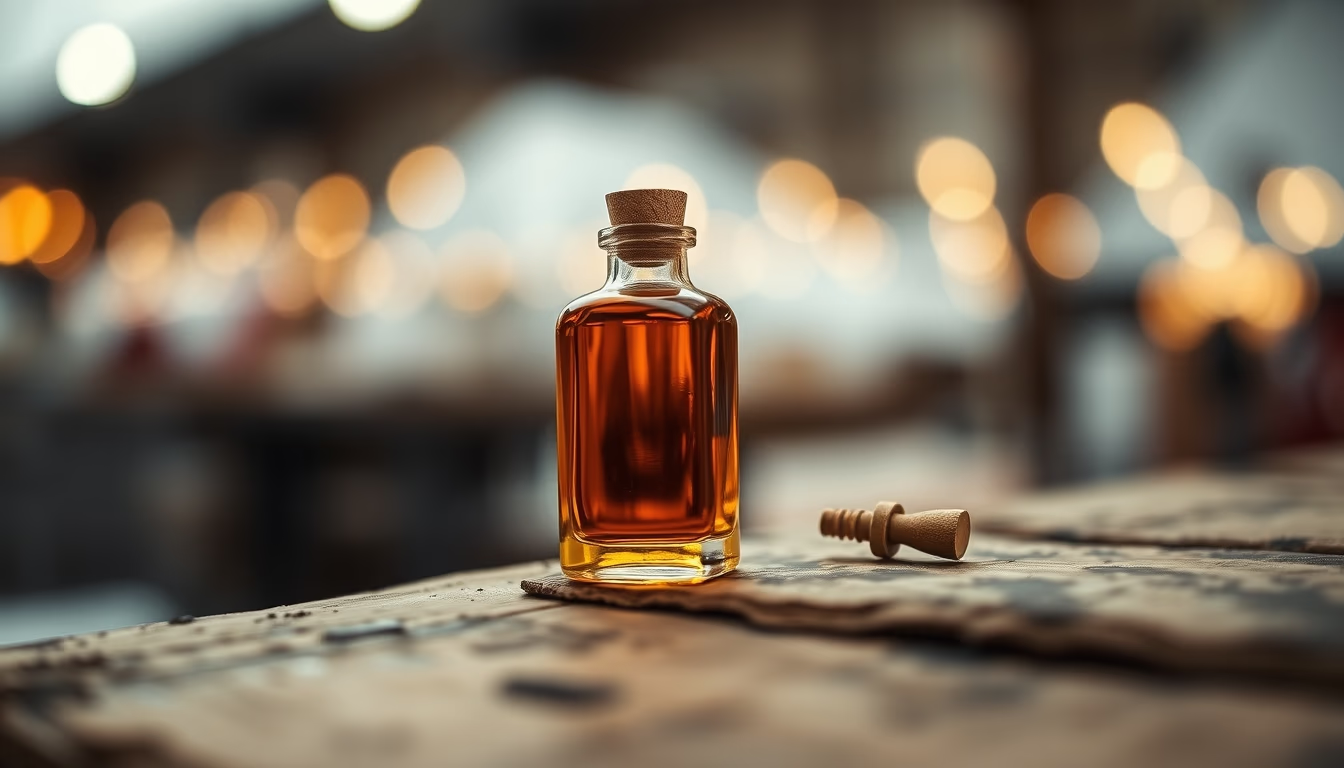
Baltic amber trade, known as northern gold, has driven commercial routes from ancient times to the present day.
About this subject
Baltic amber, often called northern gold, is fossilized resin from prehistoric pine trees, ranging from 30 to 50 million years old. Its extraction and trade date back to the Neolithic period, when amber artifacts were exchanged along routes connecting the Baltic Sea to the Mediterranean. The Baltic peoples, such as the Old Prussians, mastered collection and polishing, while the Phoenicians and later Romans established land and sea routes to bring the gem to distant markets. The Amber Road, one of Europe's oldest trade routes, linked the Baltic coasts to the Adriatic, passing through rivers like the Vistula and Danube. During the Roman Empire, amber was highly valued not only for its beauty but also for its supposed medicinal and magical properties, used in jewelry and amulets.
In the Middle Ages, the Teutonic Order's monopoly over the Baltic coast turned amber into a source of wealth and power. The order controlled collection and sale, establishing strict laws against smuggling. After the order's decline, the region came under the rule of duchies and kingdoms such as Poland and Prussia, which continued to exploit the resource. By the 16th century, amber had become a status symbol in the court of the Habsburgs and other European kingdoms. Artisans in Danzig, modern-day Gdańsk, created elaborate pieces such as crucifixes, candlesticks, and chests, exported throughout Europe.
Today, amber mining occurs mainly in Russia, especially in the Kaliningrad region, which holds about 90% of global reserves. Other Baltic countries, such as Lithuania, Latvia, Poland, and Germany, also have significant deposits. Amber is used in jewelry, cosmetics, and alternative medicine. Moreover, prehistoric insect or plant inclusions in amber are of great scientific interest, providing clues about ancient ecosystems. The amber trade also sparks environmental controversies, as mining on beaches and in forests can cause erosion and landscape damage. Yet, the fascination with the shine and history of northern gold persists, keeping a millennia-old tradition alive.
The tilt-shift miniature effect in the image represents this commercial activity on a reduced scale, highlighting amber extraction or sale with a playful touch. The miniature effect invites viewers to reflect on the global scale of this trade, which has always been small in volume but immense in cultural and historical value. The photograph captures the essence of a business that spans millennia, uniting nature, craftsmanship, and economy.
Frequently Asked Questions
What is Baltic amber?
Baltic amber is fossilized resin from prehistoric pine trees, commonly found on the shores of the Baltic Sea. It is known for its colors ranging from light yellow to brown, and sometimes contains insect or plant inclusions.
What was the historical importance of the amber trade in Europe?
The amber trade was crucial in antiquity, linking northern Europe to the Mediterranean via the Amber Road. It influenced local economies, generated wealth for orders like the Teutonic, and fostered craftsmanship in cities like Gdańsk.
Where is amber mined today?
Most amber is mined in the Kaliningrad region of Russia. Other Baltic countries such as Lithuania, Latvia, Poland, and Germany also have deposits, but on a smaller scale.
Direct URL
https://pub-c7d6a6ea828543ac903a74a341ccb2e1.r2.dev/imagens/amber-baltic-trade-tilt-shift-miniature-fresh2.avifHow to credit
Include a visible link back to UtilizAí. Copy one of the snippets below:
<a href="https://xn--utiliza-eza.com/en/midia/imagens/amber-baltic-trade-tilt-shift-miniature-fresh2">Amber baltic trade</a> by <a href="https://xn--utiliza-eza.com">UtilizAí</a>, licensed under <a href="https://creativecommons.org/licenses/by/4.0/">CC BY 4.0</a>.
[Amber baltic trade](https://xn--utiliza-eza.com/en/midia/imagens/amber-baltic-trade-tilt-shift-miniature-fresh2) by [UtilizAí](https://xn--utiliza-eza.com), CC BY 4.0
License: CC-BY-4.0